A healthy childhood 'boosts job prospects' deep into middle-age
Ho hum: This is just another instance of high IQ people being healthier, having less divorce etc. It is the high IQ that confers advantages throughout life, though the other things accompanying high IQ may help
The blessings of a happy and healthy childhood are still a benefit to peoples’ lives deep into middle age, a new study has found. It said that men and women who were well-off and fit as children are more likely to win promotion at work than less favoured children.
And they keep on being more successful at work into their 50s and throughout their careers, it said.
The study by researchers from Princeton University was based on the records of more than 10,000 Whitehall civil servants whose progress has been tracked since the 1980s.
It comes at a time of deepening concern about the effects of a damaged childhood on adults – concern heightened by the August riots and the perception that many of those caught up in a wave of amoral lawlessness had been brought up in troubled families and without fathers.
Children are most likely to enjoy good mental and physical health alongside financial and emotional security if they come from a family headed by married parents.
The Princeton study by academics Anne Case and Christina Paxson said that Whitehall provided few examples of children from poor and unhealthy families but nevertheless their records still provided ‘evidence that health and socio-economic status in childhood influences occupational status in adulthood.
‘Adults who had better childhood health, as measured by childhood hospitalisations and adult height, start at higher grades in the civil service on average, and are promoted to higher grades after they enter Whitehall.’
It added that results had been amended to take into account the advantages won from a good education, so that there could be no doubt that good childhood health played a part in career success much later in life.
The researchers said: ‘In summary, in this selected sample of white collar workers, not only are poorer health and worse social circumstances in childhood associated with lower initial employment grade, but they are associated with a widening of earnings gaps over time.
‘Those who were healthy in childhood and those from higher socio-economic backgrounds are significantly more likely to be promoted.’
The findings are based on the Whitehall study which has plotted the lives and careers of 10,308 civil servants in white collar jobs in 20 government departments. The tracking began in 1985 when the men and women in the study were aged between 35 and 55.
Most research projects over the past 20 years have followed the progress of children only until their late teens. They have shown that those with the best health and the most comfortable financial backgrounds are most likely to well at school and go on to good education and good jobs.
All studies have found that the children most likely to do well are those from traditional married families, which tend have the most money and the best health. Children of cohabitees do less well, and those who are most likely to become failures come from single parent and broken families.
SOURCE
Does breast cancer screening do more harm than good?
Today, around 1.5 million women, mostly between the ages of 50 and 70, are screened in the UK each year and the programme, it is claimed, saves the lives of around 1,300 women annually.
The perceived wisdom is that breast-cancer screening is a no brainer. If you have cancer, any cancer, surely it’s best to catch it as early as possible so that it can be more effectively treated and you have the highest chance of survival. The annual cost of around £100 million to run the programme seems like money well spent.
Unfortunately, there is a growing body of respected medical and research opinion which shows things are simply not that clear cut.
Last week, a paper published in the Journal of the Royal Society of Medicine reiterated the conclusion that, far from being of huge benefit to women, breast-cancer screening may, in fact, be doing nearly as much harm as it does good.
‘I can understand why people find this hard to believe,’ says Dr Karsten Jorgensen, a research scientist with the independent Nordic Cochrane Centre in Denmark, who has carried out in-depth research into the harms and benefits of breast screening.
By comparing survival rates from an area of Denmark that has had no screening against areas that have, the Cochrane Centre found that far from the NHS claim that screening saves the lives of 1,347 lives each year, the true figure is more like 500. This means that for every life saved, 2,000 women have to be screened.
Furthermore, Dr Jorgensen and his team claim that of those women screened, around one in four will receive an incorrect diagnosis — a false positive — during her screening lifetime.
This is when a woman will be told their mammogram has thrown up something suspicious that will need further investigation, such as a biopsy, only to be told later there is no cancer.
Even worse, he says, thousands of women in the UK are being over-diagnosed each year — that is, they are being treated for cancers which they simply do not have.
These figures are backed up by Australian research published in 2010, which found that one in three of all invasive cancers diagnosed by screening falls into this category.
This means that every year in the UK up to 7,000 women receive unnecessary surgery, plus possible chemotherapy and radiotherapy, with all the long-term health risks such as lymphoma, infections and stroke for a cancer which may never have existed.
Unsurprisingly, the findings by medical bodies around the world that challenge the benefits of screening have created a furious debate in the medical and scientific community. ‘These same criticisms have been trotted out a number of times by the same authors,’ says Professor Julietta Patnick, director of the NHS Cancer Screening Programme.
‘On each occasion, they have been comprehensively rebutted in the public domain by various experts.
‘The most recent estimates suggest that screening saves one life for about 400 women screened over a ten-year period. We know that 97 per cent of women with screen-detected cancers are alive five years later compared to just over 80 per cent of all women who were diagnosed without screening, and attending a screening lowers a woman’s risk of having a mastectomy.’
'Once a mammogram picks up an abnormality you go into a system that processes you with little thought about you as an individual'
Dr Trish Groves, deputy editor of the British Medical Journal, a publication which has led the debate on breast screening, doesn’t entirely agree.
‘There are two main issues when we look at breast screening,’ she explains. ‘The first is false positives, when a woman may be told the scan has picked up abnormalities and then is sent for various checks and scans and needle biopsies — even a lumpectomy — only to be told she is clear.
‘The other issue is over-diagnosis and therefore over-treatment. We know around 20 per cent of cases diagnosed by screening are Ductal Carcinoma in Situ (DCIS).’ (DCIS is a very early form of breast cancer. Cells inside some of the breast ducts have begun to turn cancerous, but have not yet spread into surrounding breast tissue.)
She adds: ‘DCIS can only be picked up by mammogram and so is relatively new to us. We know little about how it spreads and grows, although initial research suggests around 50 per cent of this type of cell changes will never spread and are not actually cancerous.
‘But, by and large, DCIS is treated in the same way as all other breast cancers — with surgery, sometimes a lumpectomy but occasionally a mastectomy, maybe even chemotherapy. Although some women may be happy to have a complete regime of treatment for a condition which may not be cancerous, most will not.
‘Either way, we have to accept that screening means that a large number of women will undergo a life-changing, painful, nasty treatment regime when, in fact, there is nothing wrong with them at all.
‘We believe that the leaflets for the NHS Breast Screening Programme don’t really explain the potential harm and instead overstate the benefits of screening, rather than offering mammography to women whose symptoms, family histories or genetic make-up suggests they’re at risk of breast cancer, and the harms aren’t really explained at all. We think that should change.
‘Doctors, the public, politicians and, of course, women and their families, might still think that saving one life is well worth the downside of screening thousands of women and giving hundreds of them unnecessary treatments, but shouldn’t they at least be told that the benefits aren’t certain?’
Dr Emma Pennery, clinical director of the charity Breast Cancer Care, says: ‘What is important is that women are properly informed about the risks of the screening programme as well as the benefits. For example, receiving a false positive may be a completely acceptable risk to one woman if she thinks she may have an early detection of cancer. But to another woman this may bring unimaginable strain.
While the arguments rage, oncologists and surgeons believe there are merits to both points of view. ‘I feel it is great pity that the two sides have become so polarised,’ says consultant breast surgeon Mr Rajiv Vashisht, who practises at the Clementine Churchill Hospital and the West Middlesex University Hospital.
He adds: ‘We all want to improve the outlook for breast cancer, and the Cochrane Review and other research has thrown up issues we should all be debating. ‘Overall, I am in favour of breast screening. It does pick up cancers early, which gives women more choices about treatment.
‘False positives are, of course, an issue. Over-diagnosis is something we all dread, but if the results show a problem, we have to assume the worst and treat our patients accordingly.
‘Watch and wait may be a suitable policy for prostate cancer, but breast cancer has a completely different disease path.
‘Prostate cancer is very slow growing and goes first to the surrounding areas — breast goes first to the lungs, liver and bone, and, once that happens, you are struggling to catch up with it. ‘Anyone who works with breast cancer knows what an awful disease it can be and any weapon we have has to be welcomed.’
So, what now is the best option for a woman offered screening?
‘If you have a high risk of breast cancer — a family or genetic risk — then there is no question but that you should be regularly scanned,’ says Professor Jane Maher, chief medical officer of Macmillan Cancer Support and an oncologist. ‘Other women should make sure they fully understand the risks before screening, and the best source of unbiased information is cancer charity websites. ‘Once you know the risks, decide in advance what you will do if you get a positive result.
‘Remember that with the majority of breast cancers there is no need for immediate action. Go away and think about your options, possibly ask for a second opinion, read up on the different treatments options.’
And she says: ‘Finally, don’t just accept what you are being told. Ask questions until you are satisfied you know all the answers.’
SOURCE
Thursday, September 15, 2011

Wednesday, September 14, 2011
Why Statins Do More Harm Than Good
This is the latest from Prof. Seneff. She is of course well out of the mainstream on this and becoming more so but she makes a good case for her conclusions. The acid test would be be in lifetime survival statistics when they become available. Statins may reduce heart disease but do they promote death from other causes?
The severe side-effects of statins create a problem in testing that, however. Because of those side-effects only a minority of people can continue taking statins regularly so that minority may be particularly robust and therefore resistant to other causes of death. In such circumstances theory becomes more important and Prof. Seneff does claim considerable support for testable aspects of her theories
I myself am particularly struck by the "coincidence" of increased Alzheimer's incidence and increased statin use. The mental side-effects of statin use are very similar to Alzheimer's. Taking statins is a rather good way to go rapidly ga ga if you are inclined that way
Americans have been well trained over the past few decades to avoid dietary fat and cholesterol and to stay out of the sun. Their conscientious implementation of this misguided advice has led to an epidemic in obesity and heart disease, along with a host of other debilitating conditions like arthritis and Alzheimer's disease.
Cholesterol is to animals as chlorophyll is to plants. Cholesterol, absent from plants, is what gives animals mobility and a nervous system. It is therefore not surprising that statin drug side effects mainly impact muscles and the nervous system.
The heart, as a muscle, is not exempt from statin toxicity. This is why the incidence of heart failure has steadily risen in step with the widespread adoption of statin therapy, now displacing cardiovascular disease as the number one killer. In this article I am going to take you on a whirlwind tour of the 60,000 foot view of my understanding of the principle causes of the current health crisis in America.
My extensive research has caused me to hypothesize a remarkable feat that the human body can perform in the presence of sunlight, which is to extract sulfur from hydrogen sulfide in the air and convert it to sulfate, taking advantage of the sun's energy to catalyze the reaction.
This process takes place in the skin upon sun exposure, and also in the endothelial cells lining blood vessels, and in the red blood cells, platelets, and mast cells in the blood. This feat is performed by a very interesting molecule called "endothelial nitric oxide synthase,'' a misnomer, since its main responsibility is to synthesize sulfate rather than nitric oxide.
The sulfate so produced plays a huge role in cardiovascular health, both by preventing blood clots and by keeping pathogenic microbes (bacteria and viruses) at bay. But it also plays another role that is just as important, which is to give cholesterol (as well as vitamin D and other sterols) a free ride through the blood stream.
Vitamin D3 (a highly touted nutrient) is synthesized in the skin from cholesterol (a highly demonized nutrient) and its chemical structure is almost identical to that of cholesterol. By attaching to cholesterol or vitamin D3, sulfate makes the molecule water soluble, and this means that it no longer has to travel packaged up inside an LDL particle. LDL, as you probably know, is the so-called "bad'' cholesterol, which will cause doctors to prescribe statins if the level is too high.
A great way to lower LDL levels is to get adequate sun exposure. It's not going to work to take a vitamin D supplement: you have to go outside and soak up the sun, because supplements are never sulfated and vitamin D is not cholesterol. Raw cow's milk is the only dietary source I know of that actually supplies sulfated vitamin D3, but even that is still not cholesterol sulfate.
Because most Americans have inadequate cholesterol in their skin and grossly inadequate amounts of sun exposure, they suffer from a huge deficiency in cholesterol and sulfate supply to the tissues. Not surprisingly, most impacted are the muscles and nervous system.
Because the heart muscle is indispensible, the body has developed a back-up strategy to give it special treatment, which is to synthesize cholesterol sulfate from LDL and homocysteine in the fatty deposits (plaque) that build up in arteries supplying the heart. The macrophages in the plaque extract cholesterol from damaged small dense LDL particles, and export it to HDL-A1. The platelets in the plaque will only accept cholesterol from HDL-A1, which they then convert to cholesterol sulfate.
They obtain the sulfate through yet another process which requires energy and oxidizing agents, extracting the sulfur from homocysteine. With insufficient homocysteine, the sulfur will most likely be extracted from cartilage, which gets its strength from extensive disulfide bonds. This, in my view, is the main cause of arthritis -- depletion of sulfur from the cartilage in the joints. So now you have both cardiovascular disease and arthritis as a consequence of a low-fat diet and aggressive sun avoidance.
Statin drugs dramatically lower LDL levels by interfering with cholesterol synthesis, and this wreaks havoc on the liver, the main back-up supplier of cholesterol to the tissues when cholesterol intake and cholesterol sulfate production are down. With the American diet, the liver has another huge task, which is to convert fructose to fat.
The fat cannot be stored or shipped (via LDL) if there is insufficient cholesterol. As a consequence, the liver abandons this task, and the fructose builds up in the blood, causing extensive glycation damage to blood proteins. One of the impacted proteins is the apoB in LDL, which interferes with LDL's ability to deliver its goods to the tissues, including cholesterol, fats, vitamins A, D, E, and K, and antioxidants. So LDL levels fall sharply with statins, and so does the bioavailability of all these nutrients.
Muscle cells come to the rescue, heroically, by extracting excess fructose from the blood and converting it to lactate, using anaerobic metabolism. They have to switch over to anaerobic metabolism anyway, because coenzyme Q10, another casualty of statin therapy, is in low supply. Coenzyme Q10 is crucial for aerobic metabolism.
Lactate is a great fuel for the heart and liver, but the problem is that the muscle cells get wrecked in the process, due to massive overdoses of fructose, in the context of inadequate cholesterol, which would have offered some protection. This is a principal contributor to the excessive muscle pain and weakness associated with statins. Eventually, the muscles can't do it any more, and you're now on the verge towards heart failure.
People on long-term statin therapy start to notice that their hair is receding faster, they're developing cataracts, they can't hear as well as they used to, they keep forgetting things, they can't open the pickle jar any more, and perhaps they'll need rotator cuff surgery soon, as their shoulders are so sore. They think it's just because they're growing old, but these are all side effects that my research, together with my students at MIT, has uncovered, by comparing statin drug side effects with side effects associated with other drugs in age-matched reviews.
Even more alarming are the rare but debilitating and even life-threatening side effects we've detected, such as ALS and Parkinson's disease, heart and liver failure, neuropathy and severe muscle damage. A 17-year study on the elderly confirmed what I already suspected: low serum cholesterol is associated with increased frailty, accelerated mental decline, and early death. (Ref 1.)
Statins are not the answer for anyone seeking to avoid cardiovascular disease. The answer, instead, is to modify the diet to include foods that are rich in cholesterol and saturated fat, to avoid empty carbohydrates, especially high fructose corn syrup, to eat foods that are good sources of sulfur, and, most especially, to spend plenty of time outdoors in the sun.
SOURCE
Australia: Breakfast food bans could be counterproductive
IF you buy junk food at a drive-through in NSW it may astound you to learn from new mandatory labelling that popcorn chicken is basically fat suspended in a superstructure of chicken eyeballs. This will no doubt shock the people who missed the memo that health food doesn't come in buckets.
Last week the Cancer Council NSW continued its war on fast food with an assault on Bubble O'Bill, the Paddle Pop lion, the Coco Pops monkey and Toucan Sam, long-serving avian ambassador of Froot Loops cereal. Should the Cancer Council succeed, parents can rest assured any food promoted by a jungle creature in drag will be taken off the shelves and replaced, presumably with a plain olive green box.
Once again the food nannies will have succeeded not only in taking the fun out of another meal but in removing what effectively has served as a warning sign for parents that products are junk food. Foods such as Nutri-Grain, many mueslis and "healthy breakfast spreads" such as peanut butter and Nutella are promoted not by cartoons but by sports people.
If Nutella had a cartoon bird on it perhaps people would have worked out faster that just because a marathon runner promotes it, chocolate isn't a breakfast food. Certainly the San Diego mother who sued Nutella for selling her fake health food would have had a harder time proving she was not a complete idiot.
Bans on food and beverage advertisements for products that are high in fat, salt and sugar are defended with studies such as the 2006 Access Economics report on obesity in Australia that claimed it cost us $8.3 billion. Obesity certainly is a serious health problem with links to cancer and diabetes, but picking on the fun foods as the sole culprits and treating parents like idiots reveals an agenda based as much on cultural prejudice as health consciousness.
Mass-produced, commercial junk food is easy to recognise; certainly the mascots help. However, posh food is often as bad for your health but is rarely marketed with anything as crass as a cartoon toucan. Wagyu beef has become increasingly popular in part because it has a high fat content and consequently is full of flavour. Perhaps a Pokemon-style cow mascot would help us remember at the butcher that Wagyu is not a healthy alternative to lean beef, fish or lentils.
At the ice cream fridge the poshest ice creams have the highest milk fat content. That's why they are so delicious. While Paddle Pops are clearly labelled junk food by the presence of the Paddle Pop lion, Maggie Beer's ice cream has a picture of very dignified and grown-up looking treats on the box. Eating a little of either won't hurt you but if you're planning to watch The Notebook, the Lion represents more value for your money.
My waistline has been enhanced by a range of foods both healthy and unhealthy, gourmet and gourmand. There are a remarkable number of kilojoules in fast and slow, fancy and plain, wholesome and junk, the amount of sugar in "diet" foods being an obvious case in point.
The Cancer Council's bans won't address the avalanche of kilojoules available in our prosperous society. What they can look forward to is enabling parents such as the San Diego Nutella mum to blame food producers or the government for their failure to meet a basic parenting requirement: feeding their kids properly.
SOURCE
Tuesday, September 13, 2011
The small benefit and huge burden that Statins impose on the body
I reproduce below a small excerpt of a very large scholarly study that points out the huge stresses that statins place on the body. I have of course long condemned the statin fad and have advised everyone I know not to take them but even I did not realize how very damaging statins are to people. Like thalidomide, they may even be teratogenic. Given the importance of the subject, I am putting up this article only today. Read on:
by Stephanie Seneff
I would like to start by reexamining the claim that statins cut heart attack incidence by a third. What exactly does this mean? A meta study reviewing seven drug trials, involving in total 42,848 patients, ranging over a three to five year period, showed a 29% decreased risk of a major cardiac event (Thavendiranathan et al., 2006). But because heart attacks were rare among this group, what this translates to in absolute terms is that 60 patients would need to be treated for an average of 4.3 years to protect one of them from a single heart attack. However, essentially all of them will experience increased frailty and mental decline, a subject to which I will return in depth later on in this essay.
The impact of the damage due to the statin anti-cholesterol mythology extends far beyond those who actually consume the statin pills. Cholesterol has been demonized by the statin industry, and as a consequence Americans have become conditioned to avoid all foods containing cholesterol. This is a grave mistake, as it places a much bigger burden on the body to synthesize sufficient cholesterol to support the body's needs, and it deprives us of several essential nutrients. I am pained to watch someone crack open an egg and toss out the yolk because it contains "too much" cholesterol. Eggs are a very healthy food, but the yolk contains all the important nutrients. After all, the yolk is what allows the chick embryo to mature into a chicken. Americans are currently experiencing widespread deficiencies in several crucial nutrients that are abundant in foods that contain cholesterol, such as choline, zinc, niacin, vitamin A and vitamin D.
Cholesterol is a remarkable substance, without which all of us would die. There are three distinguishing factors which give animals an advantage over plants: a nervous system, mobility, and cholesterol. Cholesterol, absent from plants, is the key molecule that allows animals to have mobility and a nervous system. Cholesterol has unique chemical properties that are exploited in the lipid bilayers that surround all animal cells: as cholesterol concentrations are increased, membrane fluidity is decreased, up to a certain critical concentration, after which cholesterol starts to increase fluidity (Haines, 2001). Animal cells exploit this property to great advantage in orchestrating ion transport, which is essential for both mobility and nerve signal transport. Animal cell membranes are populated with a large number of specialized island regions appropriately called lipid rafts. Cholesterol gathers in high concentrations in lipid rafts, allowing ions to flow freely through these confined regions. Cholesterol serves a crucial role in the non-lipid raft regions as well, by preventing small charged ions, predominantly sodium (Na+) and potassium (K+), from leaking across cell membranes. In the absence of cholesterol, cells would have to expend a great deal more energy pulling these leaked ions back across the membrane against a concentration gradient.
In addition to this essential role in ion transport, cholesterol is the precursor to vitamin D3, the sex hormones, estrogen, progesterone, and testosterone, and the steroid hormones such as cortisol. Cholesterol is absolutely essential to the cell membranes of all of our cells, where it protects the cell not only from ion leaks but also from oxidation damage to membrane fats. While the brain contains only 2% of the body's weight, it houses 25% of the body's cholesterol. Cholesterol is vital to the brain for nerve signal transport at synapses and through the long axons that communicate from one side of the brain to the other. Cholesterol sulfate plays an important role in the metabolism of fats via bile acids, as well as in immune defenses against invasion by pathogenic organisms.
Statin drugs inhibit the action of an enzyme, HMG coenzyme A reductase, that catalyses an early step in the 25-step process that produces cholesterol. This step is also an early step in the synthesis of a number of other powerful biological substances that are involved in cellular regulation processes and antioxidant effects. One of these is coenzyme Q10, present in the greatest concentration in the heart, which plays an important role in mitochondrial energy production and acts as a potent antioxidant (Gottlieb et al., 2000). Statins also interfere with cell-signaling mechanisms mediated by so-called G-proteins, which orchestrate complex metabolic responses to stressed conditions. Another crucial substance whose synthesis is blocked is dolichol, which plays a crucial role in the endoplasmic reticulum. We can't begin to imagine what diverse effects all of this disruption, due to interference with HMG coenzyme A reductase, might have on the cell's ability to function.
How Statins Destroy Muscles
Europe, especially the U.K., has become much enamored of statins in recent years. The U.K. now has the dubious distinction of being the only country where statins can be purchased over-the-counter, and the amount of statin consumption there has increased more than 120% in recent years (Walley et al, 2005). Increasingly, orthopedic clinics are seeing patients whose problems turn out to be solvable by simply terminating statin therapy, as evidenced by a recent report of three cases within a single year in one clinic, all of whom had normal creatine kinase levels, the usual indicator of muscle damage monitored with statin usage, and all of whom were "cured" by simply stopping statin therapy (Shyam Kumar et al., 2008). In fact, creatine kinase monitoring is not sufficient to assure that statins are not damaging your muscles (Phillips et al., 2002).
Since the liver synthesizes much of the cholesterol supply to the cells, statin therapy greatly impacts the liver, resulting in a sharp reduction in the amount of cholesterol it can synthesize. A direct consequence is that the liver is severely impaired in its ability to convert fructose to fat, because it has no way to safely package up the fat for transport without cholesterol (Vila et al., 2011). Fructose builds up in the blood stream, causing lots of damage to serum proteins.
The skeletal muscle cells are severely affected by statin therapy. Four complications they now face are: (1) their mitochondria are inefficient due to insufficient coenzyme Q10, (2) their cell walls are more vulnerable to oxidation and glycation damage due to increased fructose concentrations in the blood, reduced choleserol in their membranes, and reduced antioxidant supply, (3) there's a reduced supply of fats as fuel because of the reduction in LDL particles, and (4) crucial ions like sodium and potassium are leaking across their membranes, reducing their charge gradient. Furthermore, glucose entry, mediated by insulin, is constrained to take place at those lipid rafts that are concentrated in cholesterol. Because of the depleted cholesterol supply, there are fewer lipid rafts, and this interferes with glucose uptake. Glucose and fats are the main sources of energy for muscles, and both are compromised.
As I mentioned earlier, statins interfere with the synthesis of coenzyme Q10 (Langsjoen and Langsjoen, 2003), which is highly concentrated in the heart as well as the skeletal muscles, and, in fact, in all cells that have a high metabolic rate. It plays an essential role in the citric acid cycle in mitochondria, responsible for the supply of much of the cell's energy needs. Carbohydrates and fats are broken down in the presence of oxygen to produce water and carbon dioxide as by-products. The energy currency produced is adenosine triphosphate (ATP), and it becomes severely depleted in the muscle cells as a consequence of the reduced supply of coenzyme Q10.
The muscle cells have a potential way out, using an alternative fuel source, which doesn't involve the mitochondria, doesn't require oxygen, and doesn't require insulin. What it requires is an abundance of fructose in the blood, and fortunately (or unfortunately, depending on your point of view) the liver's statin-induced impairment results in an abundance of serum fructose. Through an anaerobic process taking place in the cytoplasm, specialized muscle fibers skim off just a bit of the energy available from fructose, and produce lactate as a product, releasing it back into the blood stream. They have to process a huge amount of fructose to produce enough energy for their own use. Indeed, statin therapy has been shown to increase the production of lactate by skeletal muscles (Pinieux et al, 1996).
Converting one fructose molecule to lactate yields only two ATP's, whereas processing a sugar molecule all the way to carbon dioxide and water in the mitochondria yields 38 ATP's. In other words, you need 19 times as much substrate to obtain an equivalent amount of energy. The lactate that builds up in the blood stream is a boon to both the heart and the liver, because they can use it as a substitute fuel source, a much safer option than glucose or fructose. Lactate is actually an extremely healthy fuel, water-soluble like a sugar but not a glycating agent.
So the burden of processing excess fructose is shifted from the liver to the muscle cells, and the heart is supplied with plenty of lactate, a high-quality fuel that does not lead to destructive glycation damage. LDL levels fall, because the liver can't keep up with fructose removal, but the supply of lactate, a fuel that can travel freely in the blood (does not have to be packaged up inside LDL particles) saves the day for the heart, which would otherwise feast off of the fats provided by the LDL particles. I think this is the crucial effect of statin therapy that leads to a reduction in heart attack risk: the heart is well supplied with a healthy alternative fuel.
This is all well and good, except that the muscle cells get wrecked in the process. Their cell walls are depleted in cholesterol because cholesterol is in such short supply, and their delicate fats are therefore vulnerable to oxidation damage. This problem is further compounded by the reduction in coenzyme Q10, a potent antioxidant. The muscle cells are energy starved, due to dysfunctional mitochondria, and they try to compensate by processing an excessive amount of both fructose and glucose anaerobically, which causes extensive glycation damage to their crucial proteins. Their membranes are leaking ions, which interferes with their ability to contract, hindering movement. They are essentially heroic sacrificial lambs, willing to die in order to safeguard the heart.
Muscle pain and weakness are widely acknowledged, even by the statin industry, as potential side effects of statin drugs. Together with a couple of MIT students, I have been conducting a study which shows just how devastating statins can be to muscles and the nerves that supply them (Liu et al, 2011).
I believe that the real reason why statins protect the heart from a heart attack is that muscle cells are willing to make an incredible sacrifice for the sake of the larger good. It is well acknowledged that exercise is good for the heart, although people with a heart condition have to watch out for overdoing it, walking a careful line between working out the muscles and overtaxing their weakened heart. I believe, in fact, that the reason exercise is good is exactly the same as the reason statins are good: it supplies the heart with lactate, a very healthy fuel that does not glycate cell proteins.
Much more here
Monday, September 12, 2011
SpongeBob SquarePants bad for concentration

Behaviour changes that last only a few minutes are hardly a great concern but that is all that the report below has demonstrated. That a fast-paced cartoon might wind kids up a bit is is hardly surprising. Any fun game will do the same
Watching fast-paced cartoons such as SpongeBob SquarePants damages young children’s concentration and behaviour, according to psychologists. Tests showed that four year-olds who watched just a few minutes of the popular television show were less able to solve problems and pay attention afterwards than those who saw a less frenetic programme or simply sat drawing.
Researchers say this could be because children mimic the chaotic behaviour of their favourite TV characters, or because the fast-moving and illogical cartoons make them over-excited.
As a result, they suggest that parents consider carefully which programmes they allow their offspring to watch, as well as encouraging them to enjoy more sedate and creative activities such as playing board games.
Angeline Lillard from the University of Virginia, who carried out the experiment, said: “Parents should know that children who have just watched SpongeBob Squarepants, or shows like it, might become compromised in their ability to learn and behave with self-control.
“Young children are beginning to learn how to behave as well as how to learn. At school, they have to behave properly, they need to sit at a table and eat properly, they need to be respectful, and all of that requires executive functions. “If a child has just watched a television show that has handicapped these abilities, we cannot expect the child to behave at their normal level in everyday situations.
SpongeBob SquarePants, an animated series that has been shown on the cable channel Nickelodeon since 1999, tells the tale of an “incurably optimistic and earnest” sea sponge who lives in a pineapple and works in an underwater fast food restaurant. Although its surreal humour has made it popular with adults as well as children, it has been criticised by some evangelical Christians for allegedly promoting homosexuality.
In a new paper published in the academic journal Pediatrics, Prof Lillard and colleagues compared children who watched nine minutes of a Spongebob episode with those who had spent the same time drawing or watching a more realistic and slower-paced Canadian cartoon called Caillou.
They found “little difference” in behaviour and performance between the drawing group and the Caillou group afterwards.
But the four year-olds who had watched SpongeBob saw their “executive function” – the ability to pay attention, solve problems and moderate their behaviour – was “severely compromised”.
Prof Lillard suggested: “It is possible that the fast pacing, where characters are constantly in motion from one thing to the next, and extreme fantasy, where the characters do things that make no sense in the real world, may disrupt the child's ability to concentrate immediately afterward. “Another possibility is that children identify with unfocused and frenetic characters, and then adopt their characteristics.”
SOURCE
Crocus drug that can kill tumours in one treatment with minimal side effects
In mice. The approach is however a clever one so it is to be hoped that its toxicity can be controlled enough to make it usable in humans

A drug derived from plant extracts could wipe out tumours in a single treatment with minimal side effects, according to research. Scientists have turned a chemical found in crocuses into a ‘smart bomb’ that targets cancerous tumours. Crucially, healthy tissue is unharmed, reducing the odds of debilitating side effects.
And unlike other side effect-free drugs, it is able to kill off more than one type of the disease, including breast, prostate, lung and bowel cancer. Potentially, all solid tumours could be vulnerable to drugs developed this way, meaning it could be used against all but blood cancers.
In some tests of the drug, half of tumours vanished completely after a single injection, the British Science Festival will hear this week.
The drug, based on colchicine, an extract from the autumn crocus, is at an early stage of development, and has so far been tested only on mice. But the University of Bradford researchers are optimistic about its potential in humans.
Professor Laurence Patterson said: ‘What we have designed is effectively a “smart bomb” that can be triggered directly at any solid tumour without appearing to harm healthy tissue. ‘If all goes well, we would hope to see these drugs used as part of a combination of therapies to treat and manage cancer.’
Colchicine has long been known to have anti-cancer properties but has been considered too toxic for use in the human body. To get round this, the researchers attached a chemical ‘tail’ to it, deactivating it until it reaches the cancer. Once there, the tail is cut off by an enzyme called MMP, which is found in tumours.
Removing the tail activates the drug, which then attacks and breaks down the blood vessels supplying the tumours with oxygen and nourishment. Cancers use the blood supply to spread around the body and it is hoped that the treatment, called ICT2588, will also combat this.
The first tests on humans could start in as little as 18 months. If successful, the drug could be on the market in six to seven years.
Henry Scowcroft, of Cancer Research UK, said: ‘This is exciting but very early work that hasn’t yet been tested in cancer patients.’ Professor Paul Workman, of the Institute of Cancer Research in London, said the results so far were promising. He added: ‘If confirmed in more extensive laboratory studies, drugs based on this approach could be very useful as part of combination treatments.’
SOURCE
Behaviour changes that last only a few minutes are hardly a great concern but that is all that the report below has demonstrated. That a fast-paced cartoon might wind kids up a bit is is hardly surprising. Any fun game will do the same
Watching fast-paced cartoons such as SpongeBob SquarePants damages young children’s concentration and behaviour, according to psychologists. Tests showed that four year-olds who watched just a few minutes of the popular television show were less able to solve problems and pay attention afterwards than those who saw a less frenetic programme or simply sat drawing.
Researchers say this could be because children mimic the chaotic behaviour of their favourite TV characters, or because the fast-moving and illogical cartoons make them over-excited.
As a result, they suggest that parents consider carefully which programmes they allow their offspring to watch, as well as encouraging them to enjoy more sedate and creative activities such as playing board games.
Angeline Lillard from the University of Virginia, who carried out the experiment, said: “Parents should know that children who have just watched SpongeBob Squarepants, or shows like it, might become compromised in their ability to learn and behave with self-control.
“Young children are beginning to learn how to behave as well as how to learn. At school, they have to behave properly, they need to sit at a table and eat properly, they need to be respectful, and all of that requires executive functions. “If a child has just watched a television show that has handicapped these abilities, we cannot expect the child to behave at their normal level in everyday situations.
SpongeBob SquarePants, an animated series that has been shown on the cable channel Nickelodeon since 1999, tells the tale of an “incurably optimistic and earnest” sea sponge who lives in a pineapple and works in an underwater fast food restaurant. Although its surreal humour has made it popular with adults as well as children, it has been criticised by some evangelical Christians for allegedly promoting homosexuality.
In a new paper published in the academic journal Pediatrics, Prof Lillard and colleagues compared children who watched nine minutes of a Spongebob episode with those who had spent the same time drawing or watching a more realistic and slower-paced Canadian cartoon called Caillou.
They found “little difference” in behaviour and performance between the drawing group and the Caillou group afterwards.
But the four year-olds who had watched SpongeBob saw their “executive function” – the ability to pay attention, solve problems and moderate their behaviour – was “severely compromised”.
Prof Lillard suggested: “It is possible that the fast pacing, where characters are constantly in motion from one thing to the next, and extreme fantasy, where the characters do things that make no sense in the real world, may disrupt the child's ability to concentrate immediately afterward. “Another possibility is that children identify with unfocused and frenetic characters, and then adopt their characteristics.”
SOURCE
Crocus drug that can kill tumours in one treatment with minimal side effects
In mice. The approach is however a clever one so it is to be hoped that its toxicity can be controlled enough to make it usable in humans
A drug derived from plant extracts could wipe out tumours in a single treatment with minimal side effects, according to research. Scientists have turned a chemical found in crocuses into a ‘smart bomb’ that targets cancerous tumours. Crucially, healthy tissue is unharmed, reducing the odds of debilitating side effects.
And unlike other side effect-free drugs, it is able to kill off more than one type of the disease, including breast, prostate, lung and bowel cancer. Potentially, all solid tumours could be vulnerable to drugs developed this way, meaning it could be used against all but blood cancers.
In some tests of the drug, half of tumours vanished completely after a single injection, the British Science Festival will hear this week.
The drug, based on colchicine, an extract from the autumn crocus, is at an early stage of development, and has so far been tested only on mice. But the University of Bradford researchers are optimistic about its potential in humans.
Professor Laurence Patterson said: ‘What we have designed is effectively a “smart bomb” that can be triggered directly at any solid tumour without appearing to harm healthy tissue. ‘If all goes well, we would hope to see these drugs used as part of a combination of therapies to treat and manage cancer.’
Colchicine has long been known to have anti-cancer properties but has been considered too toxic for use in the human body. To get round this, the researchers attached a chemical ‘tail’ to it, deactivating it until it reaches the cancer. Once there, the tail is cut off by an enzyme called MMP, which is found in tumours.
Removing the tail activates the drug, which then attacks and breaks down the blood vessels supplying the tumours with oxygen and nourishment. Cancers use the blood supply to spread around the body and it is hoped that the treatment, called ICT2588, will also combat this.
The first tests on humans could start in as little as 18 months. If successful, the drug could be on the market in six to seven years.
Henry Scowcroft, of Cancer Research UK, said: ‘This is exciting but very early work that hasn’t yet been tested in cancer patients.’ Professor Paul Workman, of the Institute of Cancer Research in London, said the results so far were promising. He added: ‘If confirmed in more extensive laboratory studies, drugs based on this approach could be very useful as part of combination treatments.’
SOURCE
Sunday, September 11, 2011
Australian Cancer Council wants to kill Paddle Pop lion and Coco Pops monkey

Even though the best evidence is that there is NO harm in sugar, fat and salt
THE Coco Pops monkey and Paddle Pop lion would be scrapped under a Cancer Council proposal to ban cartoon characters and sports stars from spruiking unhealthy kids' food.
Cancer Council NSW, backed by the Obesity Policy Coalition and The Parents' Jury, are seeking a ban on promotional characters, movie tie-ins and the athletes who promote foods high in sugar, fat and salt.
Although stopping short of calling for plain packaging, Cancer Council nutritionist Kathy Chapman said regulations around the marketing of foods to children were urgently needed.
"What we'd like to see is the removal of these promotional characters - whether they're cartoon characters, sporting celebrities or movie tie-ins - from all foods that are high in fat, sugar and salt," she told The Sunday Telegraph.
Research by Cancer Council NSW and the University of Sydney's Prevention Research Collaboration found that nearly 74 per cent of promotional characters on Australian food packets promote products to children that would fail healthy nutritional standards.
Among the foods targeted are Bubble O'Bill ice-creams, which have 25 per cent of a child's recommended daily saturated fat intake in one 65g serve, and Kellogg's Froot Loops, which have almost three teaspoons of sugar per 30g serve. Coco Pops are more than one-third sugar and contain nearly a third of a child's daily sodium intake in one 30g serve.
It is estimated that one in four children are overweight or obese. Obesity Policy Coalition senior policy adviser Jane Martin backed the Cancer Council's call.
"We'd like to see these powerful kinds of endorsements by licensed characters, company-owned cartoons and celebrities not allowed on unhealthy foods," she said.
"Children in particular are vulnerable to this thing. They are familiar with the character so it's not surprising when you are using Sponge Bob Square Pants and Bart Simpson to advertise food that children relate to these characters."
Ms Martin said packaging was a key part of a promotional arsenal. While her organisation welcomed cricketers fronting Weet-Bix, which were high in fibre and low in salt, she said Ky Hurst spruiking the high-sugar cereal Nutri-Grain misleadingly gave it "a healthy halo".
Parents' Jury campaign manager Corrina Langelaan said plain packaging would be the first step in attacking pester power.
SOURCE
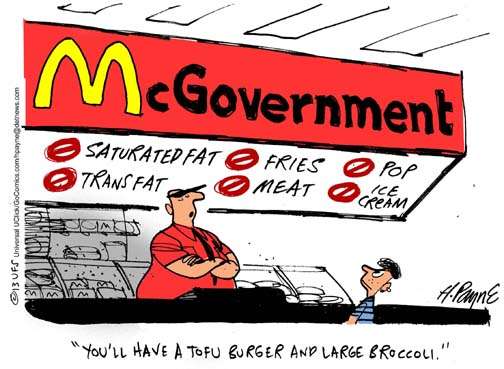
Another infliction on ordinary people by the food Fascists and their absurd theories
HP Sauce's recipe secretly changed after 116 years by American owners of the Great British Condiment

For more than a century HP Sauce has been a staple of many a British dining table.
But after 116 years of being produced to a carefully guarded recipe, the brown sauce which famously bears a picture of the Houses of Parliament on the label has been secretly altered at the request of Government health chiefs.
Heinz, the American company which bought the famous British brand in 2005, has changed the celebrated concoction that includes tomatoes, malt vinegar, molasses, dates, tamarind and secret spices to reduce the salt content.
The new recipe of Britain's best-loved brown sauce, synonymous with bacon sandwiches, fry-ups and sausage and mash, now contains 38 per cent less salt. But critics argue the change in salt levels for such small amounts of food makes no difference to our diet.
The previous version of HP Sauce contained 2.1g of salt per 100g. The new version contains 1.3g – but fans claim the change has come at a high price. They say it just doesn't taste the same.
The US company has altered the recipe despite launching a Reduced Salt And Sugar version at the same time. The new HP sauce recipe got the thumbs down from Michelin-starred chef Marco Pierre White.
He said he sent back a meal of sausages and mash at Mail on Sunday columnist Piers Morgan's Kensington pub The Hansom Cab last week. 'I sent the meal back, because I thought it was off,' he said. 'At first, I thought it was the sausages, but it wasn't. It was the HP, which tasted disgusting. It was definitely dodgy. I had no idea they had changed the recipe.
'I was brought up on HP Sauce in Yorkshire. My old man used to say ketchup was for Southerners and HP was for Northerners. My father would turn in his grave if he discovered they changed the recipe.'
Heinz made the changes after signing up to the Coalition Government's Responsibility Deal, a programme of targets for reducing the level of fats and salts used by food manufacturers. The key pledges include an agreement to reducing salt in food so people eat 1g less per day by end of 2012.
Health experts claim this measure will save the NHS £46 million a year within three years and prevent more than 4,000 premature deaths a year.
But as a result of the decrease in salt in the old sauce, the new line has more calories and carbohydrates. The new version also has less fibre, an essential part of a balanced daily diet. It has been reduced from 1.2g per 100g to 0.4g per 100g.
John Northey, from the Isle of Man, contacted Heinz to complain. In a letter to a newspaper, he wrote: 'Gone was the familiar tang and the sauce seemed bland and sickly. Heinz has spoiled a product enjoyed by generations, adversely affected its keeping qualities and, incidentally, increased the calorie count at a time when we're all being warned about obesity.'
The HP brand has not been without controversy in recent years. There was uproar in 2007 when production of this symbol of 'Britishness' was moved from Birmingham to Elst in the Netherlands, with the loss of 125 jobs.
A year later the company was again forced to defend the move after it was revealed that 18 months after axing HP Sauce in Birmingham on the grounds that production costs would be cheaper in Holland, it had also begun making it in Spain.
The sauce's appeal has crossed Britain's class divide, with generous dollops enjoyed at thousands of 'greasy spoon' cafes and by Prime Ministers. In the Sixties, it became known as 'Wilson's Gravy' after the wife of Prime Minister Harold Wilson let slip that his one fault was that 'he will drown everything in HP'.
SOURCE
Even though the best evidence is that there is NO harm in sugar, fat and salt
THE Coco Pops monkey and Paddle Pop lion would be scrapped under a Cancer Council proposal to ban cartoon characters and sports stars from spruiking unhealthy kids' food.
Cancer Council NSW, backed by the Obesity Policy Coalition and The Parents' Jury, are seeking a ban on promotional characters, movie tie-ins and the athletes who promote foods high in sugar, fat and salt.
Although stopping short of calling for plain packaging, Cancer Council nutritionist Kathy Chapman said regulations around the marketing of foods to children were urgently needed.
"What we'd like to see is the removal of these promotional characters - whether they're cartoon characters, sporting celebrities or movie tie-ins - from all foods that are high in fat, sugar and salt," she told The Sunday Telegraph.
Research by Cancer Council NSW and the University of Sydney's Prevention Research Collaboration found that nearly 74 per cent of promotional characters on Australian food packets promote products to children that would fail healthy nutritional standards.
Among the foods targeted are Bubble O'Bill ice-creams, which have 25 per cent of a child's recommended daily saturated fat intake in one 65g serve, and Kellogg's Froot Loops, which have almost three teaspoons of sugar per 30g serve. Coco Pops are more than one-third sugar and contain nearly a third of a child's daily sodium intake in one 30g serve.
It is estimated that one in four children are overweight or obese. Obesity Policy Coalition senior policy adviser Jane Martin backed the Cancer Council's call.
"We'd like to see these powerful kinds of endorsements by licensed characters, company-owned cartoons and celebrities not allowed on unhealthy foods," she said.
"Children in particular are vulnerable to this thing. They are familiar with the character so it's not surprising when you are using Sponge Bob Square Pants and Bart Simpson to advertise food that children relate to these characters."
Ms Martin said packaging was a key part of a promotional arsenal. While her organisation welcomed cricketers fronting Weet-Bix, which were high in fibre and low in salt, she said Ky Hurst spruiking the high-sugar cereal Nutri-Grain misleadingly gave it "a healthy halo".
Parents' Jury campaign manager Corrina Langelaan said plain packaging would be the first step in attacking pester power.
SOURCE
Another infliction on ordinary people by the food Fascists and their absurd theories
HP Sauce's recipe secretly changed after 116 years by American owners of the Great British Condiment
For more than a century HP Sauce has been a staple of many a British dining table.
But after 116 years of being produced to a carefully guarded recipe, the brown sauce which famously bears a picture of the Houses of Parliament on the label has been secretly altered at the request of Government health chiefs.
Heinz, the American company which bought the famous British brand in 2005, has changed the celebrated concoction that includes tomatoes, malt vinegar, molasses, dates, tamarind and secret spices to reduce the salt content.
The new recipe of Britain's best-loved brown sauce, synonymous with bacon sandwiches, fry-ups and sausage and mash, now contains 38 per cent less salt. But critics argue the change in salt levels for such small amounts of food makes no difference to our diet.
The previous version of HP Sauce contained 2.1g of salt per 100g. The new version contains 1.3g – but fans claim the change has come at a high price. They say it just doesn't taste the same.
The US company has altered the recipe despite launching a Reduced Salt And Sugar version at the same time. The new HP sauce recipe got the thumbs down from Michelin-starred chef Marco Pierre White.
He said he sent back a meal of sausages and mash at Mail on Sunday columnist Piers Morgan's Kensington pub The Hansom Cab last week. 'I sent the meal back, because I thought it was off,' he said. 'At first, I thought it was the sausages, but it wasn't. It was the HP, which tasted disgusting. It was definitely dodgy. I had no idea they had changed the recipe.
'I was brought up on HP Sauce in Yorkshire. My old man used to say ketchup was for Southerners and HP was for Northerners. My father would turn in his grave if he discovered they changed the recipe.'
Heinz made the changes after signing up to the Coalition Government's Responsibility Deal, a programme of targets for reducing the level of fats and salts used by food manufacturers. The key pledges include an agreement to reducing salt in food so people eat 1g less per day by end of 2012.
Health experts claim this measure will save the NHS £46 million a year within three years and prevent more than 4,000 premature deaths a year.
But as a result of the decrease in salt in the old sauce, the new line has more calories and carbohydrates. The new version also has less fibre, an essential part of a balanced daily diet. It has been reduced from 1.2g per 100g to 0.4g per 100g.
John Northey, from the Isle of Man, contacted Heinz to complain. In a letter to a newspaper, he wrote: 'Gone was the familiar tang and the sauce seemed bland and sickly. Heinz has spoiled a product enjoyed by generations, adversely affected its keeping qualities and, incidentally, increased the calorie count at a time when we're all being warned about obesity.'
The HP brand has not been without controversy in recent years. There was uproar in 2007 when production of this symbol of 'Britishness' was moved from Birmingham to Elst in the Netherlands, with the loss of 125 jobs.
A year later the company was again forced to defend the move after it was revealed that 18 months after axing HP Sauce in Birmingham on the grounds that production costs would be cheaper in Holland, it had also begun making it in Spain.
The sauce's appeal has crossed Britain's class divide, with generous dollops enjoyed at thousands of 'greasy spoon' cafes and by Prime Ministers. In the Sixties, it became known as 'Wilson's Gravy' after the wife of Prime Minister Harold Wilson let slip that his one fault was that 'he will drown everything in HP'.
SOURCE
Saturday, September 10, 2011
'Surfing the web is turning our brains to mush'
And where is the longditudinal double-blind evidence for this assertion? It's just opinion
HAVE you found yourself watching TV while talking on the phone and checking your emails? Already distracted reading that sentence? Well, you're not alone, the Herald Sun reported.
The internet has not only changed our lives, it's changed the way our brains work, according to research by visiting UK social psychologist Sheila Keegan.
Dr Keegan says the internet is reducing our ability to think and concentrate and, with long-term use, could cause brain dysfunction. "We spend huge and a growing number of hours on the internet and, as a result, our brains are returning to shallow thinking," she said. "We are being more easily distracted, and our thinking has developed a staccato quality that lacks concentration.
"The problem is so widespread that studies have also concluded that long-term internet addiction would result in chronic dysfunction of our brains, which is a pretty scary thought!"
Dr Keegan said more research was needed to be done on the long-term effects of persistent use of the internet, particularly in young children.
She said US research had revealed some children as young as five spent up to six hours a day in front of a screen. Lengthy periods spent alone in front of the TV or on the computer meant many young children were not developing the social skills they needed for later life.
"Kids need to have a good balance. They can learn a lot from the internet," she said. "But the human brain is quite malleable. It's hard to say what the long-term effects will be. There needs to be research. But it's a bit like climate change. We can't wait for it to happen."
Dr Keegan presented her paper, Are we losing our minds and should we be bothered?, at the Australian Marketing and Social Research conference in Sydney this week.
SOURCE
Rake some leaves to cut dementia risk: How exercise that gets the heart pumping slows condition
Garbage in garbage out. This seems mainly to be a survery of epidemiological opinion. Meta-anayses are important but can very easily be biased by author expectations
It might not feel great at the time, but raking in the autumn leaves and shovelling the winter’s snow has a silver lining. In fact, any exercise that gets the heart pumping may reduce the risk of dementia and slow the condition's progression once it starts, according to a Mayo Clinic study published this month in Mayo Clinic Proceedings.
Researchers examined the role of aerobic exercise in preserving cognitive abilities and concluded that it should not be overlooked as an important therapy against dementia. The researchers broadly defined exercise as enough aerobic physical activity to raise the heart rate and increase the body's need for oxygen. Examples include walking, gym workouts and activities at home such as shoveling snow or raking leaves.
'We culled through all the scientific literature we could find on the subject of exercise and cognition, including animal studies and observational studies, reviewing over 1,600 papers, with 130 bearing directly on this issue.
'We attempted to put together a balanced view of the subject,' says J. Eric Ahlskog, a neurologist at Mayo Clinic.
'We concluded that you can make a very compelling argument for exercise as a disease-modifying strategy to prevent dementia and mild cognitive impairment, and for favorably modifying these processes once they have developed.'
The researchers note that brain imaging studies have consistently revealed objective evidence of favorable effects of exercise on human brain integrity.
Also, they note, animal research has shown that exercise generates trophic factors that improve brain functioning, plus exercise facilitates brain connections (neuroplasticity).
More research is needed on the relationship between exercise and cognitive function, the study's authors say, but they encourage exercise, in general, especially for those with or worried about cognitive issues. 'Whether addressing our patients in primary care or neurology clinics, we should continue to encourage exercise for not only general health, but also cognitive health,' Dr. Ahlskog says.
SOURCE
Friday, September 09, 2011
Study: Pot smokers may be at lower obesity risk
One suspects the integrity of the self-report data this is based on. Pot users could report themselves as slimmer than they really are for a number of reasons: paranoia, frivolity, poor reality contact etc.
Despite the tendency of marijuana users to experience the "munchies," pot smokers may have a lower risk of obesity that those who don't use the drug, a new study finds. The results show the prevalence of obesity is lower among people who frequently smoke pot compared with those who have never inhaled.
The researchers said they were surprised by their initial results, because they expected to find the opposite. So they examined a second sample of people, and found exactly the same result. Together, the two samples studied more than 50,000 people.
The reason behind the link is not clear. It could be that people who use cannabis also engage in other behaviors that lower their obesity risk. Or it may be that pot smokers exercise more or have a specific diet that keeps them thin, said study researcher Yann Le Strat, a psychiatrist at Louis Mourier Hospital in France.
"On a personal point of view, I would be surprised that cannabis use is associated with a higher rate of physical activity, but this cannot be ruled out," Le Strat told MyHealthNewsDaily.
Another possibility is that components of cannabis may help people lose weight. If this turns out to be the case, researchers should investigate which components these might be and try to put them into drug form, Le Strat said.
Cannabis and obesity
Cannabis use is known to increase appetite. In studies, drugs have been developed to block a receptor in the brain that is activated by cannabis compounds (called the cannabinoid CB1 receptor) in the hope that the drugs would reduce hunger. However, very few studies have looked at the link between cannabis use and obesity.
Le Strat and colleagues examined data from two national surveys in the United States called the National Epidemiologic Survey on Alcohol and Related Conditions (NESARC) and the National Comorbidity Survey—Replication, involving about 41,600 and 9,100 people, respectively.
Between 4 and 7 percent of participants in these surveys reported using cannabis at least once in the last year. Obesity was assessed using participants' body mass index (BMI). The survey showed that about 22 to 25 percent of people who don't smoke pot were obese, while 16 to 17 percent of cannabis users were obese.
Obesity was less common among users who smoked pot more frequently. For instance, the NESARC survey showed about 14 percent of participants who used cannabis three days a week or more were obese, the researchers said. Between 0.7 and 1.8 percent of the sample smoked marijuana this frequently.
The participants reported their own BMI as well as cannabis use, so if they did not give accurate estimates of these measurements, the results could be skewed.
SOURCE
Oily fish and nuts 'cut chance of food allergies'
If you are a pig. It's speculation anyway. The changes in the gut observed have NOT been shown to lead to fewer allergies
Mothers-to-be can reduce the chances of their babies developing food allergies by eating a diet rich in oily fish and nuts, new research indicates.
Academics have discovered that omega-3 fatty acids - found in fish like salmon, mackerel and tuna, as well as walnuts, pumpkin seeds and linseeds - prompt the gut to develop in a way that boosts the immune system.
And they warn that more children could now be at risk of food allergies than in the past because consumption of such foods has fallen.
The team, from France's National Agricultural Research Institute (INRA), found that when mothers-to-be ate a diet high in a particular group of polyunsaturated fatty acids (PUFAs), the gut walls of their offspring were more permeable.
This allowed more broken down food substances and bacteria to pass into the bloodstream, triggering the baby's immune system to produce antibodies.
Dr Gaëlle Boudry, from the INRA, explained: "Our study identifies that a certain group of polyunsaturated fatty acids causes a change in how a baby’s gut develops, which in turn might change how the gut immune system develops."
She continued: "The end result is that the baby’s immune system may develop and mature faster – leading to better immune function and less likelihood of suffering allergies."
Food allergy appears to be a growing problem, with the number of related hospital admissions in Britain rising six-fold since 1990.
There is considerable debate about how real the reported increase actually is, however. The National Institute for Health and Clinical Excellence (Nice) last year estimated that while more than a third believed they were allergic to some form of food, only a tenth were found to be allergic when properly tested.
Nonetheless, a recent, robust study from the Isle of Wight found one in 20 children did have an allergy. It also found evidence that the real incidence was growing.
Allergy experts do not really know what is behind the rise. One theory is the 'hygiene hypothesis': that as homes have become cleaner, children's immune systems now have less chance to develop fully.
More and more attention is also being paid to the role of early exposure to foods, both in the first years of life and in the womb.
Dr Boudry said: "There is intense research interest in maternal diet during pregnancy. In the Western diet, the group of polyunsaturated fatty acids that we have shown to help gut function are actually disappearing – our dietary intake of fish and nut oils is being replaced by corn oils which contain a different kind of fatty acid."
Their research, published in The Journal of Physiology, added to evidence that consuming such fatty acids in pregnancy was beneficial for babies, she claimed.
"Other studies have found that a diet containing fish or walnut oil during pregnancy may make your baby smarter – our research adds to this, suggesting such supplements also accelerate the development of a healthy immune system to ward off food allergies."
She emphasised that their study was in pigs, but the research group believe the animal's intestine is an "excellent model of the human gut".
In the study, pregnant and lactating sows were given a dietary supplementation of linseed oil. The permeability of their offsprings' intestinal walls was than compared with that of piglets from sows not given the supplement.
SOURCE
Thursday, September 08, 2011
Socialising keeps you slim: Having lots of social contact burns off more fat than using a treadmill does
If you are a mouse
Keeping a busy social life amongst lots of friends may keep people slimmer than spending hours on a treadmill, according to scientists. They say that socialising and meeting with friends helps boost levels of 'brown fat' in the body which burns calories to generate heat. Living in a stimulating, social environment was found to reduce abdominal fat in mice by half over four weeks, even if they ate more.
US researchers say that social stimulation aids weight loss by converting white fat into brown. White stores calories and makes us fatter, while brown burns energy to generate heat.
Converting white fat into brown is notoriously difficult, normally requiring long term exposure to cold conditions or activating part of the body's nervous system. However, scientists from Ohio State University now think that having a busy social life is an even more effective way of changing white fat into brown.
The team came up with their theory by studying the effects of various living environments on mice. Those who lived alongside a greater number of mice, had more space and toys to stimulate them lost far more weight over the course of the study than their 'couch potato' counterparts.
Increased levels of brown fat may also be attributed to an increase in a brain chemical called brain-derived neurotrophic factor [BDNF] found in the sociable mice.
Study author Dr Matthew During, whose team's findings appear in journal Cell Metabolism said: I'm still amazed at the degree of fat loss that occurs. ‘The amount that comes off is far more than you would get with a treadmill. It's usually hard to induce the switch from white to brown fat.
‘It takes months of cold - you really have to push - and it doesn't induce brown fat to the same degree as what on the surface appears to be a relatively mild change in physical and social environments.’
Explaining how new technology had threatened face-to-face socialising, he added: ‘It's not just a sedentary lifestyle and high calorie foods, but an increasing lack of social engagement.’
Co-author Dr Lei Cao said: ‘After four weeks in the enriched environment, the animals' abdominal fat decreased by 50 per cent. ‘We often think of stress as a negative thing, but some kinds of stress can be good for your health. ‘In fact, the enriched housing is more taxing for the animals as they have to deal with each other and with a more complex environment.’
Dr Cao added: ‘The new result may offer insight into studies showing a link between loneliness and ill health. ‘Loneliness is a profound factor for cancer and death; it's on par with cigarette smoking. Social engagement is very important.’
SOURCE
Daily tipple boosts health in old age
Appropriate reservations are expressed below but the evidence for benefit from moderate alcohol use is extensive so it may be time to accept the relationship as real
Middle-aged women who indulge in a drink or two a day are boosting their chance of good health in their seventies, a new study claims. Enjoying a small tipple regularly and in moderation improves women's chances of avoiding heart disease, diabetes and other mental and physical disorders in later life, researchers found.
A study of 14,000 female nurses found that those who frequently drank one to two drinks a night, but no more, had a 30 per cent better chance of overall good health in their seventies than those who avoided alcohol altogether.
Drinking moderate amounts of alcohol on a nightly basis was shown to be healthier than indulging just once or twice a week. Women who drank on five to seven nights a week enjoyed a 50 per cent better chance of good health in later life than teetotallers.
Writing in the Public Library of Science journal, the researchers from the Harvard School of Public Health in Boston said their work showed that "regular, moderate consumption of alcohol" in their fifties could boost overall health among women who survive into their seventies.
Experts cautioned that the study did not prove that alcohol is good for the body and claimed the results could have been down to other lifestyle factors.
Associate Prof Jayne Lucke of the University of Queensland, Australia, said: "Drinking a small amount of alcohol may not cause women to age healthily. "Rather women who regularly drink a small amount may also have a number of other characteristics, such as good health, an active social life and a healthy appetite, that all work together to promote successful ageing."
NHS guidelines state that women should not regularly drink more than two or three units of alcohol a day, equal to one and a half standard 175ml glasses of wine or one pint of lager.
A study published last year by researchers in Paris indicated that moderate drinkers had lower rates of heart disease, obesity and depression than people who were teetotal.
The new findings showed that even drinking small amounts of alcohol can have a significant impact on health in later life. The American researchers measured alcohol intake in grams rather than units, with a glass of wine equal to about 10g and a bottle of beer including 13g.
The results showed that women with an average age of 58 who drank between 5 and 15g per night had a 20 per cent better chance of good health than non-drinkers, while those who drank 15g to 30g were 30 per cent more likely to be healthy in old age.
Dr Qi Sun, who led the study, said: "Low to moderate consumption of alcohol will slightly improve health for women in old age. We would still only recommend regular consumption of one drink per day because that is what the US health guidelines are."
But European guidelines are slightly higher and previous British studies have that as many as two drinks a night can have a positive health effect, he said.
Dr Sun added: "Even at moderate drinking levels it is highly recommended that you consume alcohol on a regular basis rather than binge drinking at the weekend. "But for lifetime non-drinkers we would not recommend drinking alcohol just to improve health, because studies have shown that regular exercise and healthy body weight are much more associated with better health at old age than alcohol."
SOURCE
Wednesday, September 07, 2011
How epidemiology works
(Data dredging illustrated)

Ibuprofen 'can double the risk of miscarriage' and many expectant mothers are unaware of the dangers
All that this probably shows is that women in poor health (as shown by their use of strong painkillers) are more likely to have miscarriages. The drug is an indicator, not a cause
Pregnant women who take painkillers such as ibuprofen are twice as likely to suffer a miscarriage, a study claims.
Scientists warn that tens of thousands of expectant mothers are taking the pills unaware of the dangers.
A major study has found that women who took ibuprofen or similar painkillers just before they conceived until the 20th week of pregnancy were 2.4 times more at risk.
Although there are clear warnings on the drugs’ packets stating they should not be used in pregnancy, as many as one in six expectant mothers still take them.
The study involved a group of painkillers known as Non-Steroidal Anti Inflammatory Drugs or NSAIDS, which include over-the-counter ibuprofen and naproxen.
Aspirin is also in this category although it wasn’t included in the study, while paracetamol is deemed safe.
The researchers believe taking any number of the drugs can lead to the embryo not being properly implanted in the womb meaning a woman is far more likely to suffer miscarriage – also known as a spontaneous abortion.
Around one in eight pregnancies end in miscarriage and the majority happen in the first 12 weeks.
Often there is no obvious cause but older women and those who smoke, drink heavily or are obese are at far higher risk.
The study published in the Canadian Medical Association Journal involved 47,050 women aged 15 to 45. Dr Anick Bérard of the University of Montreal said: ‘We consistently saw that the risk of having a spontaneous abortion was associated with gestational use of diclofenac, naproxen, celecoxib, ibuprofen and rofecoxib alone or in combination.
‘Women who were exposed to any type and dosage of non-aspirin NSAID during early pregnancy were more likely to have a spontaneous abortion.’
But doctors pointed out the risks of a woman suffering a miscarriage due to painkillers were very small. They also said the study did not take into account other possible causes such as smoking and obesity.
Dr Virginia Beckett, spokesman for the Royal College of Obstetricians and Gynaecologists, said: ‘It is important that any woman before conception and during pregnancy plans their pregnancy and reduces their risk of any complications through maintaining a healthy lifestyle. ‘It is safe to take paracetamol during pregnancy.’
SOURCE
(Data dredging illustrated)
Ibuprofen 'can double the risk of miscarriage' and many expectant mothers are unaware of the dangers
All that this probably shows is that women in poor health (as shown by their use of strong painkillers) are more likely to have miscarriages. The drug is an indicator, not a cause
Pregnant women who take painkillers such as ibuprofen are twice as likely to suffer a miscarriage, a study claims.
Scientists warn that tens of thousands of expectant mothers are taking the pills unaware of the dangers.
A major study has found that women who took ibuprofen or similar painkillers just before they conceived until the 20th week of pregnancy were 2.4 times more at risk.
Although there are clear warnings on the drugs’ packets stating they should not be used in pregnancy, as many as one in six expectant mothers still take them.
The study involved a group of painkillers known as Non-Steroidal Anti Inflammatory Drugs or NSAIDS, which include over-the-counter ibuprofen and naproxen.
Aspirin is also in this category although it wasn’t included in the study, while paracetamol is deemed safe.
The researchers believe taking any number of the drugs can lead to the embryo not being properly implanted in the womb meaning a woman is far more likely to suffer miscarriage – also known as a spontaneous abortion.
Around one in eight pregnancies end in miscarriage and the majority happen in the first 12 weeks.
Often there is no obvious cause but older women and those who smoke, drink heavily or are obese are at far higher risk.
The study published in the Canadian Medical Association Journal involved 47,050 women aged 15 to 45. Dr Anick Bérard of the University of Montreal said: ‘We consistently saw that the risk of having a spontaneous abortion was associated with gestational use of diclofenac, naproxen, celecoxib, ibuprofen and rofecoxib alone or in combination.
‘Women who were exposed to any type and dosage of non-aspirin NSAID during early pregnancy were more likely to have a spontaneous abortion.’
But doctors pointed out the risks of a woman suffering a miscarriage due to painkillers were very small. They also said the study did not take into account other possible causes such as smoking and obesity.
Dr Virginia Beckett, spokesman for the Royal College of Obstetricians and Gynaecologists, said: ‘It is important that any woman before conception and during pregnancy plans their pregnancy and reduces their risk of any complications through maintaining a healthy lifestyle. ‘It is safe to take paracetamol during pregnancy.’
SOURCE
Tuesday, September 06, 2011
Soda drinking under heavy attack
But where are the double-blind studies showing what harm it does? It's all just theory -- and wrong theories are a dime a dozen when subjected to double-blind test
Half of Americans drink a soda or sugary beverage each day - and some are downing a lot. One in 20 people drinks the equivalent of more than four cans of soda each day, even though health officials say sweetened beverages should be limited to less than half a can.
The Centers for Disease Control and Prevention released the figures Wednesday in a report said to be the government's first to offer national statistics for adults and kids.
Sweetened drinks have been linked to the U.S. explosion in obesity and related medical problems, and health officials have been urging people to cut back for years. Some officials have proposed an extra soda tax and many schools have stopped selling soda or artificial juices.
But advocates say those efforts are not enough, and on Wednesday, a coalition of 100 organizations announced a new push. The effort includes the American Heart Association and the some city health departments that plan to prod companies to stop the sale of sugary drinks on their property or providing them at business meetings - as Boston's Carney Hospital did in April. There will also be new media campaigns, like one starting soon in Los Angeles that will ask, "If you wouldn't eat 22 packs of sugar, why are you drinking it?"
The new CDC report may be ammunition. It found:
- About half the population drinks a sugared beverage each day.
- Males consume more than females, with teenage boys leading the pack. On average, males ages 12 through 19 drink the equivalent of nearly two cans of soda each day.
- Poor people drink more than the more-affluent. Low-income adults got about 9 percent of their daily calories from sugary beverages; for high-income adults, it was just over 4 percent.
- Blacks get more of their calories from sweetened beverages than other racial and ethnic groups.
The study is based on in-person interviews of more than 17,000 people in the years 2005 through 2008. They were asked to recount everything they ate and drank in the previous day. However, diet sodas, sweetened teas, flavored milks and 100 percent fruit juice did not count.
Healthy-eating recommendations call for people to limit sugary drinks to 64 calories per day. That's a little less than half of a 12-ounce can of regular Coca-Cola, which is 140 calories.
In other terms: An average can of sugared soda or juice has 10 to 12 teaspoons of sugar.
There have been efforts to reduce children's access to sodas and sports drinks in schools, with beverage companies agreeing to remove full-calorie soft drinks. But the CDC study found more than half of the drinks are consumed at home. Less than 1 percent are bought at schools or day-care centers.
That's why some members of the coalition argue that parents shouldn't drink sweetened beverages, so they don't serve as a poor example. They hope drinking soda will become as unfashionable as smoking.
A spokesman for Carney Hospital, the 149-bed Boston facility that stopped allowing full-calorie soft-drink sales, said the approach made sense. When the policy was implemented in April, sales of beverages dropped, but have gone back up, as more people apparently are adjusting to water and other non-sweetened drinks.
The hospital's Dorchester neighborhood has high rates of diabetes and other weight-related illnesses, said spokesman Joe Burnieika. "We can't afford to feed people's bad habits if we can give them a healthy alternative," he said.
In a statement, the American Beverage Association on Wednesday suggested that the coalition's effort was misguided. Citing sales data and some other research, the industry group said sales of full-calorie soft drinks had been declining, which they credited to soda makers offering more no-calorie and low-calorie options and improved calorie labeling on the front.
These initiatives "will contribute far more to solving complex health issues like obesity than (the coalition's) sound bite solution that offers plenty of hype but no substance," the statement said.
SOURCE
BAD SCIENCE by Ben Goldacre (Harper Perennial 2009) £12.99
Book Review by Dr. Alick Dowling.
This book is unknown to many MedChi members despite being hugely popular – it has entered the best-seller list recently. I, by chance, received a copy at Christmas from a nephew, who with his wife were fellow medical students with Goldacre in Oxford, qualifying in 1995.
The book proved an enjoyable read. Abounding with common sense as well as much combative material from his Bad Science weekly column in the Guardian, Goldacre’s aim is to correct much nonsense written by ‘scientific’ or ‘medical’ journalists that is wrong, frightens many readers and yet escapes editorial correction. His column has a large and devoted following, many of whom were at the Bath Literary Festival when Ben Goldacre spoke on March 1st 2009. Three hours earlier I had heard James Le Fanu introducing his Why Us? to his audience that Spring morning in the splendid Guildhall Banqueting Room. The review of Why Us? appeared last month on the MedChi website.
I had no thought then of doing the same for Ben Goldacre’s book. It had already reached a wide public; my only criticism would have been that it lacked an index. There are many reasons not to review a book – for example in the Spectator (May 2nd 2009) Nigel Lawson wrote: "As a general rule, I do not believe in reviewing bad books. Review space is limited, and the many good books that are published deserve first claim on it."1
My reason for not reviewing Goldacre’s book was the opposite. It is a good book and needed no more praise. When we were told the astonishing reason why a new (actually the original) version was now available I changed my mind. This includes the pivotal Chapter 10 The Doctor Will Sue You Now, omitted from the version published last year. Goldacre’s account of how this came about is lucid, revealing and gives an example of his style:
The missing index is explained. This is also available on the internet for owners of the original paperback, but unless it is completely rewritten it will only be valid for the first 9 chapters. Read the missing chapter free, and then decide whether to buy the new paperback.
The Chapter Bad Stats and its precursor Why Clever People Believe Stupid Things is of particular interest to doctors – not because they can be assumed to be Clever People, but because many do not realize how easily promoters of dubious theories manipulate us to accept ‘facts’ that are cleverly presented. Older doctors, never taught statistics, are more vulnerable than our younger colleagues. Goldacre uses clarity and simple terms to elucidate the subject. Malcolm Kendrick wrote a similar account about statistics in his book The Great Cholesterol Con (also reviewed on the MedChi website). For a comparison see below.
Goldacre’s aim to make ‘science’ accessible to ordinary readers is difficult to achieve, but he has the knack of doing so. He repeats the mantra: “I think you’ll find it’s a bit more complicated than that” when exasperated by the simplistic ‘explanations’ by ‘science’ journalists and even suggests it as a T-shirt slogan for the whole book.
His chapters on other individuals (including the new extraordinary account of Rath) are riveting. Professor Patrick Holford, the academic lynchpin at the centre of the British nutritionism movement, is dealt with in Chapter 9. It is not surprising that the ‘nutritionist’ Gillian McKeith took exception to Goldacre’s exposure in Chapter 7, but someone who has survived a legal encounter with Rath can easily dismiss her threats of legal action.
Goldacre’s introduction mentions the 50th anniversary of C.P. Snow’s lecture on the ‘Two Cultures’ of science and the humanities. Then arts graduates simply ignored science. No progress apparent since, but he is perceptive in seeing there has been a positive regression: "Today, scientists and doctors find themselves outnumbered and outgunned by vast armies of individuals who feel entitled to pass judgment on matters of evidence – an admirable aspiration – without troubling themselves to obtain a basic understanding of the issues."
The structure of the book is sensible and cleverly laid out – a steady crescendo from a gentle introduction in how science should be taught, through an increasingly serious range of how we should view what we are told by ‘experts’ with suspicion, then through the milder and less dangerous forms of foolishness – homeopathy makes its appearance here – through the placebo effect, onwards to the bigger fish such as Nutritionists, the way the pharmaceutical industry pulls the wool over the eyes of doctors and patients, the misuse of statistics already mentioned and culminating in what Goldacre finds most worrying, how people in positions of great power still commit basic errors when dealing with health scares. If we disagree with him he tells us that we’ll still be wrong but with a lot more panache and flair that we could possibly manage right now.
Received from the author. The chapter about Rath -- who claimed to cure AIDS by vitamins -- is here
Two examples of statistical jiggery pokery:
Goldacre:
Newspapers like big numbers and eye-catching headlines. They need miracle cures and hidden scares, and small percentage shifts in risks will never be enough for them to sell readers to advertisers (because that is the business model). To this end they pick the single most melodramatic and misleading way of describing any statistical increase in risk, which is called the ‘relative risk increase’.
Let’s say the risk of having a heart attack in your 50’s is 50% higher if you have high cholesterol. That sounds pretty bad. Let‘s say the extra risk of having a heart attack if you have high cholesterol is only 2%. That sounds OK to me. But they’re the same (hypothetical) figures. Let’s try this. Out of a hundred men in their fifties with normal cholesterol, four will be expected to have a heart attack. That’s two extra heart attacks per hundred. Those are called ‘natural’ frequencies.
Natural frequencies are readily understandable, because instead of using probabilities, or percentages, or anything even slightly technical or difficult, they use concrete numbers, just like the ones you use every day to check if you’ve lost a kid on a coach trip, or got the right change in a shop. Lots of people have argued that we evolved to reason and do maths with concrete numbers like these, and not with probabilities, so we find them more intuitive. Simple numbers are simple.
The other methods of describing the increase have names too. From our example above, with high cholesterol, you could have a 50% increase in risk (the ‘relative risk increase’); or a 2% increase in risk (‘the absolute risk increase’); or, let me ram it home, the easy one, the informative one, an extra two heart attacks for every hundred men, the natural frequency.
Malcolm Kendrick:
(p 192) quoting the Heart Protection Study (HPS) press release: If now, as a result, an extra 10 million high-risk people were to go onto statin treatment, this would save about 50,000 lives a year, that’s a thousand each week. Leaving aside the point that this 50,000 figure actually equates to one life ‘saved’ for every 200 taking the statin – ten million is an awful lot of people to use as your denominator – the concept of saving lives, suggesting as it does, that each of the 50,000 whose lives have been saved will go on to live a healthy life, is not best chosen.
In reality, taking a statin can only delay death, not prevent it. By how much? Well, if one in two hundred more people are alive after one year of taking statins, this means that if you wait another two-hundreths of a year (plus another little bit) the statin group will have caught up on the ‘placebo’ group in total number of deaths.
This represents an increased life expectancy of slightly under two days. So rather than stating that fifty thousand lives would be saved every year by taking statins, it would be considerably more accurate to state that if ten million people (at very high risk of heart disease) took a statin for a year they would live – on average – two days longer.
And if all ten million took a statin for two hundred years, they would all live – on average – an extra year. If we assume that most people would take a statin for thirty years maximum, this would lead to an average increase in lifespan of approximately two months.
Which doesn’t sound quite as dramatic as saving fifty thousand lives a year, or a thousand a week – or however you choose to hype up your figures. But there you go, it happens to be considerably more accurate.
Also remember that this benefit would only be seen in men with pre-existing heart disease. Women and men without pre-existing heart disease would not live a day longer. They would just have the dubious pleasure of thirty years of paying for drugs, worry and side effects.
But where are the double-blind studies showing what harm it does? It's all just theory -- and wrong theories are a dime a dozen when subjected to double-blind test
Half of Americans drink a soda or sugary beverage each day - and some are downing a lot. One in 20 people drinks the equivalent of more than four cans of soda each day, even though health officials say sweetened beverages should be limited to less than half a can.
The Centers for Disease Control and Prevention released the figures Wednesday in a report said to be the government's first to offer national statistics for adults and kids.
Sweetened drinks have been linked to the U.S. explosion in obesity and related medical problems, and health officials have been urging people to cut back for years. Some officials have proposed an extra soda tax and many schools have stopped selling soda or artificial juices.
But advocates say those efforts are not enough, and on Wednesday, a coalition of 100 organizations announced a new push. The effort includes the American Heart Association and the some city health departments that plan to prod companies to stop the sale of sugary drinks on their property or providing them at business meetings - as Boston's Carney Hospital did in April. There will also be new media campaigns, like one starting soon in Los Angeles that will ask, "If you wouldn't eat 22 packs of sugar, why are you drinking it?"
The new CDC report may be ammunition. It found:
- About half the population drinks a sugared beverage each day.
- Males consume more than females, with teenage boys leading the pack. On average, males ages 12 through 19 drink the equivalent of nearly two cans of soda each day.
- Poor people drink more than the more-affluent. Low-income adults got about 9 percent of their daily calories from sugary beverages; for high-income adults, it was just over 4 percent.
- Blacks get more of their calories from sweetened beverages than other racial and ethnic groups.
The study is based on in-person interviews of more than 17,000 people in the years 2005 through 2008. They were asked to recount everything they ate and drank in the previous day. However, diet sodas, sweetened teas, flavored milks and 100 percent fruit juice did not count.
Healthy-eating recommendations call for people to limit sugary drinks to 64 calories per day. That's a little less than half of a 12-ounce can of regular Coca-Cola, which is 140 calories.
In other terms: An average can of sugared soda or juice has 10 to 12 teaspoons of sugar.
There have been efforts to reduce children's access to sodas and sports drinks in schools, with beverage companies agreeing to remove full-calorie soft drinks. But the CDC study found more than half of the drinks are consumed at home. Less than 1 percent are bought at schools or day-care centers.
That's why some members of the coalition argue that parents shouldn't drink sweetened beverages, so they don't serve as a poor example. They hope drinking soda will become as unfashionable as smoking.
A spokesman for Carney Hospital, the 149-bed Boston facility that stopped allowing full-calorie soft-drink sales, said the approach made sense. When the policy was implemented in April, sales of beverages dropped, but have gone back up, as more people apparently are adjusting to water and other non-sweetened drinks.
The hospital's Dorchester neighborhood has high rates of diabetes and other weight-related illnesses, said spokesman Joe Burnieika. "We can't afford to feed people's bad habits if we can give them a healthy alternative," he said.
In a statement, the American Beverage Association on Wednesday suggested that the coalition's effort was misguided. Citing sales data and some other research, the industry group said sales of full-calorie soft drinks had been declining, which they credited to soda makers offering more no-calorie and low-calorie options and improved calorie labeling on the front.
These initiatives "will contribute far more to solving complex health issues like obesity than (the coalition's) sound bite solution that offers plenty of hype but no substance," the statement said.
SOURCE
BAD SCIENCE by Ben Goldacre (Harper Perennial 2009) £12.99
Book Review by Dr. Alick Dowling.
This book is unknown to many MedChi members despite being hugely popular – it has entered the best-seller list recently. I, by chance, received a copy at Christmas from a nephew, who with his wife were fellow medical students with Goldacre in Oxford, qualifying in 1995.
The book proved an enjoyable read. Abounding with common sense as well as much combative material from his Bad Science weekly column in the Guardian, Goldacre’s aim is to correct much nonsense written by ‘scientific’ or ‘medical’ journalists that is wrong, frightens many readers and yet escapes editorial correction. His column has a large and devoted following, many of whom were at the Bath Literary Festival when Ben Goldacre spoke on March 1st 2009. Three hours earlier I had heard James Le Fanu introducing his Why Us? to his audience that Spring morning in the splendid Guildhall Banqueting Room. The review of Why Us? appeared last month on the MedChi website.
I had no thought then of doing the same for Ben Goldacre’s book. It had already reached a wide public; my only criticism would have been that it lacked an index. There are many reasons not to review a book – for example in the Spectator (May 2nd 2009) Nigel Lawson wrote: "As a general rule, I do not believe in reviewing bad books. Review space is limited, and the many good books that are published deserve first claim on it."1
My reason for not reviewing Goldacre’s book was the opposite. It is a good book and needed no more praise. When we were told the astonishing reason why a new (actually the original) version was now available I changed my mind. This includes the pivotal Chapter 10 The Doctor Will Sue You Now, omitted from the version published last year. Goldacre’s account of how this came about is lucid, revealing and gives an example of his style:
Ben Goldacre‘s website April 9th, 2009
Chapter 10 in the original book – The Doctor Will Sue You Now, on Matthias Rath was removed, together with the index, from the first published version in Sep 08.
This is the “missing chapter” about vitamin pill salesman Matthias Rath. Sadly I was unable to write about him at the time that book was initially published, as he was suing my ass in the High Court. The chapter is now available in the new paperback edition, and I’ve posted it here for free so that nobody loses out.
Although the publishers make a slightly melodramatic fuss about this in the promo material, it is a very serious story about the dangers of pseudoscience, as I hope you’ll see, and it was also a pretty unpleasant episode, not just for me, but also for the many other people he’s tried to sue, including Medecins Sans Frontieres and more. If you’re ever looking for a warning sign that you’re on the wrong side of an argument, suing Medecins Sans Frontieres is probably a pretty good clue.
Anyway, here it is, please steal it, print it, repost it, whatever, it’s free under a Creative Commons license, details at the end. If you prefer it is available as a PDF, or as a word document. Happy Easter!
You are free to copy it, paste it, bake it, reprint it, read it aloud, as long as you don’t change it – including this bit – so that people know that they can find more ideas for free at www.badscience.net
This chapter did not appear in the original edition of this book, because for fifteen months leading up to September 2008 the vitamin-pill entrepreneur Matthias Rath was suing me personally, and the Guardian, for libel. This strategy brought only mixed success.
For all that nutritionists may fantasise in public that any critic is somehow a pawn of big pharma, in private they would do well to remember that, like many my age who work in the public sector, I don’t own a flat. The Guardian generously paid for the lawyers, and in September 2008 Rath dropped his case, which had cost in excess of £500,000 to defend. Rath has paid £220,000 already, and the rest will hopefully follow. Nobody will ever repay me for the endless meetings, the time off work, or the days spent poring over tables filled with endlessly cross-referenced court documents.
On this last point there is, however, one small consolation, and I will spell it out as a cautionary tale: I now know more about Matthias Rath than almost any other person alive. My notes, references and witness statements, boxed up in the room where I am sitting right now, make a pile as tall as the man himself, and what I will write here is only a tiny fraction of the fuller story that is waiting to be told about him. This chapter, I should also mention, is available free online for anyone who wishes to see it.
The missing index is explained. This is also available on the internet for owners of the original paperback, but unless it is completely rewritten it will only be valid for the first 9 chapters. Read the missing chapter free, and then decide whether to buy the new paperback.
The Chapter Bad Stats and its precursor Why Clever People Believe Stupid Things is of particular interest to doctors – not because they can be assumed to be Clever People, but because many do not realize how easily promoters of dubious theories manipulate us to accept ‘facts’ that are cleverly presented. Older doctors, never taught statistics, are more vulnerable than our younger colleagues. Goldacre uses clarity and simple terms to elucidate the subject. Malcolm Kendrick wrote a similar account about statistics in his book The Great Cholesterol Con (also reviewed on the MedChi website). For a comparison see below.
Goldacre’s aim to make ‘science’ accessible to ordinary readers is difficult to achieve, but he has the knack of doing so. He repeats the mantra: “I think you’ll find it’s a bit more complicated than that” when exasperated by the simplistic ‘explanations’ by ‘science’ journalists and even suggests it as a T-shirt slogan for the whole book.
His chapters on other individuals (including the new extraordinary account of Rath) are riveting. Professor Patrick Holford, the academic lynchpin at the centre of the British nutritionism movement, is dealt with in Chapter 9. It is not surprising that the ‘nutritionist’ Gillian McKeith took exception to Goldacre’s exposure in Chapter 7, but someone who has survived a legal encounter with Rath can easily dismiss her threats of legal action.
Goldacre’s introduction mentions the 50th anniversary of C.P. Snow’s lecture on the ‘Two Cultures’ of science and the humanities. Then arts graduates simply ignored science. No progress apparent since, but he is perceptive in seeing there has been a positive regression: "Today, scientists and doctors find themselves outnumbered and outgunned by vast armies of individuals who feel entitled to pass judgment on matters of evidence – an admirable aspiration – without troubling themselves to obtain a basic understanding of the issues."
The structure of the book is sensible and cleverly laid out – a steady crescendo from a gentle introduction in how science should be taught, through an increasingly serious range of how we should view what we are told by ‘experts’ with suspicion, then through the milder and less dangerous forms of foolishness – homeopathy makes its appearance here – through the placebo effect, onwards to the bigger fish such as Nutritionists, the way the pharmaceutical industry pulls the wool over the eyes of doctors and patients, the misuse of statistics already mentioned and culminating in what Goldacre finds most worrying, how people in positions of great power still commit basic errors when dealing with health scares. If we disagree with him he tells us that we’ll still be wrong but with a lot more panache and flair that we could possibly manage right now.
Received from the author. The chapter about Rath -- who claimed to cure AIDS by vitamins -- is here
Two examples of statistical jiggery pokery:
Goldacre:
Newspapers like big numbers and eye-catching headlines. They need miracle cures and hidden scares, and small percentage shifts in risks will never be enough for them to sell readers to advertisers (because that is the business model). To this end they pick the single most melodramatic and misleading way of describing any statistical increase in risk, which is called the ‘relative risk increase’.
Let’s say the risk of having a heart attack in your 50’s is 50% higher if you have high cholesterol. That sounds pretty bad. Let‘s say the extra risk of having a heart attack if you have high cholesterol is only 2%. That sounds OK to me. But they’re the same (hypothetical) figures. Let’s try this. Out of a hundred men in their fifties with normal cholesterol, four will be expected to have a heart attack. That’s two extra heart attacks per hundred. Those are called ‘natural’ frequencies.
Natural frequencies are readily understandable, because instead of using probabilities, or percentages, or anything even slightly technical or difficult, they use concrete numbers, just like the ones you use every day to check if you’ve lost a kid on a coach trip, or got the right change in a shop. Lots of people have argued that we evolved to reason and do maths with concrete numbers like these, and not with probabilities, so we find them more intuitive. Simple numbers are simple.
The other methods of describing the increase have names too. From our example above, with high cholesterol, you could have a 50% increase in risk (the ‘relative risk increase’); or a 2% increase in risk (‘the absolute risk increase’); or, let me ram it home, the easy one, the informative one, an extra two heart attacks for every hundred men, the natural frequency.
Malcolm Kendrick:
(p 192) quoting the Heart Protection Study (HPS) press release: If now, as a result, an extra 10 million high-risk people were to go onto statin treatment, this would save about 50,000 lives a year, that’s a thousand each week. Leaving aside the point that this 50,000 figure actually equates to one life ‘saved’ for every 200 taking the statin – ten million is an awful lot of people to use as your denominator – the concept of saving lives, suggesting as it does, that each of the 50,000 whose lives have been saved will go on to live a healthy life, is not best chosen.
In reality, taking a statin can only delay death, not prevent it. By how much? Well, if one in two hundred more people are alive after one year of taking statins, this means that if you wait another two-hundreths of a year (plus another little bit) the statin group will have caught up on the ‘placebo’ group in total number of deaths.
This represents an increased life expectancy of slightly under two days. So rather than stating that fifty thousand lives would be saved every year by taking statins, it would be considerably more accurate to state that if ten million people (at very high risk of heart disease) took a statin for a year they would live – on average – two days longer.
And if all ten million took a statin for two hundred years, they would all live – on average – an extra year. If we assume that most people would take a statin for thirty years maximum, this would lead to an average increase in lifespan of approximately two months.
Which doesn’t sound quite as dramatic as saving fifty thousand lives a year, or a thousand a week – or however you choose to hype up your figures. But there you go, it happens to be considerably more accurate.
Also remember that this benefit would only be seen in men with pre-existing heart disease. Women and men without pre-existing heart disease would not live a day longer. They would just have the dubious pleasure of thirty years of paying for drugs, worry and side effects.
Monday, September 05, 2011
The obesity scare raises its weighty head again
Ignore the doomsayers, and eat what you darn well please. Now for the wine, duck and Armagnac...
By Terry Wogan, a "leading media personality" in Britain
Hardly has the dust settled on urban rioting, than we’re faced with another, apparently major, crisis. Obesity. Don’t panic, Mr Mainwaring! This scare raises its weighty corpse from the dead every three years or so, when the public is perceived as breathing a little more easily. How long ago was it that young women, and girls particularly, were being warned against eating too little, and endangering their health? Now, they and the rest of us are being warned that we’re eating ourselves into an early grave, and worse, costing everybody, including the undeserving fit, a fortune in medical care.
I remember casting aspersions on the sanity of some utter dumbbell of a politician, whose name escapes me, but who, unless the old memory is playing hide and seek, counted obesity as great a danger to the human race as global warming. He’d already claimed that the same global warming was a bigger danger to mankind than terrorism. The logical conclusion: being overweight was more dangerous to life on earth than terrorism.
This time around, the bleating of the doomsayers is well up to speed: the British public should eat only as instructed, and those rotters, the food producers, should be similarly forced to come up with only what some expert has decided is good for us.
Yet doctors, dieticians, scientists and every deranged health-food guru have been at odds about what exactly is good for us since people could afford to be worried about what the next meal was going to be, rather than if there was going to be one.
In the tranquil area of France from which I write at present, the diet of the man in the street with the beret and baguette is one of wine, duck in all its forms (including the fat), lots of bread, and Armagnac to wash it all down. Heart attack on a plate, the rocky road to obesity? The inhabitants of this département live longer than any others in France.
In Spain, I was regularly presented with a chunk of country bread, grilled on an open fire, on which I was invited to spread liberal amounts of lard, until my stomach thought my hand had gone mad. I know, I know. The “experts” will tell me that this is “good” fat, far better for the children of Britain than an oven-baked chip, or a cheap pizza.
Maybe, but what is certain is that nobody, however qualified, has the right to tell anybody else what they should be eating. Or drinking. President Sarkozy of France, a great man for jumping on a bandwagon, is proposing a tax on fizzy drinks. What about human rights? The idea that tax should be levied on “wrong” food and drinks smacks too closely of dictatorship. It is the inalienable right of every man and woman in a free society to go to hell in their own handcart, as long as nobody else gets hurt.
Obesity is not catching, it’s up to you. And only you.
SOURCE
New £2.50-a-day stroke pill 'will help 1 million patients'
Almost anything would be better than warfarin. It's a very dangerous drug if you get the dose just a bit wrong. They poison rats with it
A stroke drug hailed as the biggest advance in blood-thinning for almost 60 years goes on sale today. More than a million Britons could benefit from Pradaxa, which is up to a third more effective than warfarin, the gold-standard blood-thinner, when it comes to preventing strokes.
The £2.50-a-day drug is the first of a new generation of anti-clotting medicines. Its release follows news of a similar drug, apixaban – also known as Eliquis – which was also found to be better and safer than warfarin.
The traditional treatment, which has been in use for more than half a century, is very effective but reacts with countless foods, alcohol and other medicines, with sometimes fatal consequences.
Pradaxa could vastly improve patients’ quality of life by allowing them to eat what they want without fear of upsetting the levels of medication in their blood and triggering a stroke or haemorrhage. It would also remove the need for the frequent blood tests associated with warfarin, which is also used as rat poison.
From today, Pradaxa, which is also known as dabigatran etexilate, can be used to thin the blood in people with atrial fibrillation, in which erratic beating of the heart raises the odds of stroke five-fold.
In a trial with more than 18,000 sufferers of the condition, it was 35 per cent better than warfarin at preventing strokes. Overall, around three-quarters of strokes were prevented. It also had fewer serious side-effects – although some patients struggled with indigestion.
One of the biggest advantages will be its ease of use. Warfarin users have to undergo blood tests as often as every two days to ensure they don’t accidentally take too much or too little of it. Most of them – including many pensioners – must make regular visits to their GP, even when they have been on the drug for years.
Some 1.2million Britons suffer from atrial fibrillation – which is blamed for more than 20,000 strokes a year – but many do not take warfarin because of its associated problems.
Trudie Lobban, of the Atrial Fibrillation Association, said: ‘Our members live in fear of suffering a disabling or fatal stroke. They have waited years for an alternative to current treatment.’
Professor John Camm, of St George’s Hospital in London, added: ‘This is a big leap forward. There are very few interactions with Pradaxa, so patients don’t have to be monitored every few weeks and they still get significant protection. It’s win-win.’
It remains to be seen whether the drugs rationing body, the National Institute for Health and Clinical Excellence, will judge the treatment, made by Boehringer Ingelheim, to be a good use of taxpayers’ money. Warfarin costs less than £15 per year.
A ruling on NHS use in England and Wales is expected by the end of the year. The equivalent body in Scotland is set to decide within two weeks.
SOURCE
Friday, September 02, 2011
The Inventiveness of Nanny knows no bounds
With passive smoking on the run, a new menace comes waddling into view (the Guardian reports:
Governments around the world need to make immediate and dramatic policy changes to reverse a pandemic of obesity which could affect an extra 11 million people in the UK over the next 20 years, public health scientists have warned.The call to act…comes in a series of papers published on Friday in the Lancet medical journal. The journal begins with a strongly-worded editorial arguing that voluntary food industry codes are ineffective and ministers must intervene more directly…There was a particular need for leadership ahead of a UN summit in New York next month on preventing non-communicable diseases such as diabetes and cancer, said one of the authors, Boyd Swinburn, from the centre for obesity prevention at Melbourne’s Deakin University..Swinburn’s paper comes up with a clear primary culprit: a powerful global food industry “which is producing more processed, affordable, and effectively-marketed food than ever before”. He said an “increased supply of cheap, palatable, energy-dense foods”, coupled with better distribution and marketing, had led to “passive overconsumption”.
Passive eating?
Naturally the individual is incapable of deciding these things for himself. And naturally, we have to think of, yes, wait for it, the children.
Another study by Steven Gortmaker from Harvard University’s school of public health, concludes that the response by governments has been a failure of will which mirrored previous struggles to tackle tobacco consumption. Ministers knew it made sense to crack down on junk foods but did not have the political appetite to take on such a huge industry.
“I think governments get it, but don’t know what to do about it, and don’t think it’s their responsibility. But it is their responsibility,” he said. His study lists eight cost-effective policies. Topped by a tax on unhealthy food and drink, the rest focus on shielding children from TV advertising or ensuring they exercise more.
SOURCE
Advertising Isn't the Obesity Boogeyman
With nearly one in three American children overweight, it's easy to question why anyone would oppose voluntary government guidelines that would severely restrict which foods can be marketed to children. What isn't addressed by many is the theory behind these proposed guidelines, crafted by a gang of four government agencies called the Interagency Working Group (IWG), without the support of scientific evidence or advertising statistics.
As the nation's obesity epidemic swells, food and advertising companies are coming under intense scrutiny, taking the blame from local and federal lawmakers for America's expanding waistline. The cornerstone of the IWG guidelines works from the predisposition that obesity is caused by advertising, even though no research supports this theory. The fact is, children are moving less and eating more. According to Health and Human Services data, fewer than 33% of children and adolescents aged 6 to 17 are engaged in 20 minutes of vigorous physical activity, while caloric intake for those aged 6-11 has remained relatively constant since 1974. It's no surprise that obesity rates have more than tripled during the past thirty years, when one also factors in the explosive use of technology devices among children.
No one would argue that the factors contributing to obesity range widely. But blaming America's kid bulge solely on television advertising is folly. Children are watching less television each day and therefore seeing fewer advertisements. From 2004 to 2010, food and beverage advertisements viewed per average child aged 2 to 11 years decreased from 2500 to around 1250 while advertising for cookies, snacks, and other candy decreased between 65%-99%.
It is unclear whether less advertising would lead to less consumption of the foods targeted by IWG guidelines. What is certain is that banning advertising for foods that do not meet these strict nutrition principles will increase prices for consumers. Though critics can find examples throughout the years of corporate advertisers knowingly promoting products with a health risk, the burden remains on companies to stay competitive in our free market, capitalist economy by responding to market pressure. More Americans are leading healthier lifestyles and want their children to do the same, so many food companies are tweaking their products accordingly. Recently, McDonald's added apple slices to its Happy Meals. Over the years, cereal companies have switched to whole grains and cut back on sugar and sodium content. And a group of manufacturers released their own guidelines for adjusting the ingredients of food marketed to children, which they had been working on for years before being targeted by the IWG.
In 2006, a group of 17 food manufacturers formed the Children's Food and Beverage Advertising Initiative (CFBAI) and released preliminary guidelines for greater self-regulation of food advertising to children. Once again in response to calls from consumers, the CFBAI has debuted a new set of voluntary guidelines to be enacted by 2014, making consistent recommendations that could lead to further changes in foods advertised to children. The new proposed standards don't give the companies a "pass" on improving. One-third of their products would be adjusted for fat, sugar and sodium content under the new guidelines, a step FTC Chairman Jon Leibowitz called "a significant advance and exactly the type of initiative the commission had in mind."
What's frustrating is this isn't enough for some critics. Lisa M. Powell, the researcher who authored a study for the University of Illinois at Chicago, commented to Reuters that the bulk of children's advertising is still fast food, and that advertising "makes [a parent’s] job that much tougher."
No matter how glitzy and glamorous food ads can be, rarely do they drive consumers to rush to the grocery store and purchase those marketed products. Moreover, children are not the primary purchasers of food for households. They're not behind the steering wheel, pulling up to the fast-food drive thru window or running into the convenient store for salty or sweet treats. It is parents who decide what to feed their children.
Parenting is tough indeed, but part of the job description is making choices that run contrary to what children may want at any given moment. It's rarely a success story when big government tries to parent - and this issue is no different.
SOURCE
Thursday, September 01, 2011
The freedom to be fat
"People of the same trade seldom meet together, even for merriment and diversion, but the conversation ends in a conspiracy against the public" – Adam Smith
As usual, Adam Smith was right. Today I can think of no trade about which the above is more true than the medical profession. I don’t just mean doctors’ use of occupational licensure laws to keep their prices artificially inflated. Politically active groups of doctors are possibly the greatest single threat to personal freedom that there is in the UK today. Their motivation isn't necessarily their wallets, but their egos. Bullies like to use the state to push people around so they feel powerful.
There’s a sad example of this in today’s call in the Lancet, a medical journal that is often used as a political mouthpiece by campaigning doctors, for the government to introduce a “fat tax” to curb obesity.
Of course, the proposal is utterly specious. It's pretty dubious whether the "obesity epidemic" claims are true or not. And which diet plan should be implemented? Is it bacon, sugar, bread or something else that makes us fat? Will political parties of this fat tax utopian future be divided between the Low-Carb Party and the Low-Fat Party? And what if fat people's early mortality rates mean that they actually save the government money in pension and care home bills?
The doctors err even by their own logic. As Will Wilkinson has pointed out, if fat taxers thought things through, they would favour a tax on fat people themselves, not on the food they eat. Taxing food punishes people who exercise so that they can enjoy Big Macs, but not people who are so lazy that they balloon out while eating a balanced diet.
The justification for pushing people around like this is the NHS. Shouldn’t people have to pay for their own illnesses? Well, yes – that’s how personal responsibility works. But having an NHS removes the personal responsibility, and artificial attempts to inject it into the system are doubly illiberal and wrong.
The government (and the electorate, for that matter) forces people to be in the NHS. You have no choice in the matter, and you can’t opt out of it. Jamie Whyte put it well: "first the do-gooders conjure up the external costs by insisting that no one should have to pay for his own medical care, then they tell us that they must interfere with behavior that damages our health because it imposes costs on others." This is perverse and illiberal. The tax would only affect the poor – rich people's spending habits wouldn't be dented. How easy it must be for doctors to pontificate about the need for a fat tax, knowing that such a tax would hardly affect them at all.
This creepy, controlling paternalism has plenty of fans in politics on both sides of the partisan divide. Doctors are the politicians' enablers, lending the weight of their “expertise” to the nanny instinct of the political class in exchange for the feeling of being important. No amount of expertise – medical or otherwise – should give somebody the right to interfere with another adult’s choices. Nor should democracy be used as an excuse to violate the sovereignty of the individual. If fat people are costing the NHS money, that's a mark against having an NHS, not against having fat people.
SOURCE
Subscribe to:
Posts (Atom)


