Tuesday, January 15, 2013
Could a cup of tea made from coffee leaves be the healthiest hot drink option?
This is just another variation on the stupid but uncrushable antioxidant theory. No evidence of its effects at all
For those who find ‘tea or coffee’ a question too far first thing in the morning, relief may soon be on hand – a combination of both.
Researchers claim they have discovered the ultimate brew – a tea made from coffee leaves which is healthier than both of the drinks.
The coffee leaf tea, which is said to have an ‘earthy’ taste that is less bitter than tea and not as strong as coffee, boasts high levels of compounds which lower the risk of diabetes and heart disease, experts said.
It also carries far less caffeine than traditional tea or coffee and contains antioxidant and anti-inflammatory properties.
The coffee leaves were analysed by researchers from the Royal Botanic Gardens in Kew, South-West London, together with researchers in Montpellier, France.
They believe the drink – from the leaves of the coffea plant – has thus far been overlooked because of the preoccupation with the plant’s seeds, coffee beans, which are nowhere near as healthy.
While there is evidence coffee leaf tea is drunk in places such as Ethiopia, South Sudan and Indonesia, previous attempts to import it into Britain from as early as the 1800s have been unsuccessful.
After analysing 23 species of coffee plant and finding many health benefits, the researchers now hope the coffee tea could rival the well-established types of coffee and black and green teas in Britain.
Dr Aaron Davies, a botanist at Kew, reported in the journal Annals of Botany that seven species of coffee plant contained high levels of mangiferin – a chemical usually found in mangoes which is believed to have anti-inflammatory effects as well as lowering cholesterol, protecting neurons in the brain and reducing the risk of diabetes.
The leaves were also found to hold high levels of antioxidants, which reportedly help combat heart disease, diabetes and cancer.
Dr Davies said: ‘In 1851 people were touting it as the next tea and there were all these reports about its qualities. It was said to give immediate relief from hunger and fatigue, and “clear the brain of its cobwebs”. It was also said to be refreshing – although some found it undrinkable.’
SOURCE
Brain-boosting milkshake claiming to reduce symptoms of early dementia goes on sale in the UK
This is just a con-job by a yoghurt company
A brain-boosting milkshake that is said to reduce symptoms of early Alzheimer's has gone on sale in the UK today. The drink contains a mix of ‘memory boosting’ nutrients including those found in breast milk and herring.
The ‘medical food’ comes after a decade of research into a formula food that might improve the brain function of people in the early stages of the disease.
It contains omega 3 fatty acids, the nutrient found in fish which is known to be good for the brain, with a daily dose equivalent to eating three or four herrings.
The drink also contains two other compounds normally present in the blood - uridine, which is produced by the liver and kidneys and found in breast milk, and choline found in meat, nuts and eggs - B vitamins and other nutrients.
It will be available over-the-counter in pharmacies and online at £3.49 for a daily dose - adding up to almost £1,300 a year - and consumers have to confirm they have consulted a doctor or other health professional.
Studies originally carried out by researchers at Massachusetts Institute of Technology suggest it helps improve memory performance after six months in people with mild Alzheimer’s who are not taking drugs.
However, a study on people with moderate Alzheimer’s who were on prescribed medication found no improvement.
The Alzheimer's Society has warned the milkshake 'is a lot less effective than current drugs available for people in the early stages of dementia'
Some have welcomed Souvenaid for providing a new dietary aid to improve the health of early Alzheimer’s patients, but critics warned it was an expensive option that was less effective than drugs.
The three main compounds in Souvenaid are needed by brain nerve cells to make phospholipids, the primary component of cell membranes that form synapses.
Dr David Wilkinson, Consultant in Old Age Psychiatry, said ‘Alzheimer’s disease is not part and parcel of aging but a serious and progressive disease of the brain which prevents us from being able to retain new memories.
‘As we age, our bodies become less efficient at processing essential nutrients, meaning that we need to increase our intake of food to absorb the same amount of nutrients in order to maintain a healthy body. In the same way, we need the right nutrients for our brains to keep them healthy.
‘Alzheimer’s disease sufferers often find it very difficult to get everything they need through diet alone and the nutritional intervention by the use of Souvenaid is a new area of research offering promising results for the management of early Alzheimer’s disease.’
Products marketed as food for special medical purposes do not have to go through the same EU regulatory process as drugs.
But they have to prove they are ‘safe and beneficial and effective in meeting the particular nutritional requirements of the persons for whom they are intended’ and must be taken under medical supervision.
People buying Souvenaid, which comes in two flavours vanilla and strawberry, are being urged to speak with a doctor, specialist nurse, dietitian or pharmacist first.
Professor Clive Ballard, director of research at the Alzheimer’s Society charity, said ‘People shouldn’t get excited that an off-the-shelf drink is going to transform the lives of people with dementia.
‘While past studies of this product have showed some benefits for memory, there is no evidence that it has an effect on other aspects of thinking or everyday life and there was also no benefit on other symptoms of dementia.
‘This is likely to cost about £1000 a year and is a lot less effective than current drugs available for people in the early stages of dementia.
‘For many older people with dementia where finances might be tight, people are probably much better off putting their money towards good quality care or taking part in exercise.
‘One in three people over 65 will develop dementia. It’s vital we continue to fund research into new treatments to enable people to live well with the condition.’
Souvenaid is made by Nutricia, the medical foods division of Danone Research.
SOURCE

Monday, January 14, 2013
CA: Regulations eased on homemade food businesses
Not before time. Hopefully it foretells similar action elsewhere
California's homemade food makers are now able to sell their products to restaurants and grocery stores, thanks to a new law that went into effect this year.
The California Homemade Food Act created a new category of producers called "cottage food producers," which will allow people to cook their food items right from their kitchens at home.
"We all are very optimistic and excited," said Patricia Kline of San Francisco, who makes and sells small fruit pies.
Kline sells her pies at farmer's markets, online and also does special events like weddings and lunches. She says one of the huge barriers to enter into this business was the requirement to use commercial kitchens.
"Having the this law in place will allow me to be able to take advantage of orders that come in that day, and take advantage of pop-up opportunities and pick-up wholesaling," she said.
Assemblyman Mike Gatto, a Democrat from Los Angeles, helped pioneer the new law after he read a story about Mike Stambler, a bread maker from Los Angeles who had his business shut down in 2011 after authorities discovered he was selling bread he made from his home. Gatto saw this as an opportunity to help those like Stambler and drafted the bill.
"If you want to enter the food production business, the barriers before this bill were enormous," Gatto said. "I just thought there was a lot of business demand for people who wanted to enter this business and they didn't have an outlet. I wanted to make it a bit easier for them," he said.
Approved items include jams, baked goods, cookies, coffee, nuts, vinegar, candy and dried pasta.
"We talked with the different health departments and various scientists, and these are products that are 99.9 percent safe," Gatto said.
Nutritionist Laura Cipullo says that if the food item is cooked, it will probably kill any type of food-borne illness, and since vinegar is acidic it would be less likely to carry bacteria.
"The pros are that they are made better, more wholesome and healthier and give more people the ability to have more jobs and a different variety of food," Cipullo said.
The state will require cottage food producers to a take a food-handling class and pass an exam that is created by the California Department of Public Health.
The California Restaurant Association does not see any major fallout for the restaurant industry with the new law. But it had initial concerns about whether the new cottage food producers would be held to similar food safety and sanitation standards as restaurants.
"We kind of have a wait-and-see attitude to see how the agencies enforce some the of standards that our outlined in the law," said Angelica Pappas spokesperson for the California Restaurant Association.
Kline believes this new law will help families create small businesses they need to help them make that extra money they need in a bad economy.
"It can only be a good thing to have a close relationship with you, the customer, and me, the producer of what you're going to eat," Kline said.
In 2013, the total revenue limit will be $35,000 and will rise to $50,000 by 2015.
"People view it as a way to become the small business and are very excited and very positive about the law and a lot of people think it will change their lives," said Gatto.
SOURCE
Drug could reverse 'permanent' deafness by regenerating hair cells in inner ear
Sounds hopeful but not really probable. Mice may have better regenerative abilities than humans
A potential cure for permanent deafness has been found by scientists using a drug that stimulates the inner ear. The drug, codenamed LY411575, triggers the regeneration of sensory hair cells.
Until now it has not been possible to restore the cells once they have been lost due to factors such as loud noise exposure, infection and toxic drugs. This type of deafness, often suffered by rock musicians and DJs, is generally assumed to be irreversible.
Scientists succeeded in partially restoring hearing to mice that had been deafened by loud noise. Although the research is at an early stage, they believe it could lead to effective treatments for acute noise-induced deafness in humans.
The tiny sensory hairs in the cochlea are vital to hearing. Sound vibrations transferred from the eardrum shake the hairs, causing nerve messages to be fired to the brain. Without the hairs, the hearing pathway is blocked and no signals are received by the brain’s auditory centre.
While birds and fish are capable of regenerating sound-sensing hair cells, mammals are not.
The new approach involves reprogramming inner ear cells by inhibiting a protein called Notch.
Previous laboratory research had shown that Notch signals help prevent stem cells in the cochlea transforming themselves into new sensory hair cells.
The drug LY411575 suppresses Notch. Mice with noise-induced hearing loss generated functioning sensory hair cells after the drug was injected into their damaged cochleas.
Lead researcher Dr Albert Edge, from Harvard Medical School in the US, said: 'We show that hair cells can be regenerated from the surrounding cells in the cochlea.
'These cells, called supporting cells, transdifferentiate into hair cells after inhibition of the Notch signalling pathway, and the new hair cell generation results in a recovery of hearing in the region of the cochlea where the new hair cells appear.
'The significance of this study is that hearing loss is a huge problem affecting 250 million worldwide.'
Details of the study are reported in the journal Neuron.
A green fluorescent protein was used to label the newly generated hair cells.
Electronic measurements of auditory brainstem responses confirmed that three months after treatment, lost hair cells had been replaced and were working. Improvement in hearing was seen over a wide range of frequencies.
Dr Edge added: 'The missing hair cells had been replaced by new hair cells after the drug treatment, and analysis of their location allowed us to correlate the improvement in hearing to the areas where the hair cells were replaced.
'We’re excited about these results because they are a step forward in the biology of regeneration and prove that mammalian hair cells have the capacity to regenerate.
'With more research, we think that regeneration of hair cells opens the door to potential therapeutic applications in deafness.'
Vivienne Michael, chief executive of the charity Deafness Research UK, said: 'As always, we have to be cautious about new research findings but this US research is extremely encouraging.
'At the moment there is no way of reversing eight in 10 cases of hearing loss, including noise-induced deafness and the progressive deafness so many of us experience as we age - hearing aids are the only answer.
'These results show just how important it is to increase the investment in research into medical treatments that could prevent or reverse hearing loss and improve the quality of life for the millions of people affected.'
SOURCE
Sunday, January 13, 2013
Sweet soft drinks may raise risk of depression
It's only a conference paper so far so is difficult to evaluate but apparently BOTH sugar and aspartame intake were associated with depression. Sugar and aspartame are very different chemicals so is it the bubbles in pop that are bad for you? Perhaps the real question is why do depressed people like pop?
If you are feeling low, it may be best to lay off the fizzy drinks and have a cup of coffee instead. A study has linked soft drinks to depression – with diet versions particularly problematic. Coffee, however, appeared to have the opposite effect.
The finding comes from US researchers who studied the drink consumption of 265,000 men and women aged 50 to 71. Ten years into the study, the volunteers were asked if they had been diagnosed with depression in the previous five years.
Those who drank more than four cans of soft drinks a day were 30 per cent more likely to have had depression than those who drank none, the American Academy of Neurology conference heard. The risk seemed greater among those who preferred diet drinks.
The researchers said this may be due to the presence of the artificial sweetener aspartame, which yesterday was provisionally given a clean bill of health by the European Food Safety Authority, following a review.
Making the link does not prove soft drinks cause depression. But researcher Honglei Chen said: ‘While our findings are preliminary and the underlying biological mechanisms are not known, they are consistent with a small but growing body of evidence suggesting that artificially sweetened beverages may be associated with poor health.’
The study found that those who had four cups of coffee a day were 10 per cent less likely to become depressed than non-coffee drinkers. Dr Chen said this may be due to the caffeine in coffee stimulating the brain.
The British Soft Drinks Association urged caution over the findings and pointed out that the scientists themselves said that more research is needed.
SOURCE
"Superfoods" can make cancer MORE likely, says pioneer of DNA study
Mega-pesky!
Fashionable anti-cancer superfoods and supplements do not prevent the disease and may even cause it, according to a scientist who helped discover the structure of DNA.
James Watson said the cure for many cancers will remain elusive unless scientists rethink the role of antioxidants, which include vitamin pills and food such as blueberries and broccoli.
It is widely believed they boost health and fight cancer by mopping up oxygen molecules called free radicals. But Dr Watson argues these may be key to preventing and treating cancer – and depleting the body of them may be counter-productive.
Free radicals not only help keep diseased cells under control, they are also pivotal in making many cancer drugs, as well as radiotherapy, effective, he believes.
Writing in a journal published by the Royal Society, the 84-year-old Nobel laureate stated that antioxidants ‘may have caused more cancers than they have prevented’.
‘For as long as I have been focused on the curing of cancer, well-intentioned individuals have been consuming antioxidative nutritional supplements as cancer preventatives, if not actual therapies,’ he said.
‘In light of recent data strongly hinting that much of late-stage cancer’s untreatability may arise from its possession of too many antioxidants, the time has come to seriously ask whether antioxidant use much more likely causes than prevents cancer.’
He said a vast number of studies had found antioxidants including vitamins A, C and E and the mineral selenium, to have ‘no obvious effectiveness’ in preventing stomach cancer or in lengthening life. Instead, they seem to slightly shorten the lives of those who take them, and vitamin E may be particularly dangerous.
The American, who describes his theory as among his most important work since the DNA breakthrough with British colleague Francis Crick in 1953, said blueberries may taste good but give no protection against cancer. The study by Dr Watson, based at the Cold Spring Harbor Laboratory in New York, is published in the journal Open Biology.
He has caused uproar in the past with his opinions on race, intelligence, beauty and homosexuality.
Professor Nic Jones, of Cancer Research UK, agreed that studies showed antioxidants were ineffective for cancer prevention in healthy people and can even slightly increase the risk of the disease.
He said vitamins and minerals should be obtained through a healthy and balanced diet.
SOURCE
Friday, January 11, 2013
Tablet made from ginseng could boost a man's love life
"showed a small but significant improvement in sexual function ". It's no Viagra
It's long been used by the Chinese as an aphrodisiac, but new research claims tablets made from ginseng really can perk up a man's love life. A South Korean study found men with erectile dysfunction improved their performance in the bedroom after taking the tablets for just a few weeks.
Although some previous studies have suggested ginseng can help tackle impotence, many have been conducted in mice.
The latest research involved more than 100 men who had been diagnosed with erection problems.
Impotence affects one in ten men in the UK at some point in their lives. Although drugs such as Viagra, Cialis and Levitra have revolutionised treatment in the last ten years, around 30 per cent of men who take them see no improvement.
For these men, the only other options are to inject drugs straight into the penis, or use a pump that manually increases blood supply to the organ. Neither is very popular.
While herbal remedies like ginseng have been touted as alternative treatments, the evidence to support their use has been lacking.
Ginseng is a plant that has been used for thousands of years to bolster overall health.
The root contains several active substances, called either ginsenosides or panaxosides, that are thought to be responsible for the medicinal effects of the herb.
Scientists at the Yonsei University College of Medicine in Seoul, South Korea, recruited 119 men with mild to moderate erectile dysfunction.
The group was split into two and while half took four tablets a day containing extracts of Korean ginseng berry, the rest took identical dummy pills.
After eight weeks, researchers measured improvements by using a recognised scale called the International Index of Erectile Dysfunction.
The results, published in the International Journal of Impotence Research, showed a small but significant improvement in sexual function in the ginseng group compared to those on the dummy tablets.
In a report on their findings the researchers said: 'Korean ginseng berry extract improved all domains of sexual function. 'It can be used as an alternative to medicine to improve sexual life in men.'
SOURCE
Parents sentencing their children to cancer by letting them sit in front of TV and computer screens for hours on end?
More WCRF rubbish. They are scaremongers for profit. "A review of several studies" is their evidence. Leaving out the ones that don't suit them, of course
Millions of parents are putting their children at risk of cancer because they let them spend too long sitting – either watching TV, playing computer games or surfing the internet.
Doctors have today delivered a stark warning that a generation of youngsters is also at risk of obesity, heart disease and diabetes because of their sedentary lifestyles.
Even more worrying is that children who do exercise regularly are still at risk, because long periods of inactivity could still lead to obesity.
Experts have now urged parents to limit the amount of time children spend being sedentary to two hours a day.
But a 2011 study by the World Cancer Research Fund (WCRF) found that the average child in the UK is already exceeding this by watching more than two-and-a-half-hours of television and surfing the internet for an hour and 50 minutes a day.
Dr Rachel Thompson, deputy head of science at the World Cancer Research Fund told MailOnline that even if children exercise, they can still develop dangerous bad habits if they are allowed to spend hours a day inactive.
She said: ‘We know that being physically active as a child means you’re more likely to continue to be so as an adult.’
Professor Mitch Blair of the Royal College of Paediatrics and Child Health told the Daily Mirror that children are 'exposed to screens' more than ever before.
He said: 'We are becoming increasingly concerned that this encourages a more sedentary lifestyle’, adding that screen time should be limited to no more than two hours a day.
The research agency Childwise says children spent an average of 5.9 hours a day in front of the TV, a games console or a compute.
And just last month, the latest NHS figures revealed that a third of final year primary school children are overweight or obese.
The exact mechanism of how being sedentary causes cancer is still relatively unknown. But it’s thought that physical activity decreases the risk of cancer by reducing inflammation in the body – which is linked to developing the condition, Dr Thompson said.
Being active also reduces body fat – it’s known that obese people have higher levels of inflammation in the body – and increases insulin sensitivity, thereby reducing the risk of diabetes.
She added: 'Being overweight also increases levels of certain hormones such as oestrogen, and this has been linked with an increased risk of certain cancers, such as breast.’
Indeed, the most physically active women are 20 per cent less likely to get the disease than their most sedentary counterparts, according to Cancer Research UK.
Furthermore, an increasing body of research is linking a lack of physical activity to between 6 and 10 per cent of all cases of heart disease, type-2 diabetes, and breast and bowel cancer.
The charity says a review of several studies showed a 24 per cent risk reduction for colon cancer in the most versus least active men, and a 21 per cent risk reduction in the most active women.
Physical activity may affect colon cancer risk in various ways, including the time it takes for waste to pass through the body, inflammation and insulin resistance and hormone levels.
Being more active also reduces the risk of endometrial cancer by 30 per cent.
Last year, Britain was labelled one of the most sedentary populations on Earth, with almost twice the proportion of people defined as 'inactive' as in neighbouring France.
SOURCE
Thursday, January 10, 2013
How deadly peanut allergies can be cured... with peanuts: Holding tiny dose under tongue 'can build tolerance'
I have been saying for ages that peanuts are the cure for peanut allergy
A new treatment could help peanut allergy sufferers get over their potentially deadly intolerance to the popular pub snack.
Trials of sublingual immunotherapy treatments, where patients are given doses of allergens in gradually increasing amounts, suggest the technique could one day be used as a cure for the allergy.
However, experts carried out the tests under strict conditions and have warned people not to try a similar experiment themselves.
Around one in a 100 people in the U.S. and UK is allergic to peanuts, and reactions range from mere watery eyes to potentially fatal anaphylactic shock.
For sufferers even eating a tiny amount of peanut can lead to a deadly reaction. Many must carry around special medicines like epinephrine-containing pens for emergency treatment in case they eat contaminated food.
The prevalence of peanut allergy is increasing, however there is as yet no clinical treatment available for sufferers other than strict dietary elimination.
New research published in the the Journal of Allergy and Clinical Immunology this month however shows that giving patients gradually increasing doses of a liquid containing peanut powder could help them to build up a tolerance.
The patients first hold the liquid under the tongue for 2 minutes and then swallow it.
Dr Wesley Burks, a professor at the University of North Carolina School of Medicine, said the results of the research were 'encouraging'. 'The immune response was stronger than we thought it might be, and the side effects of this treatment were relatively small,' he said, 'However, the magnitude of the therapeutic effect was somewhat less than we had anticipated. That's an issue we plan to address in future studies.'
Dr Burks and Dr David Fleischer, of National Jewish Health in Denver, Colorado, recruited 40 peanut allergy sufferers aged between 12 and 37, and randomly gave them either daily peanut sublingual therapy or a placebo.
All were given a baseline oral food challenge of up to 2g of peanut powder to test how much peanut powder they could consume without symptoms.
After 44 weeks, all were given a second oral food challenge. Those who were able to consume either 5g, or at least 10-fold more peanut powder than their baseline amount, were considered to be responders (i.e., desensitised to peanut).
At 44 weeks, 70 per cent of those who received peanut therapy were responders, compared to 15 per cent of those who were given the placebo.
Among the responders, the median amount of peanut powder they could successfully consume without symptoms increased from 3.5 to 496 milligrams.
After 68 weeks, that amount increased significantly, to 996 milligrams.
Of 10,855 peanut doses given through week 44 of the study, 63.1 per cent were symptom-free. When oral and pharyngeal symptoms were excluded from the analysis, 95.2 per cent of doses were symptom-free.
The study concluded that peanut sublingual therapy safely induced desensitisation in a majority of participants compared to a placebo, and that the longer that treatment continued the more peanut powder they could safely eat.
However, Dr Burks cautions, this is not a treatment that people should try on their own.
For now it's a treatment that should only be given by medical professionals in a carefully monitored clinical trial, he said.
SOURCE
Are our genes to blame? Obesity has 'very strong' genetic component, claim researchers
And I have been saying this for ages too. And the evidence is not limited to mice
Genes are largely to blame for bulging waistlines, a study has found. While diet plays a key role in obesity, some people are programmed to get fat easily, research from the US suggests.
Although the work focused on mice, it is believed to be just as relevant to humans.
Lead scientist Dr Brian Parks, from the University of California at Los Angeles (UCLA), said: 'Our research demonstrates that body-fat responses to high-fat, high-sugar diets have a very strong genetic component, and we have identified several genetic factors potentially regulating these responses.
'We found that obesity has similar genetic signatures in mice and humans, indicating the mice are a highly relevant model system to study obesity.
'Overall, our work has broad implications concerning the genetic nature of obesity and weight gain.'
Dramatic increases in obesity over the past few decades have been linked to high-calorie sugar and fat-rich diets as well as sedentary 'couch potato' lifestyles.
But the new research indicates that body-fat responses to food are to a large extent hard-wired in to our DNA.
Over the course of the two-year study, the UCLA team looked at the effect of high-calorie diets on more than 100 strains of laboratory mice.
The scientists located 11 regions of the genetic code associated with obesity and fat gain due to diet. Several of these overlapped with genes identified in human studies.
'We measured the change in fat dynamically at five different points following a high-fat, high-sugar feeding, providing strong evidence for a genetically controlled body-fat set-point,' said Dr Parks.
'Our use of inbred mice strains also enabled detailed analysis of the relationship between obesity traits, gene expression, intestinal flora and diet.'
Dietary responses varied greatly across strains, according to the findings reported in the online edition of the journal Cell Metabolism.
Increases in body fat as a proportion of weight ranged from zero to 600%.
Most mice strains responded during the first four weeks of a high-calorie diet and did not accumulate more fat during the remainder of the study. This suggests they reached a natural upper threshold limit after which continued fat gain was resisted by genetic mechanisms.
'We observed high heritability of about 80% for body-fat percentage across the study timeline,' said co-author Professor Jake Lusis, also from UCLA.
'Changes in body-fat percentage after high-fat, high-sugar feeding were also highly heritable, suggesting that dietary responses are strongly controlled by genetics.'
The findings are consistent with generational patterns of body mass index and obesity seen in humans, said the researchers.
'Our results emphasise the importance of gene-by-environment interactions, with important implications for an understanding of the overall genetic architecture of obesity,' said Prof Lusis said.
'In particular, it will be of interest to examine behavioural and neurological differences among the strains as they relate to obesity traits.'
SOURCE
Wednesday, January 09, 2013
How doctors are using Coca-Cola to treat painful stomach blockages
I can see the headline now: "Coke is good for you!" Much teeth-grinding among the food freaks
Doctors are using Coca-Cola to treat a painful stomach condition, sparing patients from surgery. They have discovered that the fizzy drink is highly effective at dealing with a condition known as a gastric phytobezoar.
This is a stomach blockage which, unless it is successfully removed or destroyed, can subsequently lead to a bowel obstruction.
It is often caused by certain fruits which do not digest properly - for instance, in Asia many cases are a result of eating persimmons which are particularly prone to form blockages.
A variety of treatments are available to treat it, from lasers and non-surgical endoscopies to the last resort of full surgery.
Now, new research has shown that Coca-Cola has a success rate of more than 90 per cent in treating the condition.
This is because it has chemical ingredients that do a similar job to gastric acid - in helping to digest fibre - while the bubbles help speed up the process.
Even the Diet and Coke Zero options work, because they have the same basic ingredients as the 'full fat' version, said the report published in the journal Alimentary Pharmacology and Therapeutics.
The researchers from the University of Athens went through published academic papers that detailed 46 patients with the ailment who were treated with Coke in hospitals worldwide over the past 10 years.
Of those given Coca-Cola, exactly half saw the drink destroy the blockage completely and a further 19 only needed non-invasive treatments as a result of Coke's help. Only four needed full surgery, giving Coca-Cola a success rating of 91.3 per cent.
The study reported: 'Coca-Cola administration is a cheap, easy-to-perform and safe procedure that can be accomplished at any endoscopy unit.'
Coca-Cola has an acidity rating of 2.6 on the pH scale because it contains both carbonic and phosphoric acid.
The researchers added: 'It resembles gastric acid, which is thought to be important for fibre digestion. 'In addition the bubbles enhance the dissolving mechanism.'
If the Coke does not completely destroy whatever is causing the blockage then it is likely to make it smaller and soften the phytobezoar making it easy to remove without the need for full surgery, the report said.
SOURCE
Beta blockers 'could cut Alzheimer's risk': Drugs found to protect against changes in the brain
Unpublished article about a small (52) and very unrepresentative sample.
Drugs prescribed since the 1960s to lower blood pressure may cut the risk of Alzheimer’s disease, researchers claim.
A study suggests beta blockers protect against changes in the brain which can be signs of Alzheimer’s and other types of dementia.
Having high blood pressure – hypertension – in middle age puts patients more at risk of developing these conditions, as well as heart and circulatory disorders.
But the latest research suggests drugs taken for high blood pressure can offer some protection.
The study examined the brains of 774 elderly Japanese-American men after death. They had all taken part in the Honolulu-Asia Aging Study.
Of the men, 610 had high blood pressure or were being treated for high blood pressure.
Among the 350 who had been treated, 15 per cent had received beta blockers alone, 18 per cent had been given beta blockers plus another high blood pressure medication and the rest had received other blood pressure drugs.
The study found that all types of high blood pressure treatments were clearly better at protecting the brain than no treatment, according to preliminary data presented yesterday at the American Academy of Neurology’s annual meeting in San Diego.
But men who had been given beta blockers as their only blood pressure medication had fewer brain abnormalities compared with those who had not been treated for hypertension, or those who had received other high blood pressure drugs.
The brains of men who had received beta blockers along with other high blood pressure medication showed an intermediate reduction in brain abnormalities.
These included two distinct types of brain lesion – those indicating Alzheimer’s disease, and lesions called microinfarcts, usually attributed to tiny, unrecognised strokes.
And whether they had taken beta blockers alone or in combination with another blood pressure medication, those treated had significantly less shrinkage in their brains.
Study author Dr Lon White, of the Pacific Health Research and Education Institute in Honolulu, said: ‘These results are exciting, especially since beta blockers are a common treatment for high blood pressure.’
Dr Simon Ridley, of Alzheimer’s Research UK, said: ‘Hypertension is a known risk factor for Alzheimer’s and other causes of dementia, and keeping high blood pressure in check could be important for preventing these diseases.
‘This study suggests a link between the use of beta blockers and fewer signs of dementia, but as the results of this study have yet to be published in full, it’s not clear what caused this link.
‘It’s important to note that this study only looked at Japanese-American men, and these results may not be applicable to the wider population.
‘While we can’t conclude from this study that beta blockers can prevent dementia, a better understanding of the links between high blood pressure and dementia could be crucial for developing new treatments or approaches to prevention.’
Jessica Smith, research officer for the Alzheimer’s Society, said: ‘Understanding the relationships between different blood pressure drugs and Alzheimer’s is not only useful for risk reduction but also Alzheimer’s treatment development.
‘However, this is a small study and more research is needed on a larger scale to find out why beta blockers might have this effect.’
SOURCE
Tuesday, January 08, 2013
A daily tomato pill to cut heart attacks: Drug 'boosts blood flow and artery health'
This lycopene story has been around for a while now. Only so far tested for a short period on a small group of elderly patients who have already had heart attacks. May not generalize
No one would much like the idea of eating 6lb of tomatoes a day. But if their goodness was popped in an easy-to-swallow pill that you were told might prevent strokes and heart attacks you would probably be putting in an order tomorrow.
Researchers believe they may have come up with just that after trials on the supplement Ateronon.
The daily pill contains a chemical called lycopene which makes tomatoes red and is known to break down fatty deposits in the arteries.
A Cambridge University study found taking the capsule boosted blood flow and improved the lining of vessels in patients with pre-existing heart conditions. It also increased the flexibility of their arteries by 50 per cent.
The scientists believe it could limit the damage caused by heart disease – responsible for 180,000 deaths a year – and help cut the 49,000 deaths a year from strokes.
They also hope it could benefit those with arthritis, diabetes and even slow the progress of cancer.
Each pill provides the equivalent of eating around 6lb of ripe tomatoes.
Studies have shown eating a Mediterranean-style diet rich in tomatoes, fish, vegetables, nuts and olive oil can significantly reduce cholesterol and help prevent cardiovascular disease.
Preliminary results from a two-month trial, in which the pill was given to 36 heart disease patients and 36 healthy volunteers with an average age of 67, were presented at a meeting of the American Heart Association.
It was shown to improve the function of the endothelium – the layer of cells lining blood vessels. It also boosted their sensitivity to nitric oxide, the gas which triggers the dilation of the arteries in response to exercise.
Ian Wilkinson, of Cambridge University’s clinical trials unit, said: ‘These results are potentially very significant, but we need more trials to see if they translate into fewer heart attacks and strokes.’
Peter Kirkpatrick, a leading neurosurgeon and medical adviser to CamNutra, which has developed Ateronon, said: ‘It is too early to come to firm conclusions, but the results from this trial are far better than anything we could have hoped for.’
Further studies are planned, with researchers hoping it could offer an alternative to statins for heart disease sufferers who cannot take the cholesterol-lowering drugs.
Mike Knapton, of the British Heart Foundation, said: ‘Although this showed lycopene improved blood flow in people with heart disease, that’s a long way from demonstrating that taking it could improve outcomes for people with heart disease.
The best way to get the benefits of a Mediterranean diet is to eat plenty of fresh fruit and vegetables.’
SOURCE
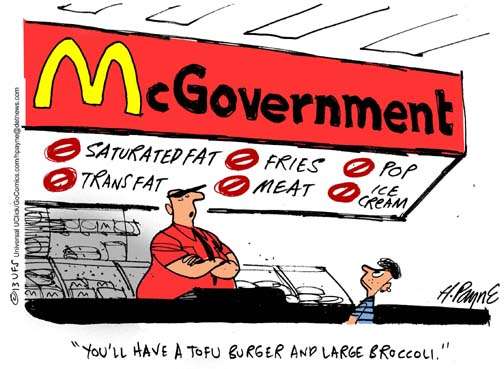
How Government Makes Us Fatter
The government, with its accomplices in the food lobby, has helped to make and keep us fat. Through subsidies and misguided food suggestions, Congress, the FDA, and the USDA have made it more difficult for Americans to make smarter dietary decisions.
It’s not as if we don’t care. Americans spend $33 billion annually on weight loss products and services. At any given time, 45 percent of women and 30 percent of men in the United States are trying to lose weight. And yet Americans are more out of shape than ever.
Obesity is a major health risk in the United States, where 65 percent of adults are overweight. The prevalence of obesity rose from 14.5 percent in 1980 to 30.5 percent today. The percentage of children who are overweight is at an all-time high: 10.4 percent of two- to five-year-olds, 15.3 percent of six- to 11-year-olds, and 15.5 percent of 12-to-19-year-olds.
Misinformation
Remember the food pyramid? In 1982, government authorities told Americans to reduce fat consumption from 40 percent to 30 percent of daily intake—and we took their advice. Instead of fats, Americans began eating more carbohydrates: an increase of 57 grams per person from 1989 to today, according to UCSF Professor of Pediatrics Dr. Robert Lustig. Today, the typical American diet is about 50 percent carbohydrate, 15 percent protein, and 35 percent fat.
At the same time, a committee at the Food and Drug Administration awarded sugar “Generally Recognized As Safe” status—even for diabetics—despite internal dissent from the USDA’s Carbohydrate Nutrition Laboratory. As part of the 2011 Agriculture Appropriations Bill, Congress legislated that pizza sauce can count as a vegetable in school lunches.
Setting aside the issue of whether such government recommendations are correct, its actions as food nanny essentially absolve Americans from the responsibility of making their own nutrition decisions. In the 1990s, American women blindly gobbled up low-fat Snackwells desserts masquerading as sensible treats. After all, Snackwells cookies met government standards: they were low in fat and contained “safe” sugar. Parents send their kids to school assuming school lunch contains healthy fruits and vegetables—never stopping to ask what their kids are actually eating each day.
Government recommendations also dissuade private nutrition groups from attempting to compete with “official” advice. Consider Dr. Atkins’ critical reception when he wrote Dr. Atkins' Diet Revolution; although a best-seller, it was panned by the nutrition establishment. The USDA’s Agricultural Resource Service still warns that the diet started out as a “gimmick” and hedges on whether it’s ultimately “worthwhile or worthless.”
Over the years, government recommendations have contributed to the replacement of lard with trans-fats (the latter of which are now considered deadly), the substitution of butter for margarine and back to butter again, and conflicting recommendations about eggs, orange juice, vitamins, certain types of fish, and the temperature at which it’s safe to eat meat. Is it any wonder that Americans are no closer to their health goals?
Subsi-diets
Farm subsidies reinforce the government’s recommendations. Most go to just a few crops: soy, corn, rice, and wheat—all of which can be converted into cheap, highly processed foods.
Take the case of corn. Starting in the mid-1980s, government subsidies made corn profitable for farmers even when market prices for corn were low. So farms across the Midwest began to produce it in abundance. Food companies funneled this cheap corn into the production of high fructose corn syrup (HFCS) as a replacement for more-expensive sugar—the price of which had been artificially sweetened by tariffs, import quotas and subsidies meant to shut cheaper foreign suppliers out of the U.S.
HFCS then made its way into previously unsweetened foods, including bread, baked goods, cereal, condiments, canned vegetables, pasta sauce, and even “nutrition” bars. Today, the average American eats 41.5 pounds of HFCS per year—financed by U.S. corn subsidies. That’s in addition to the 29 pounds of traditional sugar the USDA reports we eat on average.
Wheat, rice, and soy are turned into similarly processed food products. Wheat is extruded, robbing it of its protein, or milled and bleached into mineral-free white flour. Rice is stripped of its vitamin-packed bran to make it cook quicker. Soybeans are mashed, pulped, extruded, and pressed into thousands of products.
And government subsidies make these foods very, very cheap—much cheaper than unsubsidized raw produce, fish, or meat. Naturally, Americans respond to these low prices by buying in bulk. Today, 23 percent of Americans’ grocery budgets go to processed foods and sweets (compared to 12 percent in 1982).
Getting Government Out of the Grocery Aisles
Nutrition is far from settled science. Various researchers recommend low-carb, vegetarian, vegan, “whole” food, or simple calorie-counting diets as the route to weight loss and improved health. But one thing is clear: government interference is steering us in the wrong direction—toward sweetened and processed foods that no doctors, nutritionists, or researchers recommend. To improve the “Standard American Diet,” the first thing government can do is get out of the way.
SOURCE
Monday, January 07, 2013
Is three minutes a week of vigorous exercise all you need to get fit? Scientists say ideal fitness regime involves intense bursts of activity
Sounds like a recipe for a heart attack to me
There is welcome news for anyone who’s resolved to get fit in the New Year. Scientists claim we don’t have to spend hours every week slogging in the gym or jogging around a park in all weathers, along with the other January resolution makers.
Instead, they advocate a pioneering new quick fitness regime that makes remarkable claims: just a few 30-second bursts of intense exercise, amounting to only three minutes a week, could deliver the health and weight-loss benefits of hours of lengthy, conventional regimes.
This may revolutionise our ability to stick to New Year fitness resolutions, which only one in five of us manage to keep for more than a few weeks.
A study in the Journal of Clinical Psychology found the main reason we break resolutions is that our plans are over-ambitious: we set the bar too high in a hopelessly optimistic burst of post-Christmas enthusiasm.
But this new exercise regime lowers that bar significantly. Scientists at the universities of Nottingham, Birmingham and Bath say the secret is to commit yourself to three short bursts of highly intense exercise for 30 seconds each, with short rest periods between, in less than five minutes.
They claim early results are ground-breaking and may lead to conventional medical textbooks on exercise being torn up. Instead of sweating for hours, scientists say we should hurl ourselves around on an exercise bike or rowing machine — or even just run rapidly up and down the stairs at home.
After half a minute of wild exertion, we can collapse red-faced for 60 seconds, then do it all again. Three bouts like that means your exercise requirement for that session is sorted.
Late last year, the scientific team behind this regime launched a large-scale trial involving 300 volunteers to fully test their system. It could be just the tonic for couch-potato Britain.
For despite constant nagging from government and health professionals, the vast majority of us still don’t follow the official NHS advice to do at least 30 minutes of brisk exercise five times a week, plus two sessions of muscle-strengthening exercise such as weight-training, push-ups or heavy gardening.
More than 60 per cent of men and 70 per cent of women admit that they don’t manage that. Lack of time is our most common excuse.
As a result, millions of Britons suffer early death and unnecessary disability due to lifestyle illnesses such as diabetes and heart disease.
But the answer for many could be quick and simple.
The ongoing study is led by leading exercise expert Jamie Timmons, a professor of systems biology. The team call their system High Intensity Impact Training (HIIT).
So far, their tests on hundreds of unfit middle-aged volunteers in Britain and Canada over the past eight years have shown those three minutes of exercise a week deliver the same significant health improvements as can be achieved through hours in the gym or on the running track.
But scientists do not yet entirely understand why the short-burst exercise regime so profoundly boosts volunteers’ stamina and the fitness of their lungs, heart and blood vessels.
‘The truthful answer is we do not fully understand this,’ says Professor Timmons. ‘But a growing body of independent research shows this is the case and that the textbook explanation of the science of exercise requires revision.’
As for weight loss, the results from conventional long hours of exercise regimes often prove disappointing.
Typically, exercisers get themselves into trouble by eating more than they do normally because strenuous gym sessions leave them ravenous.
Brief, high-intensity exercise does not stimulate appetite as much, because it demands far less energy expenditure, so participants in the trial don’t suffer the same cravings.
What’s more, it appears to do something even more beneficial, according to Professor Timmons.
‘We have found that people feel their appetites are suppressed,’ he says. ‘We should have the final evidence for this next year.’
The regime should also raise people’s metabolic rates after they stop exercising, as it builds muscle — and this tissue makes metabolisms run faster. In turn, this stimulates the breakdown of fat and burns calories.
Timmons’ team also speculates that high-intensity training uses far more muscle tissue than aerobic exercise.
They say: ‘Cycling really vigorously uses not just the leg muscles, but also the upper body including arms and shoulders, so 80 per cent of the body’s muscle cells can be activated, compared to 20 to 40 per cent for walking or moderate intensity jogging or cycling.’
It will be about two years, though, before the British scientists publish their full findings as part of a Europe-wide study. In the meantime, they point out: ‘You don’t need a scientific explanation to enjoy the benefits.’
The team’s theories about short-burst exercise are increasingly supported by other research.
Australian scientists last June found sprint training for 60 minutes a week is as effective in burning male body fat as jogging for seven hours per week.
The study, led by Steve Boutcher at the University of New South Wales, Sydney, recruited 50 overweight men for short, high-intensity cycle sprints.
They had to sprint for eight seconds on an exercise bike followed by 12 seconds’ recovery in a training cycle lasting 20 minutes and repeated three times a week over 12 weeks.
Boutcher reported in the Journal Of Obesity that by the end, the volunteers, who were in their 20s, lost on average 4lb of abdominal fat and increased their muscle mass.
Importantly, they had also reduced fat around their liver, kidneys and other internal organs by 17 per cent.
This is the fat most strongly linked with an increased risk for cardio- vascular disease.
‘Other studies using aerobic exercise have found the amount of exercise needed to produce a similar decrease in visceral fat was about seven hours per week for 14 weeks,’ says Professor Boutcher.
He believes he has found a crucial clue as to why high-intensity regimes may work. Rapid bursts of muscle movement appear to flood the blood with hormones called catecholamines.
These break down fat stores in the body, and burn them up as energy. By comparison, conventional moderate exercise such as cycling for 40 minutes does not raise the blood-levels of catecholamines much at all.
And the professor has discovered another trick for raising levels of these catecholamine hormones in the blood: drink green tea after high-intensity exercise. ‘The tea stops the hormones from being degraded, so they keep burning fat for longer,’ he says.
Tests on women have found fat-loss increases significantly if they drink the tea after exercising. Three minutes of exercise and a cup of tea to follow?
Has there ever been such an appealing New Year exercise regime?
SOURCE
Make high levels of fat, sugar and salt in children's food ILLEGAL, say British Labour Party
Fascism is never far beneath the surface among Leftists
Labour will today propose new legal limits on levels of fat, sugar and salt in children's food. Shadow health secretary Andy Burnham will say urgent action must be considered to tackle spiralling levels of obesity. [Does he have any evidence that what he asks will do any good?]
One option to be considered in the party's public policy health review is to outlaw products with more than a maximum level of fat, sugar and salt which are targeted at children to try to reverse the trend.
Kellog's Frosties and Tesco Choco Snaps cereals, both high in sugar could be under threat if a cap on limits in children's foods is made law - Frosties has 37g of sugar per 100g and Tesco Choco Snaps has 36.1g per 100g
A consultation paper identifies a number of breakfast cereals containing more than 30 per cent sugar according to research by Which?, including Kellogg's Frosties, with 37.0g of sugar per 100g and Tesco Choco Snaps with 36.1g per 100g.
The latest research by the Organisation for Economic Co-operation and Development (OECD), shows that in the UK, 26.6 per cent of girls and 22.7 per cent of boys are now considered 'obese'.
Meanwhile, the National Child Measurement Programme last month reported that one-third of children in England are either overweight or obese by the time they leave primary school. Overweight children are at a greater risk of developing diabetes and cancer.
Mr Burnham said: 'The findings of the OECD should shock us out of our complacency. It is clear that the current voluntary approach is not working. We need to open our minds to new approaches in tackling child obesity.
'Labour wants to lead this debate. That is why we are asking the public and experts if new limits for sugar, fats and salts would be the right approach. Like all parents, I have bought products like cereals and fruit drinks, marketed as more healthy, that contained higher sugar levels than expected. I don't think that any parent would be comfortable with their child eating something that is 40 per cent sugar.
Mr Burnham has begun consulting with the public and experts on the issue, and is considering proposing a 30 per cent cap on sugar in cereals.
'The Government has failed to come up with a convincing plan to tackle this challenge. If we fail to act on the OECD's warning we are storing up huge problems for the country and the NHS in the long term. That is why Labour is calling for new thinking and why we're initiating today's consultation.'
Professor Gabriel Scally, former regional director of public health at the Department of Health, said: 'The continued rise in childhood obesity is an urgent call to action and must not be ignored.
'I applaud the Labour Party for tackling the issue of the foodstuffs filling our children with the empty calories that fuel obesity. Helping parents protect and promote the future health of our children is exactly what we need to be doing.'
Paul Wheeler, of Kellogg's, said: 'Frosties has been on sale for more than 60 years and by now we think people know there's sugar in them - we're not hiding it.
'The problem with ideas like this is they want an easy, silver bullet solution to what is a very difficult issue. It all boils down to the fact we believe parents, and not the government, should choose what their kids eat.'
A Department of Health spokesman said: 'By working with industry through the Responsibility Deal we have helped to reduce fat, sugar and salt in foods.
'There is now less salt in the food we buy, companies are cutting and capping calories and artificial trans fats are being widely taken out of food.'
The spokesman added: 'We are working to reduce the amount of salt in food further, cut saturated fat consumption and we are exploring how to promote healthier food choices more widely. We also want more businesses making pledges so we get bigger results.'
SOURCE
Sunday, January 06, 2013
Did outlawing leaded gasoline cause the crime rate to drop?
This theory has been around for a while and the obvious comment is that correlation is not causation. The increased availability of abortion to black mothers is another (disputed) explanation, for instance.
And why a 22 year lag? Is that just cherrypicking? A lot of crime, particularly among blacks, starts in the early to mid teens.
And it is troubling that Needleman's research on the topic was found to be essentially fraudulent. That does rather cast a pall on the whole research domain. Needleman's data would in fact appear to EXONERATE lead! He could only arrive at his anti-lead conclusions by throwing out 90% of his data!
Another factor is the rise and fall of anti-gun laws. And that leads to another big problem: Crime rates are STILL dropping, despite leaded fuel being now well back in history. Recent drops in offending would seem well-correlated with the gradual re-enactment of gun rights, both via legislation and court rulings.
At least superficially, however, the lead critics do seem to have their ducks lined up nicely. Lead may indeed be part of the explanation
A growing body of research could explain why crime rates spiked in the 1980s and 1990s and then dramatically dropped in the 2000s.
A new study links leaded gasoline to violent crime rates in six cities.
High lead levels have long been known to cause birth defects, lower intelligence and hearing problems - but now researchers are beginning to find that it also causes high levels of aggression.
Tulane University toxicologist Howard W. Mielke says high levels of lead exposure in children in the 1960s and 1970s resulted in a dramatic uptick in crime two decades later.
When the use of leaded gasoline declined in the 1980s, crime rates dropped off at corresponding rates.
Mielke found that in all six cities - Atlanta, Chicago, Indianapolis, Minneapolis, New Orleans, and San Diego - every one percent increase in the number of tons of lead released into the atmosphere resulted in a half percentage point increase in the aggravated assault rate 22 years later.
Each metric ton of lead released into the atmosphere, Mielke calculated, resulted in an increase of 1.59 aggravated assaults per 100,000.
The results were millions more shootings, stabbings and beatings, the professor says.
The data was able to explain 90 percent of the rise and fall of crime rates in the cities studied.
The link between lead and violence is relatively new, as well.
Dr Herbert Needleman, a University of Pittsburgh researcher, conducted a 1996 study that showed that children with high lead levels were much more likely to exhibit aggressive behavior than those with normal levels.
A 2002 study showed that youths had been arrested had far higher levels of lead in their bones, on average, than their non-delinquent peers.
Mother Jones writer Kevin Drum reports that the leaded gasoline theory is the only explanation for the dramatic rise and fall of violent crime across the country.
Rudy Giuliani is credited with lowering crime rates in New York thanks to aggressive policing and revolutionary tactics.
Crime rates in the city dropped 75percent between the 1990s and 2010.
But, Drum points out, it dropped by similar rates all over the nation - 70 percent in Dallas, 74 percent in Newark, 79 percent in Los Angeles. All of those cities stepped up enforcement, but never had 'revolutionary' leaders to combat crime, Drum says.
The study, published in August in the journal Environmental International, is one of several pieces of research dating back to 2000 that ties leaded gasoline to crime.
General Motors developed a lead additive for gasoline to prevent engine knock in the 1920s. The most popular additive was tetraethyllead, which soon became nearly universal.
By the 1970s, cars were being made with catalytic converters, which were incompatible with leaded gasoline.
The government also began taxing the fuel more heavily over pressure from environmental advocates, who cited growing research that showed the additive was a neurotoxin tied to birth defects.
Leaded gas was quickly phased out by the 1980s. It was banned for use in vehicles on U.S. roadways in 1996.
It is still in use - but only in race cars, piston-powered airplanes and some off-road vehicles.
SOURCE
Stop blaming the state for Britain's obesity, and start eating less and running around more
Welcome to the new army of Fat Controllers. Following the national binge, the sordid newspaper supplements are full of diets, exercises and lifestyle fads. Naturally, the Royal College of Physicians doesn’t want to be left out and so has blessed us all this New Year with the recommendation that there should be an anti-obesity commissar “in every NHS trust.” They don’t quite put it like that, but that’s exactly what it amounts to.
The RCP – and I am again translating their euphemisms into the way we speak in the street – blame the Government for our national tubbiness. Government help for those who stuff themselves daily with food items so disgusting as to put you off eating forever is, says the RCP, “patchy.” And there is, apparently, “a lack of joined-up thinking from the government.”
Well, quite. It’s time that someone had the guts – so to speak – to lay the blame squarely where it belongs: of course the Government is entirely responsible for the extravagant girth of the national waistline. It has nothing to do with a tendency to lie on the sofa swigging cans of strong lager and cheap cider all day only reluctantly to arise and go to the supermarket and there pile the trolley with pizzas and pies and sundry processed inedibles which thicken the figure, dull the brain and clog the arteries.
While I’m on this investigative journalism kick, this courageous fault-finding with everyone else but myself and ascribing culpability for all ills to the state, let me say also how angry I am for that the Government has not acknowledged its other responsibilities: for instance, to provide me with a £10,000 watch and my wife with a £20,000 handbag and both of us with a house like wot Wayne Rooney’s got.
But back to the flab. Jonathan Swift, thou should’st be living at this hour – to satirise our nation as a new Lilliput in which the poor die because they haven’t enough to eat, and a new Brobdingnag where the rich die because they eat too much.
What should be the message of these NHS-based, taxpayer-funded “teams of experts” and “obesity champions” to all the Mr and Mrs Gargantua and Pantagruel as they waddle around our great cities between the burger bar and the kebab stall? I don’t want to blind the nation with science, but I’m afraid the advice is extremely technical and hard to understand: EAT LESS AND RUN ABOUT MORE
SOURCE
Friday, January 04, 2013
Lustig fructose
"Lustig" is German for "funny" or "amusing". Usually Ashkenazi when used as a surname
Robert Lustig is an attention-seeking food-fanatic and seems to be some kind of nut. But a small recent study suggests that he may be on to something.
His extreme claims about natural fruit sugar (fructose) being a "poison" have rightly put most of the medical research fraternity against him and the research evidence against his demonization of fructose is strong. There are even some studies (e.g. here) that suggest that fructose is good for you.
He does seem to have crumpled under the weight of opposition and now demonizes sugar generally, including ordinary table sugar, which is a combination of fructose and glucose. And, broadly speaking, his argument that in some way we get used to a high sugar intake and thus consume more sugar that we otherwise would is reasonable enough. Habituation is a well-known process in many things. I reproduce below some comments on his latest book.
But has he given up too soon? A recent study does show a strong differential response to fructose versus glucose. Admittedly the study is small and very short term but it is carefully constructed, cautiously analysed and relies on direct brain measurements rather than subjective judgments.
On the other hand (you almost need to be an octopus in this matter) measuring cerebral blood flow is a pretty crude measurement of anything -- but on yet another hand several different measures produced similar results
What I think the latest results suggest is that there needs to be more attention to glucose. Fructose may not be the villain but glucose may be the saviour! Lustig may have been right in separating out different types of sugar, even if he originally focused on the wrong one. Should we replace ordinary table sugar with glucose only?
Glucose is not as sweet as table sugar so we would have to use more of it -- which might not be good. But we could add a bit of aspartame for more sweetness. Yes: I know the cannonade of condemnation that will greet me from the aspartame freaks. Been there. Done that.
Excerpt:
Waistband feeling a bit tighter, or buttons straining after Christmas?
While it’s easy to blame your appalling willpower or TV-inspired lethargy, according to a respected U.S. obesity expert, weight gain might not be your fault at all.
In a fascinating new book, Robert Lustig, a professor of clinical paediatrics at the University of California, expounds a whole new scientific theory.
He argues that the urge to overeat and lounge around doing nothing is not a sign of weakness.
It is, he says, a hormonal issue, triggered by eating too much sugar.
He points the finger of blame at the hormone leptin, which acts like an appetite thermostat.
As one of two ‘hunger hormones’ in the body, leptin works to decrease the appetite (its partner, ghrelin, increases appetite).
When you have had enough to eat, your fat cells release leptin, which effectively dulls the appetite by instructing the brain that it’s time to stop eating.
But Professor Lustig warns that our sweet tooth is sending this process haywire.
For many years scientists thought obesity could be caused by a shortage of leptin — thinking that without adequate levels, overweight people simply never received the message that they were full.
But more recent studies have shown that obese people have plenty of leptin (in fact, the fatter you are, the more of it you appear to have), but are more likely to be ‘leptin-resistant’.
This means the cells in the brain that should register leptin no longer ‘read’ the signals saying the body is full, but instead assume it is starving — no matter how much food you continue to eat.
In panic, the brain pumps out instructions to increase energy storage — instigating powerful cravings for high-fat, high-sugar foods because these are the easiest and most immediate forms of energy — and conserve energy usage, by dampening any urge to get up off the sofa and go for a run.
The food cravings are made even more intense — and impossible to resist — because leptin is supposed to dampen the feeling of pleasure and enjoyment you get from food by suppressing the release of the brain chemical dopamine, helping to decrease appetite.
But if you are leptin-resistant, food never stops tasting delicious, no matter how much of it you eat.
This, says Professor Lustig, is why many overweight people find it so hard to stop eating, and why diets so often fail.
Scientists have been struggling to work out what causes leptin resistance.
But now Professor Lustig and his team have been able to show — in repeated studies on humans — that too much sugar in the diet is to blame.
High sugar diets lead to spikes in the hormone. This is needed to clear sugar out of the blood and into storage as fat.
But repeated insulin spikes, due to a high sugar diet, can lead to a condition called ‘insulin resistance’ (when the cells have been so bombarded by insulin they no longer respond to it).
Professor Lustig believes insulin resistance triggers leptin resistance, and, crucially, he has discovered that by reducing insulin levels it is possible to improve ‘leptin signalling’ (the brain’s ability to read leptin), stop cravings, put the brakes on food consumption — and trigger weight loss.
In his new book Fat Chance, Professor Lustig explains that leptin resistance — and sugar — is at the root of the obesity epidemic.
More here
Dreading your diet? Don't worry...plump people live LONGER than their skinnier counterparts
This cannot be noted often enough
If your New Year’s resolution is to live a healthier life, it might be best to ditch that diet and enjoy another helping of festive leftovers. For a bit of extra weight could actually help you live longer, according to extensive research.
Men and women who are slightly plump have longer lives than those who are slimmer, it found.
Analysis of the results of almost 100 studies revealed that those who were of normal weight – a usual barometer of health – were likely to die sooner than those who were slightly overweight.
However, those who were any bigger than this were around a third more likely to die during the months or years they were being studied than those of normal weight.
The analysis is not the first to suggest that a bit of extra weight is actually good for health.
Explanations as to why this might be include the possibility that those who start out slightly heavier will have more fat reserves to call on should they lose weight due to ill health as they get older.
It is also possible that concerns about the health of the overweight and obese means that problems linked to weight, such as high blood pressure and diabetes, are more likely to be spotted and treated, improving that person’s overall health.
It has also been suggested that some people’s genes may help them escape the health consequences of being slightly overweight, while a bit of extra padding could help the elderly to survive falls unscathed.
Another theory is that some of those who are overweight may actually exercise more and eat better than thin people who starve themselves or smoke to suppress their appetite.
For the latest study, US government researchers read 91 previous research papers on the topic from around the world – involving millions of men and women.
They looked at the subjects’ body mass index at the start of the research and how likely they were to have died by the end of it.
Body mass index, or BMI, is a mathematical formula relating height to weight.
People are classified as being of normal weight if they have a BMI of between 18.5 and 24.9 and overweight if their reading is between 25 and 29.9. A BMI higher than this is classified as obese and the bigger the reading the greater the risks to health are thought to be.
The results, published in the Journal of the American Medical Association, showed that those judged to be overweight were 6 per cent less likely to have died by the end of the study period than those of normal weight.
Having a BMI of between 30 and 34.9, and so being slightly obese, also did not seem to harm health.
However, those whose BMI was greater than this were 29 per cent less likely to live to see the end of the study than those whose weight was classed as ‘normal’.
SOURCE
Thursday, January 03, 2013
Bottled water 'less safe' than tap (despite costing up to 1,000 times more)
It's the one accessory that no health-conscious fitness enthusiast is seen without. And the benefits of bottled water are so valued that it costs up to 1,000 times more than what comes out of our taps.
But far from being healthier, the bottled variety is subject to far less stringent safety tests than tap water. It is also much more likely to be contaminated or become a source of infection, according to a university study.
The warning suggests that much of the £1.5billion-plus Britons pay for bottled water each year in the belief that it is better for us is spent mistakenly.
On average, we drink 33 litres of bottled water annually, whether ordinary mineral, fizzy, or ‘purified’ tap water.
Almost a quarter of people who drink bottled water at home say they do so because they believe it is ‘better for them’ than tap water, according to market researchers Mintel.
But what these consumers may not realise is that tap water must be checked daily under a rigorous inspection regime.
It also contains trace amounts of chlorine that prevent the spread of anything harmful such as bacterial infections.
By contrast, makers of bottled water are only required to undertake monthly testing at source. Once filled and sealed, a bottle of water might remain in storage for months before it is sold. Bottled water contains no disinfecting additives such as chlorine.
After a bottle of water is opened it has no way of remaining sterile, and so must be drunk within days.
Professor Paul Younger of Glasgow University said: ‘Water coming from UK taps is the most stringently tested in the world.
‘People think there must be something wrong with tap water because it is so cheap and plentiful. But from a safety and price perspective, tap water is better for you.
‘If the bottle is accidentally opened or someone tampers with it, then it can easily get contaminated,’ added Prof Younger, who is the author of Water: All That Matters.
‘There’s certainly a greater chance you could find something harmful in bottled water than from your taps.
‘Ideally it should be drunk on the day it is opened, as it can easily pick up bacteria from someone’s hands or face.’
Sue Pennison of the Drinking Water Inspectorate, which audits household supplies, said out of more than four million samples of tap water last year, 99.96 per cent passed strict standards.
She said: ‘Tap water is safe to drink, everything else is a personal lifestyle choice.’
Jo Jacobius, director of British Bottled Water Producers, said all water available in the UK is ‘highly regulated and generally of good quality’. She added that most bottled water companies test on a daily basis.
Natural bottled mineral water must come from an officially recognised underground spring, be bottled at source and cannot be treated or filtered.
Spring water must also be bottled at source, but it can be treated or filtered.
Sourced from rivers, boreholes and springs, tap water is treated and put into supply or held via storage reservoirs.
SOURCE
Food faddists deprive their children
As well as being a pain in the behind
BEING a relatively new mother, I thought it would be great to throw a party to celebrate my two-year-old's birthday. Unfortunately I hadn't realised birthday parties are no longer the junk food fests of my youth.
Having been up since 4am baking, I perhaps wasn't in the best mood to have my shortcomings as a hostess commented on by a mother whose daughter attends "enhanced play sessions" and "creative gymkhana classes".
Things started well: children piled in, helped themselves to cupcakes, hit one another with balloons and consumed half their body weight in fairy bread. Then Botox-mother sidled up and whispered, "I've never had to deal with this before". "Deal with what?" I asked. She hissed, "Junk food."
I looked at the table covered in half-eaten cake and sticky fingerprints. "There's fruit kebabs," I protested.
"Yes, with marshmallows."
I said she could have given her daughter some of the bread. "It's white," she said as if I'd offered cocaine.
"And the honey?"
"Not organic."
Apparently I'd committed the ultimate faux pas in the eastern suburbs: I'd thrown a birthday party that did not cater for the gluten-free, lactose-intolerant, no-dairy-before-5pm, nuts-are-evil brigade. I'd gone for brightly coloured food with a dangerously high amount of fat and coma-inducing quantities of sugar. My card was marked.
"It's not done," she said, pointing at me with a manicured finger. For her daughter's party, she had hired a nutritionist and buckwheat pancakes, organic muesli with goat's yoghurt (low fat) and rye bread with (no sugar) jam was the fare. And to drink? Water with a slice of lemon.
"Did your son enjoy the food?" I asked a friend who attended the nutritionally healthy party. "Hell, no. He kept asking why there wasn't any cake and who'd hidden all the sweets."
As I watched this mother and daughter leave , I felt desperately sorry for the little girl who will never know what it feels like to eat so much cake that you feel sick or to drink so much cordial that you spin round and round in a circle until you throw up in a heap. Buckwheat pancakes have their place but maybe not at a two-year-old's birthday party.
SOURCE
Wednesday, January 02, 2013
Pregnant women who see the hygienist reduce their risk of a premature birth by a third
Yeah, yeah! It's middle class woment who go to the "hygeinist" and they are healthier anyway. But I can't see the article in the current issue of the journal
Pregnant women who go to the hygienist may cut their risk of premature birth by a third, new research suggests.
Having a scale and polish removes the build-up of tartar from near the gumline, in turn reducing the risk of severe gum disease.
Although the link between gum disease and premature birth isn't clear, previous research has shown improving oral health does reduce the risk.
Doctors have previously established that severe gum infections cause an increase in the production of prostaglandin and tumour necrosis factor, chemicals which induce labour, to be produced.
Preterm births are defined as babies born before 37 weeks of pregnancy, and have historically been linked to poor levels of oral health. In England alone, 54,000 babies are born prematurely each year.
The new research, published in the Journal of Periodontology, found there was a 34 per cent reduction in the risk of preterm births for expectant mothers suffering with gum disease if they underwent simple treatment at the dentist or hygienist.
The researchers, from the Harvard School of Dental Medicine, found that women with gum disease who were at high risk of having a premature birth benefited from having a procedure called scaling and root planing.
Dr Nigel Carter, Chief Executive of the British Dental Health Foundation, said the research affirmed the need for expectant mothers to take care of their oral health during pregnancy.
He said: 'This paper adds to the growing body of evidence that suggests oral health during pregnancy is particularly important.
'While it is unreasonable to expect everyone to have impeccable oral health, all pregnant women should not neglect their mouths, particularly if there is a possibility of it having an impact on the unborn baby.'
He added that the importance of regular appointments with the dentist and hygienist could not be underestimated.
'The dentist or hygienist may be able to give you advice on how to care for your teeth at home if you are suffering from morning sickness, not to mention a thorough cleaning and advice on how to look after your teeth and gums at home.
'Even those with good oral health will experience changes throughout pregnancy. Some women will find their gums will bleed more easily, a problem made worse if you are already suffering from gum disease.
'As NHS dental care is free for mums to be, visiting the dentist isn’t going to impact on those vital pennies ahead of your new-born’s arrival. All you need is to be a registered NHS patient and to have a current maternity exemption certificate.'
SOURCE
Each NHS trust needs a tsar to tackle obesity crisis, say top British doctors as UK's fat epidemic shows no sign of slowing
The "leading doctors" concerned are certainly not scientists. Otherwise they would first look for evidence that their proposals would do any good. It's unlikely, to say the least
An obesity ‘tsar’ should be appointed at every NHS trust to tackle a crisis affecting millions, leading doctors say.
They also want an individual appointed at government level to oversee the new health drive.
A study by The Royal College of Physicians found that the UK is second only to the US for weight problems and the situation is getting worse.
Yet treatment is still ‘inadequate’ adding to the annual £5billion cost of dealing with the issue. The Royal College said two out of three hospitals lack ‘joined-up’ services for patients who are obese or overweight.
Complications the patients face include heart disease, diabetes, arthritis, sleep disorders and gynaecological problems.
The RCP said every NHS trust should have an obesity champion to co-ordinate services and improve staff training.
Nationally, a government appointee should drive an obesity strategy across a number of ministries including health, the Treasury, education and sport.
‘The Government has failed to address this in a joined-up way which is essential if we are to make an impact,’ said the report. The obesity tsar or figurehead could come from the House of Lords and should be politically independent, according to RCP vice-president Professor John Wass.
SOURCE
Tuesday, January 01, 2013
By all means go dry for January, but it's worth knowing that 'detoxing' does nothing for your health
Hurrah! Peter Oborne has written an entertaining piece about why he's giving up alcohol for January: in essence, because he's worried that he is looking forward to that first drink of the day a bit much, and feeling the effects more than he used to. With the constant nagging background hangover and diffuse feelings of ill health that the end of the year brings, I suspect a lot of us will sympathise.
He's doing it as part of Alcohol Concern's "Dry January" campaign; the drink charity is trying to get people to do a sponsored month off the booze, to raise money for (I assume) getting even more people off the booze.
You'd be forgiven for being a bit tired of these sponsored months – we've barely seen the back of the damn moustaches – but if people feel it's a good cause, by all means do it. One thing that's probably worth being aware of, though, is that if you do it too, while you'll no doubt raise some cash, and perhaps save a few quid and lose a few pounds, there's very little reason to believe it will make you healthier in the long term.
Every January, hundreds of thousands of people take the month off the booze as a "detox". But your liver will not thank you for it, and in fact the whole concept of "detoxing" is little more than New Age nonsense, a modern penance for the sins of the year, which will do nothing for your long-term health. (Particularly idiotic are the "detox kits" that you can buy from various outlets, which are, as far as I can work out, purest quackery, especially anything which uses the word "quantum".)
When the annual January Detox Bandwagon rolled around last year, the British Liver Trust issued a statement pointing out that it was nonsense. They got a consultant hepatologist, Dr Mark Wright, to say: "Detoxing for just a month in January is medically futile. It can lead to a false sense of security and feeds the idea that you can abuse your liver as much as you like and then sort everything else with a quick fix.
"It makes about as much sense as maxing out your credit cards and overdraft all year, then thinking you can fix it by just eating toast in January. The figures just don't stack up."
Essentially, the liver is quite good at repairing itself, but it needs to do it fairly regularly. A few days off the sauce each week, as opposed to a month off every year, is what actual doctors recommend.
Feel free, then, to have a booze-free January. You may even find it makes you feel better and saves you some money. But be aware that it does nothing for your long-term health, and to be honest, if you need to take a month off the booze to prove you can do it (and especially if you require a financial incentive, albeit a charity-directed one, to do so), then you might want to think about your relationship with the stuff.
Anyway. Mine's a Talisker, please. Happy new year, everybody!
SOURCE
Can an unborn baby really taste curry?
Pregnancy is a time like no other for old wives’ tales. But which are true, and which are hokum?
Two-and-a-half years ago when I found myself pregnant, I was bursting with questions about my developing child. Each week I would obsessively scour pregnancy books and websites for details of what my little foetus could be expected to accomplish in the coming days, trying to build up a picture of what he or she was up to in there.
But although knowing my little one was growing fingernails that week was mildly interesting, none of the books told me what I really wanted to know: when would he or she become conscious? Could they feel the sensation of the ill-advised waltzer ride I took at the fairground, and would they remember it? Was there any truth to old wives’ tales such as “weird food cravings mean you’re having a boy”, or “if your bump is low, you’re having a girl”?
I was also bemused by conflicting advice on eating, drinking and exercise – eating too much may raise the baby’s risk of obesity or diabetes; or exercise could trigger a miscarriage – much of which seemed to fly in the face of common sense. Looking at online pregnancy forums, I realised that other women were asking similar questions, often falling back on anecdote and received wisdom.
The tipping point came when I was tucking into a chicken jalfrezi at an Indian restaurant, and felt my baby do a somersault. Could he or she taste what I was eating, and did they object to it? I had to find out.
As a reporter for New Scientist, I had access to the thousands of scientific journals that are published each month, and experience of making sense of them, so I began to hunt for the answers. What I discovered amazed and excited me. I learnt that some couples really are statistically more likely to have boys – those who already have three boys, or men with lots of brothers – although no one understands why. I discovered that unborn babies can see, hear, feel and remember experiences from their time in the womb, and that some of this may help prepare them for life on the outside. For instance, babies seem to remember certain sounds from their time in utero, so they may be less fazed by everyday things like a vacuum cleaner.
And babies probably can taste curry – or at least the garlic in curry – and this may make them more receptive to it when it is introduced to their diet later on. During late pregnancy they might even dream, for they experience far higher rates of REM sleep – when dreaming occurs – than we do as adults.
Even after our daughter, Matilda, was born, questions continued to prick at my mind. I learnt that controlled crying can teach a child to sleep through the night, but there are several other less extreme methods that are just as effective.
I discovered that, far from being born with a blank slate, babies already have some concept of who their mother is; what a human face looks like; and an appreciation of numbers and language. Newborn babies already seem capable of distinguishing their mothers’ voice from that of a stranger’s. They also seem to react to a happy tone of voice, and will cry in a melody befitting their natural tongue – so the intonation pattern of French babies’ cries mimics that of the French language, for example.
As far as numbers are concerned, they seem able to match a number of beeps to a similar number of visual objects – or at least notice if they don’t match up.
I became similarly well-read in the science of baby poo: what causes it to change colour or consistency, and just how many bacteria live in it. (None at birth, but around a trillion per millilitre by the end of the first month.)
I was also frequently angered by what I read. Contrary to what pregnant women are told, there is no strong evidence that eating peanuts, exercising or lying on your back during pregnancy harms the baby. Even the science underpinning government advice on how much alcohol it is safe to drink is far from clear cut. There’s no doubt that drinking large amounts of alcohol is harmful to unborn babies, but there is a massive grey zone concerning small to moderate amounts, where there’s little to no evidence that it causes harm – and even some evidence that small amounts may be beneficial.
Shortly after I had decided to turn my research into a book – Bumpology – I discovered that I was pregnant with my second child. This time it was a very different experience. The more I researched, the more I realised that much of what I had been told during my first pregnancy was not backed up by evidence.
This time around, I was still obsessed with the little person that was growing inside me and terrified of miscarriage during the early weeks. However, I took comfort in knowing that the oft-cited statistic of one in three pregnancies ending in miscarriage is a gross generalisation, and is probably irrelevant to the bulk of women, being based on a study that detected pregnancy at the earliest possible point, when many embryos will fail.
I was generally more relaxed about what I ate, but more vigilant about avoiding things like Camembert or drinking more than a couple of glasses of wine per week, even though I understood that the risks were relatively small. I think that sifting through the evidence and focusing on the handful of things that really can cause harm in pregnancy made me appreciate that it wasn’t such a big deal to give them up for nine months – whereas being told to avoid almost everything during my first pregnancy just made me cynical about pretty much all health advice.
However, what really incensed me was the discovery that much of what I’d been told by antenatal teachers, hypnobirthing instructors and even some midwives about birth during my first pregnancy, wasn’t necessarily borne out by the evidence.
For example, women are often told that having their labour artificially kick-started if they run past their due date will increase their chances of needing a caesarean or having their baby pulled out with forceps. But if you compare the relevant groups of women, being induced at 42 weeks of pregnancy actually decreases the risk of a caesarean compared to doing nothing and simply waiting for the baby to arrive of its own accord. I suspect that knowing this could significantly reduce anxiety levels – and curry consumption – among the pregnant population.
I also felt short-changed by those antenatal teachers who glossed over some of the less convenient truths about birth and early motherhood first time around, such as the risks of tearing during labour; the fact that many labours don’t run smoothly; and just how difficult breastfeeding can be.
I was beginning to think that some of this anger was misplaced, when only last week a terrified pregnant friend called to say that a midwife had told her that having an epidural to dull the pain of labour would mean she was more likely to need forceps to deliver her baby; and that if she gave birth in a midwife-run birthing centre, she would be unlikely to tear because they would make sure the baby was delivered slowly.
It is true that epidurals increase the risk of an instrumental delivery involving forceps, but only very slightly. In fact, around 20 women would need to have an epidural for just one to need an extra instrumental delivery, and not necessarily because the drugs make it harder to push, but because if you’re already anaesthetised you’re possibly more likely to be considered a candidate for a forceps delivery.
What’s more, no one can guarantee that you won’t tear during childbirth, and in skirting around this issue antenatal teachers often neglect to reassure women that tearing really isn’t that bad, or offer tips on how to promote healing if it does happen.
Meanwhile, I have been surprised by just how much remains unknown about pregnancy, birth and babies. Although several interesting theories exist, we still don’t know for sure what causes morning sickness – even though some women, like the Duchess of Cambridge, have to be hospitalised for it. It is still near-impossible to predict how long labour will last, or if a woman is likely to develop complications.
And although there is some preliminary evidence that stress during pregnancy results in more active and irritable babies, I’d love to know if relaxed mothers are more likely to have a chilled-out baby. Our second child, Max, was born in September, and so far (in my uncontrolled, unscientific study of two), this seems to be the case.
M y research has given me greater confidence that many of my instincts about motherhood are probably correct – or at least unlikely to cause harm – and as a result, I have been more laissez-faire about the whole thing. For now, at least, Max seems to share my relaxed attitude to babyhood, while energetic Matilda continues to run circles around all of us.
Pregnancy is a time of great wonder, and I still find it staggering that a single egg and sperm can meet and trigger this cascade of events that lead to a new little person being built. Having a baby can be one of the greatest joys that life bestows, but it is hard work. Parents-to-be can therefore do without any unnecessary guilt, anxiety or doubt.
SOURCE
Subscribe to:
Posts (Atom)


