Sunday, July 14, 2013
Leave our packed lunches alone, Nanny Staters
James Delingpole
I like Henry Dimbleby. He's a delightful fellow, he runs a top notch, high-end fast food chain (Leon) and if I'd been in his shoes when the call came from 10 Downing Street to volunteer as Britain's latest school dinners czar I'm sure I too would have said "yes."
But I'm sure I would have hated myself every day thereafter. Why? Because my new job would have entailed coming up with Nanny Statist crap like this:
"Mr Dimbleby said: "More than a half of our children bring packed lunches into school and two-thirds of those have crisps in them and two-thirds have confectionery in them. "The best schools – the schools that have good food – find ways of making packed lunch the less exciting option. Some of them ban packed lunch altogether."
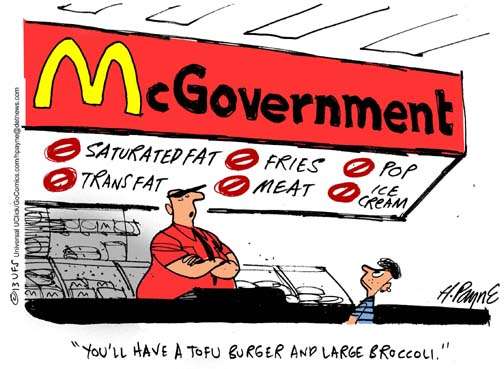
"Mr Dimbleby", it seems to me, is coming perilously close to suggesting that the decision as to what children eat at school should be a matter for the State rather than parents. Can he really believe this? Is there nothing about saying this sort of thing that makes him uneasy?
I mean sure, I agree with him on the principle that a good, well-prepared hot meal at lunchtime is probably more filling and nourishing than a packet-bread sandwich and a packet of crisps. Problem is, not all school canteens offer quite the same range and quality you might find in – oh, I don't know, let's pluck a random example from the air, shall we? – Bekynton.
Having put children through the state system myself I know whereof I speak. A new caterer arrived at my daughter's primary school to much fanfare and for a while the food was great and most parents gratefully abandoned packed lunches (which, let me tell you, are a real hassle for a parent to prepare because they have to be done fresh in the morning when you're already in a rush having breakfast and getting ready for the school run) and welcomed the new regime. But then standards began slipping to the point where my daughter (who, like a lot of children whose staple diet is gastro-porn TV programmes from the Great British Bake Off to Masterchef, genuinely cares about food) couldn't eat the stuff any more. Again: is "Mr Dimbleby" seriously suggesting that schools should force children to go on eating in the canteen regardless of how disgusting they find the food?
You hear similar arguments from well-heeled progressive types on the school system generally. "If only public schools were abolished and all those pushy middle-class strivers were forced to put their children through the state system, standards would rise across the board." Well, possibly. What would more likely happen is that all those scrubbed, diligent, nicely spoken, polite young poshos would be dragged down to the level of the lowest common denominator. And in any case it's not an experiment which has any right being attempted anywhere in a Western notionally free-market economy. Why not? Because it's illiberal bordering on the totalitarian, is why.
Get this, nice Henry Dimbleby! Get this, David Cameron! It is not the government's job to dictate to children what they can and cannot eat. That decision should be the parents' and the parents' alone. This even applies when parents make the wrong decision (as many parents undoubtedly will). Sure some children may end up obese, sure others may find it difficult concentrating in class – but allowing families the right to make wrong decisions is one of the prices we pay for living in a free society.
Creating a better society through improved diet has long been the dream of domineering politicians. Here's one, quoted in Jonah Goldberg's Liberal Fascism, sounding like he'd do very well on one of David Cameron's task forces.
The artificial is everywhere; everywhere food is adulterated, filled with ingredients that supposedly make it last longer, or look better, or pass as 'enriched', or whatever else the industry's ad men want us to believe… [W]e are in the hands of the food companies, whose economic clout and advertising make it possible for them to describe what we can and cannot eat….we shall take energetic steps to prevent the ruin of our people by the food industries.
You can almost hear the harpies at MumsNet applauding every word, can't you?
Yup, he sure knew a thing or two about the importance of nutrition, did good old Heinrich Himmler.
SOURCE
Human trials for wonder drug that shrinks cancerous tumors to begin next year
Mouse data. May not generalize to people
A drug that helps the immune system to break down cancerous tumors has been developed and is set to begin human testing early next year.
The drug, developed by researchers at the University of Stanford, has been successful on different of cancers - including breast, bowel, prostate, ovarian and brain - and could even be a cure, they said.
The drug's effectiveness centers on its relationship with a protein called CD47, which is found on the surface of cancer cells in high quantities.
The protein prevents the cancer from being engulfed and eaten by immune cells called macrophages, which serve as the body's garbage trucks by eating old or damaged cells.
The researchers made antibodies that would bind to the CD-47 on the cancer cell so that when a macrophage came along, it did not see CD-47 on the cell and engulfed everything.
So when the drug masked this 'don't-eat-me signal', it allowed the immune system to attack the cancer, destroying some entirely and shrinking others.
Tests on mice showed it to work on a broad range of cancers and with minimal side-effects. Given to mice with human tumors, the antibody made them shrink and, in some cases, disappear.
When the CD47 antibodies were injected into the mice, they produced positive results for all types of cancer, research showed.
The journal Proceedings of the National Academy of Sciences, which first published the findings of Dr Irv Weissman earlier this year, adds that the drug 'dramatically' increased survival rates.
Dr Weissman, from the Stanford University School of Medicine, said: 'Blocking this "don't-eat-me" signal inhibits the growth in mice of nearly every human cancer we tested, with minimal toxicity.
'This shows conclusively that this protein, CD47, is a legitimate and promising target for human cancer therapy.'
Now the lab has received a $20 million grant from the California Institute for Regenerative Medicine to conduct studies on humans.
Weissman told The Great Falls Tribune that the trials will start in 2014, as early as February or as late as April, depending on when it is cleared with the Food and Drug Administration.
The team of researchers at Stanford plan on starting a small 10-100 person phase I clinical human trial of the cancer therapy next year, with the focus on leukemia patients.
A similar trial will take place in the United Kingdom, the Tribune reported.
But Weissman told the paper he was approaching the study with some apprehension.
'Everybody should know that no matter how good studies are, no matter how strong the principle is, when you get to humans there could be variations in humans that could make it not work, so we're prepared for that,' he said.
Weissman added that it will take at least five years after the completion of the trial to determine whether their CD-47 trial is even successful.
The New York Post added that people are already rushing to sign up to be part of the potentially ground-breaking study.
SOURCE

Friday, July 12, 2013
CDC admits long-standing error, there is no benefit in reducing salt
Theory proven wrong by multiple facts. I have been saying this for years -- JR
A recent report commissioned by the Center for Disease Control (CDC) reviewed the health benefits of reducing salt intake and the take-home message is that salt, in the quantities consumed by most Americans, is no longer considered a substantial health hazard.
What the CDC study reported explicitly is that there is no benefit, and may be a danger, from reducing our salt intake below 1 tsp per day. What was absent about the report was is the difference between healthy mineral salts and iodized table salt.
It may be that we’re better off with more salt than less, up to 2 or even 3 tsp per day. How did it happen that such standard medical advice drifted astray, then went un-corrected for so long?
This review by the National Academies Institute of Medicine (IOM), commissioned by CDC, considered dozens of studies, from cross-cultural (less reliable) to prospective, randomized with control (most reliable). Most studies showed no relationship between salt intake and any health outcome. Some seemed to indicate that more salt had a beneficial effect.
One 2008 study the committee examined, for example, randomly assigned 232 Italian patients with aggressively treated moderate to severe congestive heart failure to consume either 2,760 or 1,840 milligrams of sodium a day, but otherwise to consume the same diet. Those consuming the lower level of sodium had more than three times the number of hospital readmissions — 30 as compared with 9 in the higher-salt group — and more than twice as many deaths — 15 as compared with 6 in the higher-salt group.
Another study, published in 2011, followed 28,800 subjects with high blood pressure ages 55 and older for 4.7 years and analyzed their sodium consumption by urinalysis. The researchers reported that the risks of heart attacks, strokes, congestive heart failure and death from heart disease increased significantly for those consuming more than 7,000 milligrams of sodium a day and for those consuming fewer than 3,000 milligrams of sodium a day.
To translate this last study into teaspoons: the finding was that anything between 1-1/2 and 3 tsp of salt per day is just fine, and there were adverse effects from eating more than that or less than that. Most Americans who are not consciously restricting salt fall in this range (1-1/2 to 3 tsp).
People who are on low-salt diets for medical reasons are getting as little as 1/2 tsp, and they’re well into the range where dearth of salt is harming them. The worst impact of low salt is on insulin sensitivity. Loss of insulin sensitivity is a big risk factor for all the diseases of old age.
Salt is the most common and readily available nonmetallic mineral in the world. So how could a mineral which we’ve bathed in and absorbed in all foods since our existence be so harmful for the human body? Two words. It isn’t. Actually, the opposite is true. A low salt diet will actually increase your risk of death.
World renowned salt researcher Dr. Brownstein states that even in those individuals with high blood pressure, the lowering effect is quite modest at best when reducing salt. Many researchers imply that any effect on blood pressure is not a direct consequence of salt at but other minerals acting on the body. Still, Dr. Brownstein will tell you that he learned in medical school the traditional party line that salt = hypertension (high blood pressure). A myth of mammoth proportions.
A study by lead researcher Dr. Niels Graudal, of Copenhagen University Hospital in Denmark, adds to a growing body of research questioning the long-term benefits of a low-salt diet. A review of seven previous studies published in the journal the Cochrane Library found that a moderate reduction in salt intake did not reduce a person’s risk of dying or having heart disease.
In a systematic review published by The Cochrane Library, British scientists found that cutting salt consumption did not translate into lower death or heart disease risk. “With governments setting ever lower targets for salt intake and food manufacturers working to remove it from their products, it’s really important that we do some large research trials to get a full understanding of the benefits and risks of reducing salt intake,” said Rod Taylor of Exeter University, who led the review.
WHY have we been told that salt is so deadly? It has what nutritionists like to call “biological plausibility.” Eat more salt and your body retains water to maintain a stable concentration of sodium in your blood. This is why eating salty food tends to make us thirsty: we drink more; we retain water. The result can be a temporary increase in blood pressure, which will persist until our kidneys eliminate both salt and water.
The scientific question is whether this temporary phenomenon translates to chronic problems: if we eat too much salt for years, does it raise our blood pressure, cause hypertension, then strokes, and then kill us prematurely? The answer is no.
A paper published in the American Journal of Hypertension warns that once average daily consumption dips to below 6.25g, the risk of heart attacks and strokes starts to increase once more.
Restricting salt consumption increases levels of cholesterol and triglycerides — both of them harmful fats which cause heart disease — and also leads to insulin resistance (the early stages of type-2 diabetes). Diets low in salt also increase the levels of fat and hormones in the blood that are known to increase the risk of heart disease.
SOURCE
Iodine: The IQ mineral
Table salt is normally iodized and that should be the end of any problems. Enter the "war on salt", however, and iodine deficiency may build up -- and dire health outcomes may result
Unless you were a regular at the sushi bar or ate fish twice a week it used to be hard to get enough iodine in your diet – but there are signs that putting iodised salt in our bread has made this easier. Nearly four years ago concerns about iodine deficiency led to bread being fortified with iodised salt. Measures of iodine concentrations in the urine of school children in Tasmania show that iodine intake is higher now than before fortification began.
But we’re not out of the woods yet – there are also signs that pregnant women may not get enough iodine to ensure the optimal brain development of their unborn babies, says Associate Professor Karen Charlton of Wollongong University’s School of Health Sciences. Research by Charlton and her team suggests that many pregnant women may be low in this mineral which is essential for an unborn baby’s developing brain.
While adults need 150 mcg of iodine daily, the need for this mineral jumps by 50 per cent during pregnancy and breastfeeding - and that’s more than a few slices of bread with iodised salt can deliver. But although the National Health and Medical Research Council recommends iodine supplements for women who are pregnant or planning to be, Charlton says the message isn’t loud enough.
“In surveys we’ve done in the Illawarra region, about 40 per cent of women attending public antenatal clinics said they don’t take iodine supplements. Women aren’t aware how important iodine is in pregnancy and my feeling is that many women aren’t given advice to take a supplement," says Charlton. “But new research has linked a low iodine intake in pregnancy with a reduced IQ in children.”
Advertisement
One UK study published in the medical journal The Lancet in May, reported that children of women with a mild to moderate iodine deficiency in pregnancy had lower scores for verbal IQ, reading accuracy and reading comprehension, compared to children born to women with adequate iodine intakes. A study from Tasmania’s Menzies Research Institute has also attributed better scores on the NAPLAN school test in nine-year-olds to differences in iodine intakes of their mothers in pregnancy.
“There are many factors affecting a child’s intellectual development, including childhood experiences and the parents’ education level – but these studies controlled for other factors and still found an impressive association with iodine intake in pregnancy,” Charlton says.
Most adults should be able to get enough iodine with three slices of bread (unless it’s organic bread which isn’t required to have iodised salt) and two to three serves of dairy food daily, a couple of serves of fish or seafood weekly and sushi now and again, Charlton says. But this may not be enough for pregnant women – especially those who don’t eat much bread or are wary of eating fish in pregnancy.
How did we get to be low on iodine to begin with? There are a few reasons - low iodine levels in soil, less use of iodine-based cleaning products in the dairy industry which once boosted the iodine content of our dairy food, the fact that we now eat so much processed food which uses non-iodised salt and that we tend to use non-iodised salt at home.
If you’re pregnant or breastfeeding Karen Charlton suggests a multivitamin containing 150mcg of iodine – although women with a thyroid problem should talk to their doctor because too much iodine can exacerbate some thyroid conditions.
Can a healthier iodine intake in childhood make up for a shortfall in the womb?
“No - most brain development occurs during pregnancy,” explains Professor Cres Eastman, Asia Pacific regional co-ordinator for the International Council for Control of Iodine Deficiency Disorders. “But an adequate iodine intake is still important in childhood and children who don’t drink milk or eat bread – foods that are often the main source of iodine in childhood – need a daily supplement of 100mcg of iodine.”
SOURCE
Thursday, July 11, 2013
Women who work shifts are 80% more likely to have fertility problems such as miscarriage
Just a social class effect
Women who work shifts are more likely to have reduced fertility levels, new research has revealed. Shift work also increases the chance of menstrual disruption, while night work increases the risk of miscarriage, the study found.
The annual meeting of the European Society of Human Reproduction and Embryology in London heard that previous research has linked shift work, which causes sleep deprivation and disruption to the body clock, with ill health.
But little was known about the effects of shift work on reproductive health and fertility.
Dr Linden Stocker headed a study by the University of Southampton which found links between shift patterns and fertility problems.
The study is a meta-analysis of all studies on the subject published between 1969 and January 2013 and included data on 119,345 women.
It found that those working shifts had a 33 per cent higher rate of menstrual disruption than those working regular hours, and an 80 per cent increased rate of reduced fertility.
Women who worked only nights did not have an increased risk of menstrual disruption or difficulty conceiving, but they did have a 29 per cent increased rate of miscarriage.
The investigators describe their findings as ‘novel’, but in keeping with other studies.
Dr Stocker said: ‘If replicated, our findings have implications for women attempting to become pregnant, as well as for their employers.’
She added: ‘Whilst we have demonstrated an association between shift work and negative early reproductive outcomes, we have not proven causation.
‘In humans, the long-term effects of altering circadian rhythms are inherently difficult to study. As a proxy measure, the sleep disruption demonstrated by the shift workers in our study creates short- and long-term biological disturbances.
‘Shift workers adopt poor sleep hygiene, suffer sleep deprivation and develop activity levels that are out-of-sync with their body clock.
‘However, if our results are confirmed by other studies, there may be implications for shift workers and their reproductive plans.
‘More friendly shift patterns, with less impact on circadian rhythm, could be adopted where practical - although the optimal shift pattern required to maximise reproductive potential is yet to be established.’
She said that the underlying biological disturbances involved in reproductive difficulties ‘are complex and not the same across all the disease processes’.
‘Indeed,’ she said, ‘it is probable that completely different causes underlie menstrual dysfunction, miscarriage and subfertility.
‘This may explain why the effects of different types of shift work are seen in some groups of women, but not others.’
SOURCE
Taking high doses of vitamins could reduce your life expectancy by up to a quarter
Taking vitamin pills in high doses could be bad for your health, say scientists.
A study found that voles who were given a lot of vitamins C and E had a reduced lifespan of up to a quarter.
Researchers said the findings, published in Biology Letters, raise questions about the benefits of popping the supplements.
The human body does not make or store vitamin C and gets its supply from fruit and vegetables. It only needs 40mg a day to keep cells healthy and promote healing.
Vitamin E helps maintain the structure of cells and is found in foods such as nuts, seeds, and cereals. A man needs just 4mg a day and a woman should have 3mg. But tablets containing up to a hundred times this amount are available in health food shops.
Researchers fed field voles large quantities of Vitamin E or C from the age of two months and compared their longevity to groups given a regular diet.
They say that voles were used for the study as giving such high quantities of vitamins to humans would be unsafe.
High doses of dietary antioxidants, such as vitamins, are commonly suggested to slow the process of cellular ageing by lessening the damage to proteins, lipids, and DNA.
Previous research had shown the lives of mice could be extended by giving them supplements, but the opposite was found to be true in voles. They had much shorter lives on average if given extra Vitamin E or C.
But despite these effects, the vitamin supplements had some effect in decreasing damage caused by aging.
Professor Colin Selman, of Glasgow University, said: ‘When we began our research we expected voles' lifespans would be boosted by the vitamin supplements in a similar way to the mice we had tested previously so we were surprised to see that was not the case.
‘Our findings suggest major differences exist in the effects of high doses of antioxidants on oxidative damage and lifespan across species.’
Britons spend £175million a year on supplements and pills containing antioxidants claimed to help combat disease.
Most popular are Vitamins C and E and beta-carotene - the pigment found in carrots, tomatoes and broccoli which the body converts into Vitamin A.
Ten million Britons take these vitamins regularly but some scientists have dismissed them as useless while others have branded them dangerous.
Professor Selman said: ‘There's been a lot of research suggesting at best vitamin supplements produce no benefit and at worst can have deleterious effects. ‘Vitamin E pills have been linked with prostate cancer and an increased risk of all-cause mortality for example.
‘Most of the benefits have been shown in lab rodents so it's interesting the supplements were reduced the lifespan of voles which usually live for about 500 or 600 days.
‘What we did not look at is what they actually died of so it would be important to discover that in the future.’
Professor John Speakman, of Aberdeen University, said: ‘It's unlikely randomised controlled trials examining the effects of antioxidant supplementation on human lifespan would be possible so we are dependent on the results of animal studies.
‘It's impossible at this stage to extrapolate the results from this small amount of data we have on voles and mice but it does suggest caution is warranted in the use of high doses of antioxidant vitamins.’
Graham Keen, Executive Director of the Health Food Manufacturers' Association commented: 'The vitamin and mineral supplements industry has an exceptional record of both safety and efficacy, in the UK and worldwide.
'Figures published by the Food Standards Agency showed that there were only 11 reported reactions to food supplements over an 11 year period, the majority of them in the lowest category of harm.'
SOURCE
The above is an animal study only but there are other findings of similar conclusions: here and here and here and here and here and here and here and here, for instance.
Wednesday, July 10, 2013
Athletic schoolgirl, 11, who does gymnastics, plays hockey and goes hiking is told by British authorities she is OVERWEIGHT

Aged 11, Katie Lee is a picture of health – and sporty to boot with a love for hockey and hiking with her fellow Scouts. But the NHS scheme that monitors primary school children’s weight bizarrely believes that she is fat.
Katie’s mother Emma was outraged when she received a letter describing her daughter, who stands 5ft 5in tall and weighs 9st 10lb, as ‘overweight’.
Former nurse Mrs Lee, 34, described the scheme as ‘ridiculous’, saying it leaves girls feeling ‘sensitive’ about their weight and prone to eating disorders. She said: ‘I was so cross when I got the letter. ‘Katie’s tall and slim – far from overweight. They tell you she is overweight when obviously she’s not – she is very athletic.
‘The first thing she said when she saw the letter is “I’m not fat”. They also sent me a healthy eating leaflet, like I couldn’t look after my children.
'They hadn’t even seen my daughter. This is the sort of thing that gives young girls eating disorders. She is at a vulnerable, impressionable age, getting ready to leave primary school.
‘She is very fit and active, she takes the dogs out for a walk in the mornings and walks to meet friends. She is also in the Scouts and hikes for miles at the weekend. She plays hockey, rounders, touch rugby and does gymnastics.’
Katie was weighed at her primary school for The National Child Measurement Programme, set up in 2005 as part of a government strategy to tackle the growing obesity crisis in young people.
Under the scheme, children in their first and last year of primary school are weighed and measured to work out their body mass index, which is calculated by dividing weight in pounds by the square of height in inches.
Results are divided into categories labelled ‘underweight’, ‘normal’, ‘overweight’ or ‘very overweight’.
But Mrs Lee, who lives with her greengrocer husband, James, 37, and their children, Liam, 12, Katie and Lily, six, in Harrogate, North Yorkshire, thinks the Government should overhaul the scheme.
She said: ‘It’s not compulsory and I think the parents of overweight children may opt out of doing it, so whatever the results are being used for the system is flawed.
‘I think there needs to be something else, not just weighing and measuring, maybe that’s OK in reception but by Year 6 children’s bodies are changing with puberty. ‘It’s just not black and white, there is a lot of grey.’
Mrs Lee is not alone in her anger at NCMP. A survey carried out by the Institute of Education found more than half of parents whose children were classed as ‘overweight’ did not agree with the findings.
The 2010 research found that 53 per cent either disagreed or strongly disagreed with results that their children were fat.
One mother surveyed said: ‘You have said that my son is 1 lb overweight, but as long as my son is happy and healthy that is all that matters, and do you realise that with your comments you could cause people to panic and reduce their intake and cause anorexia.’
A spokesman for Public Health England said: ‘The measurement process is overseen by trained healthcare professionals in schools.
‘The children are weighed and measured and their BMI is then calculated by internationally recognised tables. We do not comment on individual cases.’
SOURCE
Cost of Complying with Michelle Obama’s School Lunch Overhaul? $3.2 BILLION!
As schools continue to grapple with the school lunch menu overhaul pushed by First Lady Michelle Obama, some are realizing their headache isn’t just from a lack of food.
The program involves way too much green -- and we’re not talking lettuce and brussel sprouts.
We mean the estimated $3.2 billion schools will have to find to implement the new federal regulations. Many schools are also losing money due the unpopular Obama menu.
“New school lunch regulations mean financial losses for Pittsfield Public Schools,” reported the Berkshire Eagle in Massachusetts.
The school district expects a program operating loss of more than $100,000 due to a required equipment upgrade, as well as fewer lunches and snacks being sold.
Congressman Todd Rokita, a member of the House Education and Workforce Committee, noted at a recent hearing, “Because the law requires students to take fruits and vegetables for lunch, even if they have no intention of eating them, schools are struggling with increased waste. After implementing the new standards a year early, one Florida school district estimated students threw out $75,000 worth of food.”
“At Dedham High School in Massachusetts, providing the required vegetables in 1500 meals each week costs the district about $111 a day -- but administrators report many students just throw the fresh vegetables right into the trash,” his statement read.
A New York district experienced a 50 percent decline in the number of student purchasing hot lunch.
“This decline in participation made it more difficult for the school to afford to serve lunches and breakfasts that met the federal meal requirements. As a result, the district’s food operation went $59,000 in the red and local leaders ultimately decided to opt-out of the National School Lunch Program,” Rokita said.
The USDA estimates implementation of the new guidelines will cost $3.2 billion over five years. Given that it’s a government estimate -- and if Obamacare is any guide, the cost for schools will likely be much higher.
SOURCE
Tuesday, July 09, 2013
Packed lunches should be banned because they're making children fat, claim British government advisers
Absolutely no proof offered for their claims
Parents who make packed lunches for their children should stop, as it is making them fat, government food advisers warn.
Restaurateurs Henry Dimbleby and John Vincent argue school dinners are healthier than packed sandwiches, crisps and fizzy drinks, in a report to be published next week.
The report will also suggest that take-up must rise to at least 50 per cent to improve nutrition in meals and to save school dinners.
The co-founders of restaurant chain Leon have spent a year visiting more than 60 schools in the UK and say school dinners are ‘miles better’ than when celebrity chef Jamie Oliver began his war on Turkey Twizzlers in 2005.
‘Many parents mistakenly believe their child is better off with a packed lunch,’ the restaurateur’s write in the Sunday Times.
‘For the sake of the nation’s health we want parents to switch to school meals.’
The pair argue that the fact that 20 per cent of children are obese by the time they leave primary school is a direct result of more than half bringing packed lunches or buying food outside of school.
The pair’s school lunch plan, which will be launched this week alongside education secretary Michael Gove, also puts it down to head teachers to improve quality and take-up of school lunches.
‘A lot of heads will feel exasperated by this,’ Ian Bauckham, head of Bennett Memorial Diocesan school in Tunbridge Wells, Kent told The Sunday Times.
‘Many focus on a limited number of high priorities and we already have a big agenda to raise academic standards.’
As reported earlier this year, cooking lessons at school will become compulsory for children ages seven to 14 from September as the Government aims to ensure they can make up to 20 dishes before taking their GCSE exams.
Leon fast food chain founders Henry Dimbleby and John Vincent were tasked last year by Mr Gove, 45, with moving on the campaign for better school meals begun by celebrity chef Jamie Oliver, 37.
They suggest parents should spend the £1.2billion that annually goes on packed lunches on school meals instead, and double the take-up percentage over five years, reported the Sunday Times.
Mr Dimbleby and Mr Vincent’s chain has 13 restaurants in London and the South East, specialises in burger, chicken and fish dishes and has an emphasis on sustainability and providing good nutrition.
Jamie Oliver's 2005 crusade led to the Feed Me Better campaign, after which then Prime Minister Tony Blair promised to take steps to improve school dinners.
It saw the creation of the School Food Trust, which saw £60million spent on education and support for school administrators to improve foods in schio
SOURCE
Education protects against MS symptoms
This is just another example of middle class people being healthier
HIGHER levels of education have been linked to better outcomes for patients with multiple scelerosis.
In a study of 50 clinically diagnosed MS patients, Italian researchers sought to determine whether education worked as a prophylactic effect against neuro-psychological deterioration caused by the disease. MS affects attention, memory, executive functioning and information processing. It also causes chronic fatigue and has widespread negative impact on day-to-day life.
Of the 50 patients, 17 had less than 13 years of schooling and did not have a senior high school qualification and 33 had more than 13 years of schooling and at least a university-level diploma.
At the beginning of the trial, both groups were given a battery of tests for vigiliance, alterness and attention with no difference between the two groups discernible.
They were also classified according to occupation: low skill and professional “based on the cognitive complexity and cognitive effort needed to carry out the job efficiently”.
They were then further divided into three groups: low occupation and low education; low occupation and high education and high occupation and high education.
The patients were then put through another series of tests finding that those with low education performed worse than matched healthy controls, but there was no difference between high education and the controls.
“These results indicate that low education is a risk factor for cognitive impairment in people with neurological disease such as MS where high educational level could be considered a protective factor,” said lead investigator Elisabetta Ladavas from the University of Bologna.
The results were published in the most recent edition of the journal Restorative Neurology and Neuroscience.
SOURCE
Monday, July 08, 2013
Could bone marrow transplants cure HIV? Two men who had procedure stop taking medication after virus 'disappears' from their blood
These findings concern two very ill men so offer no generalizability of themselves
Two men with HIV have been able to stop taking their medication after receiving bone marrow transplants. Experts say it is too early to describe them as ‘cured’ – but the Aids virus shows no signs of returning in either patient.
The men, who had HIV for about 30 years, received transplants to treat blood cancer several years ago. One stopped taking anti-HIV drugs four months ago, while the other stopped seven weeks ago.
Both men had suffered with blood cancer and had undergone bone marrow transplants (marrow being prepared pictured) to treat that disease. No one expected the procedure to have such a dramatic and beneficial side effect
Both men had suffered with blood cancer and had undergone bone marrow transplants (marrow being prepared pictured) to treat that disease. No one expected the procedure to have such a dramatic and beneficial side effect
Their US doctors say keeping them on the drugs after their transplants first took place prevented their new supplies of healthy blood cells from becoming infected by HIV. The patients’ old, diseased cells were then attacked by the new ones.
The International Aids Society conference in Malaysia heard that now, even though the patients have stopped taking antiretroviral drugs, the virus cannot be detected in their blood. Normally, the disease can only be kept under control with lifelong treatment.
Working out why the bone marrow transplants had such a strong effect could lead to new treatments for the 34million living with Aids. An estimated 100,000 Britons have HIV, including 20,000 who have not been formally diagnosed.
Timothy Henrich, of the Brigham and Women’s Hospital in Boston, said the men ‘are doing very well’, but warned: ‘While these results are exciting, they do not yet indicate the men have been cured. Only time will tell.’
One possibility is that the virus is ‘hiding’ in another part of the body, such as the liver or brain, and could re-emerge in the coming weeks.
Dr Michael Brady of the Terrence Higgins Trust stressed that bone marrow transplants are ‘complex and expensive’, and could be more dangerous than daily medication.
However, he added: ‘While this is by no means a workable cure, it does give researchers another sign-post in the direction of one.’
The first person reported to be cured of HIV, American Timothy Ray Brown, underwent a stem cell transplant in 2007 to treat his leukemia. He was reported by his German doctors to have been cured of HIV two years later.
Brown's doctors used a donor who had a rare genetic mutation that provides resistance against HIV. So far, no one has observed similar results using ordinary donor cells such as those given to the two Boston patients.
Kuritzkes said the patients will be put back on the drugs if there is a viral rebound.
A rebound will show that other sites are important reservoirs of infectious virus and new approaches to measuring these reservoirs will be needed in developing a cure, Henrich said.
‘These findings clearly provide important new information that might well alter the current thinking about HIV and gene therapy,’ Kevin Robert Frost, chief executive of The Foundation of AIDS Research, said in a statement.
'While stem cell transplantation is not a viable option for people with HIV on a broad scale because of its costs and complexity, these new cases could lead us to new approaches to treating, and ultimately even eradicating, HIV.'
SOURCE
Kids Cheer as School District Opts Out of Michelle Obama’s Lunch Menu
Students in at least one school district will be saved from Michelle Obama’s “restrictive” federal school lunch takeover.
The federal school lunch guidelines that garnered much discontent among students, school staff and parents, are set to fully go into effect in the fall.
But students in the Catlin, Illinois district won’t be enduring the rumbling tummies of other students around the country. "We're going to have the freedom to do more stuff with our own program, and we want to give people options," Superintendent Gary Lewis told The News-Gazette.
School officials decided to pull out of the National School Lunch Program earlier this spring, after seeing a decline in the number of meals that were served and too much food going into the garbage last year, the paper reported.
"When the federal government changed the nutrition guidelines, they became very restrictive," said Lewis. "If a kid is hungry, they're not going to be able to concentrate in class. We need to work to make sure they're full. That will increase their potential.
"We had to not only offer vegetables but vegetables of a certain color, and we had to offer them so many times a week. I will eat kale. But if I tried to get my 11- and 7-year-old to eat kale, they will look at me like, 'What are you putting on my plate?'"
The superintendent told the paper he received “numerous complaints from students and parents about the new food offerings.”
As a result of opting out, the school district will be increasing its meal prices “slightly” to compensate for the loss of the government subsidy.
Catlin is the latest of many school districts throughout the nation to opt out of the Michelle Obama-promoted overhaul.
SOURCE
Sunday, July 07, 2013
British children's diets worse today than in wartime: And now illnesses of 1940s are making a comeback (?)
There is so much politically correct dishonesty in this article that one wonders if there is any truth in it all. We see no mention that most of the rickets observed is in brown-skinned people originating from the Indian subcontinent -- particularly among Moslems who cover up a lot. Brown skin is not very efficient in turning sunlight into vitamin D and shrouding most of your skin in billowing garments reduces that capacity manyfold. And in the weak sunlight of Britain that matters. It is mainly immigration and cloudy skies, not fast food that lies behind the upsurge in rickets.
A secondary cause is the modern tendency to keep children indoors for "elf 'n safety" reasons. That also prevents skin from doing its job. Again, food is not the culprit.
One notes that no figures are given on the vitamin content of (say) a Big Mac meal. I think I know why. A Big Mac meal in fact has lots of nutrients. If eating bread, meat, salad and potatoes is an unhealthy meal we are all in trouble.
I don't know enough about the demographics of citrus-eating to comment on the claims about scurvy but I imagine that the claims about it are as dishonest as the claims about rickets. I note however that tomatoes are an excellent source of vitamin C and McDonald's hamburger fillings do include tomato. I note also that potatoes are rich in several micronutrients, especially vitamin C and potato chips are of course a prominent part of a McDonald's meal
The onus of proof for their claims is clearly on the pundits below and they have not even tried to give evidence for their claims. It is all just careless assertion
Wartime diseases are making a comeback among children because their junk food diets are worse than during rationing, warn experts. Conditions such as scurvy and rickets are being fuelled by too many takeaways and microwave meals, it is claimed.
But poor nutrition has not stopped many from becoming obese, it is feared, as they are putting on weight from eating the wrong sorts of food.
Doctors’ leader Mark Temple said it was a ‘great tragedy’ that some families gain less goodness from their food than those coping with rationing in the Second World War.
‘Food standards are worse now than they were during the rationing during the war,’ he said. ‘That’s a strong indictment on the food industry.’
Latest figures show that 10 per cent of pupils are obese when they start school. The proportion doubles to almost 20 per cent in those about to start secondary education.
Dr Temple, chairman of the British Medical Association’s public health medicine committee, said: ‘Obesity is a major health threat and we ought to be doing something about it.’
Sioned Quirke, a member of the British Dietetic Association, warned that relying on fast food was leading to a rise in diseases last commonly seen during the early 20th century.
Working in the Rhondda Valleys, South Wales, she has seen rising numbers of childhood illnesses thought to have been eradicated.
‘Rickets and scurvy are coming back,’ she said. ‘When I was training ten years ago, we thought we would not come across them. ‘These conditions are long-term. If the bones are affected by vitamin deficiency, they are affected for life.’
Last year, child health experts said the incidence of rickets rose four-fold in the last 15 years as young children were not getting enough vitamin D.
The Royal College of Paediatrics and Child Health said cases went up from 183 in 1995/96 to 762 in 2011.
Latest figures for 2008 show that 94 children were treated in NHS hospitals for scurvy. However, many health authorities classify it as malnutrition rather than as a separate condition.
Miss Quirke said: ‘For some groups, diet and nutrition has reverted to being as poor as it was 100 years ago. ‘The difference between now and then is that this is out of choice. People say fruit and vegetables are not affordable when they are.’
Rickets is caused by a lack of calcium and vitamin D from foods like oily fish and eggs, making bones soft and malformed. Scurvy can be caused by a lack of vitamin C, which is vital to make collagen. If this protein is not replaced, tissue breaks down, leading to muscle and joint pain. The gums may also bleed and swell.
Vitamin C cannot be made by the body so must come from food.
Rationing began in January 1940 and one person’s typical weekly allowance was: a fresh egg; 4oz margarine and bacon (about four rashers); 2oz butter and tea; 1oz cheese; and 8oz sugar.
The RCPCH has issued a series of leaflets for doctors highlighting signs of deficiency.
SOURCE
The trans fat hysterics have a new target
For the facts on Trans fats, see here
A BATTER-LADEN fried fish dish which packs two weeks' worth of harmful trans fat in a single serving has been named the worst restaurant meal in America.
The Big Catch meal, sold at the fast food chain Long John Silver's, contains 33 grams of trans fat and 3700 milligrams of sodium, said the Centre for Science in the Public Interest.
People should limit themselves to two grams of trans fat daily, according to the American Heart Association, and most people should eat 1,500 milligrams of sodium per day, according to the Institute of Medicine.
"Long John Silver's Big Catch meal deserves to be buried 20,000 leagues under the sea," CSPI executive director Michael Jacobson said in a statement announcing the group's pick of worst restaurant meal in America.
"This company is taking perfectly healthy fish - and entombing it in a thick crust of batter and partially hydrogenated oil. The result? A heart attack on a hook."
The fish is battered and fried in partially hydrogenated soybean oil, and sold with onion rings and hush puppies (deep-fired cornmeal batter). Its total calorie count is rather low for a fast food meal - just 1320 (5520kJ), CSPI said.
But its artery-clogging trans fat is twice the level of the worst KFC dish, which had 15 grams of trans fat before a 2006 CSPI lawsuit led the chicken chain to stop using partially hydrogenated oil.
"Trans fat from partially hydrogenated oil is a uniquely damaging substance that raises your bad cholesterol, lowers your good cholesterol, and harms the cells that line your blood vessels," said Walter Willett, nutrition department chair at the Harvard School of Public Health.
"It might have been defensible to use hydrogenated oil in the 1980s, before trans fat's harmfulness was discovered, but no longer."
Long John Silver's introduced the "Big Catch" in May, describing it as "the largest fish we have ever offered weighing in at 7-8 ounces (200-225g) of 100 per cent premium Haddock caught in the icy waters of the North Atlantic."
But that claim did not stand up to the scrutiny of CSPI inspectors, who picked apart the breading from the fish and said they found "an average of about four and a half ounces of actual fish and almost three ounces of oil-soaked batter."'
Long John Silver's, which calls itself the "largest quick service seafood restaurant in the world," did not immediately respond to a request for comment.
CSPI said it plans to sue the chain if it continues to use partially hydrogenated oil in its deep-fryers and if it continues to misrepresent the amount of fish in the meal and the nutrition information for the side items.
The group's researchers found that the meal's onion rings were advertised to contain seven grams of trans fat but actually contained 19.5 grams.
SOURCE
Friday, July 05, 2013
Ban school run and make pupils walk': Britain's new public health chief's bid to battle childhood obesity
Ivory tower Fascist
The school run should be banned in a bid to battle childhood obesity, says Britain’s new public health chief.
He argues that parents should not drive children to school but make them walk instead to help them keep fit.
Professor John Ashton, who takes over as president of the Faculty of Public Health today, argues that a century of progress in preventing diseases and lengthening life is stalling as obesity soars.
A lack of exercise and diets dependent on junk food has combined with other factors such as stress and poverty to create a crisis which he says is ‘in danger of writing off a generation.’
Professor Ashton says that British cities should be re-engineered to tackle modern health problems and that fears about a ‘nanny state’ should not stop the government action to improve health.
He said: ‘We’re used to this idea that our children are not going to be as well off as we have been. But I don’t think anybody has really expressed yet that they may not be as healthy either.
‘One of the things we should be doing is really strictly prohibiting cars stopping outside school to drop kids off but having drop-off points, if at all, a few hundred yards away so at least the children get to walk a quarter of a mile each day form the dropping off point... it would make a difference.’
In an interview before taking up his new role, Professor Ashton told the Times that he blamed a poor quality NHS and council leadership for failing communities.
He said: ‘We’ve had 100 years of progress in statistics of longevity and health and wellbeing, and there’s evidence now that things are stalling.
‘The golden generation, now in their 90s, have really benefited from traditional lifestyles — walking to school and work, not going everywhere in the car, not having junk food — but that’s been coupled with the benefits of modern medicine.
‘What we’ve now got is generations coming through where there’s been a deterioration of lifestyles.
‘The Victorian public health movement was driven by one simple idea — the sanitary idea, which was about separating human and animal waste from food and water.
Professor Ashton, the former director of public health in Cumbria, also added that sensible town planning is an important part of giving people the kind of environment that helps keep them healthy.
He added: ‘Here we’ve got more of an ecological crisis, where we’ve created a habitat for ourselves where people don’t live the way we used to live.
‘We don’t expend 3-4,000 calories a day, we eat high density food, we’re not living in the way the human species evolved.
‘We need to have places where we live that support healthy living, so we do walk for some distance every day, make it easier to take exercise, to cycle, to eat healthily.’
But his radical ideas have been met with sceptics by some parenting groups.’
Justine Roberts, chief executive of Mumsnet, said: ‘I suspect there will be a mixed reaction to this because some people will find it quite hard to manage in practical terms.’
SOURCE
The spinach myth has lessons
Popeye's love of spinach is born out of one of history's easiest mathematical errors.
A mathematician and scientist has revealed that spinach's iron content was miscalculated by a German chemist when he misplaced a decimal point.
His mistake gave birth to Popeye's obsession with the vegetable, which the cartoon character eats in vast quantities to boost his strength.
Popeye's testimony that he is 'strong to the finish, 'cause I eats my spinach' is apparently born from a mistake 50 years before he became popular.
Samuel Arbesman talks about how scientific errors can lead to popular myths in his book, 'The Half-life of Facts: Why Everything We Know Has an Expiration Date'.
In 1870, German chemist Erich von Wolf was researching the amount of iron in spinach and other green vegetables.
When writing up his findings in a new notebook, he misplaced a decimal point, making the iron content in spinach ten times more generous than in reality.
While Mr von Wolf actually found out that there are just 3.5 milligrams of iron in a 100g serving of spinach, the accepted number became 35 milligrams thanks to his mistake.
This caused the popular misconception that spinach is exceptionally high in iron, which makes the body stronger.
If the value was true, eating a generous serving of spinach would be comparable to munching on a small piece of paper clip.
The story goes that cartoon creators aware of spinach's miraculous health properties had the idea that Popeye should eat spinach to increase his strength.
It is believed that the cartoon character is responsible for boosting consumption of spinach in the US by a third.
The myth of spinach's extraordinary iron content led to the creation of Popeye
While Mr von Wolf's error was spotted and corrected in 1937 when someone re-checked his maths, spinach is still popularly thought to be one of the most iron-rich vegetables, perhaps helped by the cartoon character.
In 1981, the British Medical Journal published an article to try and debunk the spinach myth.
Mr Arbesman uses the Popeye story to illustrate how humans have a tendency to ignore re-examining evidence and admitting when we are wrong.
He said that the reason such errors spread and lead to well-believed myths are because it is easier to spread a 'fact' that sounds correct than to delve deeper.
According to the United States Department of Agriculture, an 180g serving of boiled spinach contains 6.43 milligrams of iron, compared to a 170g hamburger that contains a maximum of 4.42 milligrams of iron
Spinach also contains iron absorption-inhibiting substances, including high levels of oxalate, which are said to render most of the iron found in spinach of no use to the body
SOURCE
Thursday, July 04, 2013
A male fertility treatment increases risk of intellectual impairment and autism in children
This sort of thing has been expected from the beginning. ICSI is a last ditch procedure. It is NOT standard IVF. That ICSI is so widely used in the NHS is of concern. Lazy government doctors who can't wait for normal fertilization?
A common form of fertility treatment increases the risk of children developing autism and mental disabilities in later life, a new study has found.
Researchers have reported that children born following an IVF treatments for male infertility are 51% more at risk of developing intellectual impairments than those born by normal conception.
Around half of the 48,000 IVF treatments carried out annually in Britain use this form of fertility treatment, known as intra-cytoplasmic sperm injection (ICSI).
It is used where the men are deemed to be almost completely infertile and involves injecting the sperm directly into their partner’s egg.
However, the technique is already considered to be controversial as it has been linked to an increased risk of birth defects.
The study also found that in the most severe cases of male infertility, where men require surgery as part of the treatment, children were more than four times more likely to develop autism.
However, the number of men who undergo this are small so the numbers of actual cases are extremely low.
Dr Avi Reichenberg, from the Institute of Psychiatry at King's College London, who led the study, said: "About 50 per cent of IVF treatments use ICSI in the UK.
“Our study shows that these treatments developed to manage male infertility are associated with an increased risk for developmental disorders in the offspring.
“Whilst intellectual disability or autism remain a rare outcome for IVF, being aware of the increased risk associated with certain types of IVF means offspring at risk can be identified and potentially monitored for developmental disorders.”
The study, which is published in the Journal of the American Medical Association, analysed data from more than 2.5 million births in Sweden, of which 30,959 were conceived using IVF treatment.
They found that among those children who were conceived naturally, the risk of mental disability, defined by an IQ below 70 and an inability to perform every day skills such as learning, communication or social relationships, was just 62 out of every 100,000 births.
Standard IVF increased the risk by around 18 per cent, but when children who had been born as twins or triplets were taken into account this increase disappeared.
This is because even naturally conceived twins and triplets have an increased risk of developing a mental disability in later life, however, mothers who undergo IVF are more likely to give birth to multiple children in one pregancy.
However, among those children conceived following IVF with ICSI, the risk increased by 51 per cent compared to natural conception, with 93 out of every 100,000 developing a mental disability. This remained high even after taking twins into account.
In the UK, this would be equivalent to 22 of the 24,000 births achieved using IVF with ICSI would have an intellectual disability.
A subset of the patients who had received IVF with ICSI saw the men need surgery to retrieve their sperm. This increased the risk of the children developing severe autism by 4.6 times standard IVF.
However, the number of patients who have to undergo surgical ICSI are extremely low and when the researchers looked at children who had been born alone the risk disappeared.
It is unclear why the risk is so much greater in multiple births using this technique than in the general population.
The researchers claim this presents a strong argument for an increase in the use of IVF techniques that transfer just a single fertilised egg into the mother as this would help to reduce the chance of twins or triplets being born.
Dr Karl-Gösta Nygren, co-author of the paper from the department of medical epidemiology at Karolinska Institutet, said: “I find these results reassuring as the risk is very small. The risk of birth defects is much higher.
“Some of these risks are even preventable, so using single egg transfer could prevent multiple births for example.
“There is a strong argument for extending the use of single egg transfer to diminish these risks.”
He added that it is likely the increased risk created by the use of ICSI is due to defects carried in the sperm rather from the procedure itself.
The use of ICSI has attracted criticism in recent years as it can cause sperm that contain genetic defects to be selected and injected into an egg when they would not normally survive to make the arduous journey to the egg.
It has also caused ethicists to question whether such techniques should be used as it circumvents one of the ways nature has evolved to prevent poor quality genes from being passed on.
A recent found, for example, that in 10 per cent of births using ICSI, the baby had a birth defect, compared to less than six per cent in natural births.
Dr Alan Pacey, a fertility expert at the university of Sheffield and chairman of the British Fertility Society, said: “The main message of the paper is a positive one, suggesting that any risk of these disorders is very low in comparison to children conceived naturally.
“It does highlight the importance of preferentially using standard IVF rather than ICSI.”
Between one and two per cent of the children born in the UK are conceived through IVF.
Sally Goddard Blythe, director of the Institute for Neuro-Physiological Psychology in Chester, which helps children with learning disabilities, said that she has noticed an increase in the number of children she was working with who had been conceived through IVF.
She said: “Over the past 20 years, we are seeing an increase in the percentage of children at an older age who were conceived as a result of IVF.
“We have 75 to 80 new families coming in to see us a year. The incidence of IVF in their developmental history in the past two years is 10 per cent while 20 years ago
“Obviously there are more children being conceived through IVF but these figures still seem higher than they would normally be without it being an additional risk factor.” “More attention needs to be paid to this.”
SOURCE
'Unhealthy' multibuys targeted in new British obesity crackdown
This is just opinionation. Where is the evidence that multibuys have any health effects?
Supermarket multibuy promotions on fatty foods could be scrapped in a new obesity crackdown by the Government.
Minutes from a Department of Health working group reveal big retailers and food companies may also have to set aside a percetange of marketing spend for "healthier" products instead of promoting fizzy drinks, confectionery and crisps.
A new code could also be introduced to restrict the use of cartoon characters on food that is high in sugar and salt.
The details come two weeks after the Government unveiled plans for traffic light front-of-pack labelling system to show how much fat, salt, sugar and how many calories are in each product.
The "high level" Department of Health working group includes Mars UK, Tesco, caterers Sodexo and consumer watchdog Which?.
Multibuys such as buy-one-get-one-free and 3 for 2 are a staple of the weekly shop for millions of households across the country.
But Government officials fear they are feeding the obesity crisis costing the NHS billions of pounds.
A Department of Health spokeswoman last night insisted the proposals were just that, and they were simply part of a number of possible new "responsibility deals" with the food industry. More talks are planned.
Mary Creagh, Labour's shadow environment secretary, said supermarkets would only act if new legislation was introduced. She said: "The Government has already promised there will be no new legislation in this area. The supermarkets will only do what they decide to do."
Labour unveils a new Food Policy tomorrow, centred around promoting UK-made products in a bid to protect shoppers from global price shocks.
It wants more food manufacturers to seek protected status enjoyed by the likes of Quality Meat Scotland, Melton Mowbray Pork Pies and Cornish Pasties.
SOURCE
Wednesday, July 03, 2013
Being HAPPY makes you FAT
Oh dear, my jeans don't fit. Not at all. If I lie on the bed, suck in my breath and pull with all my might, I can just about get the zip up half way, but after that it just won't budge. As for the button - ha! - it's practically laughing at the idea it will ever be done up again.
And I wouldn't mind, but these are my stretchy jeans. The ones usually reserved for my bloated, hormonal, post-Christmas days. The jeans I dig out when I'm feeling my very biggest. Which means I am now bigger than my biggest.
I should be in a state of self-loathing, diet-starting panic. But as I look down at my full belly, note the beginnings of back fat poking out under my bra and assess the extra padding on my hips, all I can do is laugh and shrug.
Who cares if I've filled out a bit? What's a few extra pounds (ok, 15) between friends? In the old days I'd have been considered attractively Rubenesque.
Anyway, it doesn't matter what I look like on the outside, it's what's on the inside that counts. Yes, my thighs are chafing, but I'm happy! Boy, am I happy - and that's the problem.
Forget putting on the pounds when you're miserable, the time I put on weight is when life is good. And life has been good of late. A three-month sabbatical travelling around the U.S. and a love affair - or two - have reignited my appetite for life, laughter… and food.
Cheeseburgers, chips, pasta, pancakes dripping in maple syrup with strawberries and cream, more pancakes .... temptations I would normally run a mile from have been welcomed with open arms - or, rather, an open mouth.
Of course, we all go over the top when we're away, and I'd expected my indulgence to stop once I'd got home. But here I am, still eating, drinking and being merry - too content to care that half my wardrobe is now a no-go area.
It turns out I'm not a comfort eater, I'm a happy eater.
But it's not just me. While the received wisdom is we reach for the crisps and chocolate when we're down in the dumps, new research shows it could be happiness that makes us pile on the pounds.
A study published last month found that if you are the kind of person who lets your mood affect your eating - that's about 75 per cent of us - you are likely to eat more calories when you are happy than when you are down.
In experiments carried out by psychologists at Maastricht University in the Netherlands, 87 students were shown clips from films or TV shows in order to evoke a positive, neutral or bad mood.
To get them into a happy state, the students watched Mr Bean and When Harry Met Sally. To get them in a neutral mood, they were shown a fishing documentary. And for the negative mood, the students watched a clip from the film The Green Mile, when John, an innocent prisoner, is executed.
Straight after viewing the clips, they were offered crisps and chocolates, then researchers measured their calorie intake after each scene.
Students classed as emotional eaters by earlier psychological tests scoffed more after watching the happy clips than the negative one.
The researchers concluded: 'These findings could be of value for the treatment of obesity. They underline the importance of positive emotions on overeating, which are often overlooked.'
How true. When I'm stressed, my appetite vanishes. When I'm sad and lonely I might reach for the Dairy Milk and takeaways, but only for a couple of nights.
Soon, my self-loathing kicks in and I tell myself I will be happier if I could just be half a stone lighter; more loveable and less single if I was just a dress size smaller.
A strict regime of broccoli and chicken follows.
When I'm really happy, on the other hand, my food personality changes. Instead of assessing every item as a 'good' or a 'bad' food, spending every day battling between pizza and salad, cake and fruit, I think: sod it! Who cares what side of 11st I am? I'm a good person. Life's short. Live it - eat the cheesecake!
This is a common pattern, says food psychologist Dr Christy Fergusson. 'There are two very different mechanisms going on when we eat when we're happy and when we eat when we're sad,' she says.
'When we feel down or bored, we eat to bring about a change in our physiognomy. Food gives us a surge of sugar and feel-good serotonin, which can lift our mood temporarily.
'When we're relaxed and happy, we don't obsess about calories. We shrug off cultural ideas of what we should or shouldn't eat, what we should or shouldn't weigh, and we eat because it's a great source of pleasure.'
In other words, being happy can make us ignore that voice in our head that says: 'You're not going to eat that, are you?' and helps us to live in the moment.
Psychologist Linda Papadopoulos adds: 'Think of any celebration, from birthdays and weddings, to a Friday night takeaway, and it involves eating. Enjoying food without measuring the calories or judging yourself is a healthy part of enjoying life.'
This 'living for the moment' theory is why most of us put on weight when we go on holiday. But why have I not gone on a diet since coming home?
I think it's because for the first time in my life I am not judging myself on the size of my hips. After the adventures I've had, I'm so happy in my (expanded) skin, it doesn't matter where the dial rests on the scales.
And I've been amazed to find I've had more male attention in the past few months than in a lifetime. All those years of shrinking in the corner because I felt big .... what a waste!
I've recently been seeing a lovely man who claims to love my wobbly behind and generous hips. 'But you should have seen me before,' I said when we first met. 'I was slimmer. You're catching me at my heaviest!'
I showed him a photo of what I thought represented the skinnier me and he looked mystified. 'You're crazy, I can't see a difference,' he said. 'Now, what do you want for dinner?'
And there you go. No wonder I couldn't give two hoots for calories at the moment.
Linda adds: 'When we're in a state of happiness, our self-esteem is high and we know that, for most of us, a few extra pounds doesn't make a difference. This is why people in happy relationships tend to put on weight.
Research has consistently shown that women put on weight once they get married. A stone here, half a stone there, most of the time we're the only ones who can tell the difference.
On that basis, I think we should have steak for dinner. With creamy mashed potatoes, Bearnaise sauce and chocolate cake for afters. The diet can start tomorrow - or not.
SOURCE
'Drinking fruit juice is the fastest way to gain weight
Not so "healthy"?
With forecasters predicting a warm July and summer holidays looming, many people will be swapping their chocolate bars for so-called healthy snacks. However, many of these diet favourites may be worse for your waistline than you think.
Dietitians at Tesco have compiled a list of the top traps that catch out unsuspecting dieters.
These include the unlikely culprits of honey, olive oil, fruit juice, and low-fat yoghurt. Fruit juice is dense in calories - there are just 150 in a small glass - and contains no fibre which can cause a 'sugar crash' leaving many lethargic and hungry.
Catherine Matthews, nutritionist at Tesco Diets, said that fruit juice is ‘the fastest way to gain weight’. She said: ‘It takes less than a minute for most people to drink 150 calories.’
Another issue is fruit juice's lack of fibre. When we eat fruit, fibre forms a protective layer that acts as a barrier to the intestine. This slows absorption of sugar, so the liver can to deal with the sugar steadily.
In fizzy drinks, fruit juices and smoothies, the barrier has gone, which leads to the liver being overloaded.
This triggers two things: Firstly, this overload provides a sudden burst of energy which very quickly tapers off, leading to what many experts describe as a 'sugar crash'. This can cause many people to end up feeling lethargic, irritable and even more hungry than they did before.
Secondly the high levels of fructose - fruit sugar - that are not burned off are converted to fat.
And if you thought smoothies were better, you'd be wrong.
Ms Matthews explained : ‘You may think a fruit or veggie smoothie is packed with vitamins and minerals, but it is [like juice] also laden with sugar. Some contain as much sugar as fizzy drinks.’
A recent study for MailOnline revealed that many ‘healthy’ drinks are actually worse for you than cakes and biscuits.
It found that a single serving of so-called healthy fruit juice contains the same amount of sugar as three-and-a-half doughnuts, or 13 hobnob biscuits.
It also revealed that a single 250ml serving of white grape juice contains the same amount of sugar as four Krispy Kreme glazed doughnuts.
The study also found that a bottle of Blackcurrant Ribena contains the same amount of sugar as 13 Oreo biscuits and that a Costa Massimo Red Berry Cooler contains the same amount of sugar as 16 Nature Valley Oats and Honey Granola Bars.
She went on to say that olive oil is the worst offender as, despite its health-giving properties, it is still oil and every teaspoon contains about 50 calories.
Speaking to The Times, Ms Matthews also warned about other diet-busters such as honey, which is extremely high in sugar, and of low-fat yoghurts and biscuits which sometimes contain more calories than the full-fat versions. The sugar is added as a way to make up for the flavour lost when the fat is taken out.
However, these are not the only potential dangers for dieters – slimmers are also being warned to watch out for wine as, while a glass or two can have some health benefits, a large glass can contain as much as 225 calories.
SOURCE
Tuesday, July 02, 2013
Fitness makes you happier, more productive (?)
Fitness makes you happier, more productive (?)
The results below were probably a "Hawthorne effect" or placebo effect. It was most likely the enthusiasm of the specialist teachers that enlivened the students, not better exercises. Note the third-last paragraph below
Sports teachers have a previously unsung role in the academic development of children, researchers have found - a position at odds with the gradual disappearance of specialist physical education teachers across the country.
A multimillion-dollar study into the effect of physical education for primary school children has found aerobic fitness levels have a direct correlation with literacy and numeracy test results.
There's a clear relationship, the fittest schools are the ones which got the best results.
Eight years ago, Dick Telford, the first sports scientist at the Australian Institute of Sport and now an elite running coach and adjunct associate professor at the Australian National University medical school, embarked on the Lifestyle of our Kids (LOOK) study.
His team secured $3 million in funding from the Commonwealth Education Trust to begin the most comprehensive study of its kind in the world.
They looked at two things: the effect of physical activity and the value of having specialist physical education in primary school.
They tested more than 850 year 2 students at Canberra primary schools. The children underwent numerous tests, including full body scans, blood tests, lifestyle questionnaires and hand-eye co-ordination measures. The tests were repeated each year through to year 6.
In 13 schools, Dr Telford's team installed specialist physical education teachers, provided free of charge by the not-for-profit Bluearth Foundation, to take two 50-minute classes a week.
The other 16 schools were the control group, where physical education was provided by classroom teachers.
Along the way, Dr Telford made the decision to also look at NAPLAN scores as part of the research.
"I started to prick up my ears to a few comments from the teachers saying they thought the kids were starting to concentrate better in class … that triggered my idea of measuring the NAPLAN. When I measured and found there was statistical significance, real results between the two groups, I must admit that was a bit of a surprise.
"There's a clear relationship, the fittest schools are the ones which got the best results."
Controlling for socio-economic factors, they were able to predict the average NAPLAN results in a primary school just by knowing the average fitness level of the children.
The study has produced reams of data, and will revisit the now-adolescent children this year to test again, something researchers aim to do every decade to measure long-term effects of the early health indicators and physical education.
But Dr Telford feels there is already evidence to justify reintroducing specialist PE teachers, even before seeing the long-term results of instilling an early enjoyment of physical activity.
"The Bluearth teachers, because of their training, they were able to really engage all the kids in the class."
Funding is an issue, as PE teachers are seen as the most expendable, but Dr Telford says there are ways to improve the situation.
"The way to do it is to have a specialist PE teacher, accessible to the generalist primary school teachers, to continually motivate them and professionally develop them… that's a real workable option."
SOURCE
Is food labelling making you FAT? People eat more if a portion is labelled 'small' - even if it is huge
These results obtained under experimental conditions may not be replicated in real life
The way food is labelled affects affects how much we eat of it, according to new research. Scientists discovered that people are more inclined to eat more – sometimes double – of a portion if they believe it to be ‘regular’ or ‘small’.
However if a portion is termed as being ‘large’, people tend leave some of the food they have been given.
Dr Brian Wansink and Dr David Just, of the Food & Brand Lab at Cornell University, have discovered that people tend to eat more of an item if its size is termed 'regular' than if it's termed "double size" - even if the actual portion is the same.
‘If labels are used as size information [for food], policies governing normative names could help reduce food consumption or reduce waste,’ the researchers wrote in the study.
For the study, researchers served participants either one portion of a lunch item, such as spaghetti, or two portions.
For some of the participants, the single portion of food was called ‘half-size’ and the double portion was called ‘regular’, while for the other participants, the single portion was called ‘regular’ and the double portion was called ‘double size’.
Researchers found that participants ate more of the food when eating from the ‘regular’-labelled portion, compared with eating from the ‘double-size’-labeled portion - even though the portion sizes were exactly the same.
Dr Wansink and Dr Just also discovered that a person’s willingness to pay for food was also dependent on food labels.
If a food is considered a ‘half size’, they are only willing to pay half the price as a ‘regular’ portion, even if the actual portion sizes do not reflect their labels.
Dr Wansink and Dr Just previously found that the colour of a plate could influence how much a person ate.
Research published in the Journal of Consumer research found that people served food on tables with a higher colour contrast between the plate and the tablecloth ate more than those who were served the same amount of food without a noticeable contrast.
This meant that white and black plates in particular might cause a person to eat more.
The most recent study was published in the journal Health Economics.
SOURCE
Monday, July 01, 2013
Eating two portions of oily fish could protect women against breast cancer (?)
A meta-analysis -- where GIGO (Garbage in produces Garbage out)
Women eating two helpings a week of oily fish such as salmon may gain protection against breast cancer, claim researchers. A major review of studies found adding this amount of fish to the diet cuts the breast cancer risk by up to 14 per cent.
Fish supplies omega-3 fatty acids which are essential for brain development and also thought to reduce inflammation of the brain, cardiovascular system and other cells.
But surveys suggest nine out of 10 children and two-thirds of adults in Britain never bother to eat it. The best dietary source of omega-3 fatty acids is oily fish because the human body cannot produce them.
Previous research has suggested that omega-3 is the most promising type of fat to cut cancer risk, but results have been inconsistent.
A team of researchers based in China set out to investigate the link between fish and omega-3 intake and the risk of breast cancer.
They measured intake from both dietary sources and blood tests, according to a report in the British Medical Journal.
They reviewed and analysed the results of 26 studies from the United States, Europe and Asia involving over 800,000 participants and over 20,000 cases of breast cancer.
The latest study found an extra 0.1 g or 0.1 per cent of energy per day derived from omega-3 fatty acids in fish was linked with a five per cent reduction in risk.
Overall, omega-3 fatty acids from fish sources was linked with a 14 per cent cut in breast cancer between the highest and lowest levels of intake.
The risk was lowest in Asian populations, probably because fish intake is much higher in Asia than in western countries, say the authors.
Further analysis suggested that more protection came from eating more oily fish - an extra 0.1 g or 0.1 per cent of energy per day derived from omega-3 fatty acids in fish was linked with a five per cent reduction in risk.
To achieve this level of risk reduction, women should eat one to two portions a week of oily fish such as salmon, tuna or sardines.
The authors say their analysis, together with previous publications, supports a ‘protective role’ of omega-3 fatty acids from fish on the incidence of breast cancer.
They say the study provides ‘solid and robust evidence’ which could be enhanced by additional research comparing women’s omega-3 dietary intake and breast cancer incidence, it says.
Britons are currently advised to eat fish at least twice a week, including one portion of oily fish. A portion is 140g or six ounces.
The human body cannot produce omega-3 fatty acids and the best dietary source is oily fish. Types of fish that contain high levels include tuna, salmon, mackerel, herring, sardines, and anchovies.
White fish is also a healthy food including cod, haddock and plaice although it contains lower levels of essential fatty acids.
Katherine Woods, Research Information Manager at Breast Cancer Campaign said the research may have failed to account for women with healthier diets being leaner.
She said ‘While this research reported a reduction in breast cancer risk of 14 per cent for women consuming the highest levels of a particular type of fatty acid, it is important to note that body mass index (BMI) was not factored into the findings which could go some way to explaining this link.
‘Further research is needed in order to understand any links between BMI, fatty acids found in fish and breast cancer risk.
‘Maintaining a healthy weight, exercise and reducing alcohol intake can help reduce the risk of breast cancer and other diseases.’
Sally Greenbrook, Breakthrough Breast Cancer’s Senior Policy Officer said ‘It’s difficult to say with any certainty which foods or dietary factors have an impact on breast cancer risk, since we all eat a variety of different foods, and our diet changes over our lifetime.
‘The study found that fatty acids found in fish could be associated with a lower risk of breast cancer, but there’s not enough evidence yet to suggest eating fish will reduce a person’s individual risk. However, we do recommend that all people eat a healthy balanced diet for their general health and wellbeing, of which fish can certainly form a part.’
SOURCE
Where’s My PBJ? Menu Changes Are Driving Children Out of American Lunch Lines
Food authoritarianism run wild
The attempt to legislate nutrition is causing problems in the nation's public schools. Food waste is up and the number of students buying school lunches is down, witnesses told a congressional panel on Thursday.
And the maximum weekly limits on protein and grain servings, although temporarily suspended, are particularly troublesome:
"Under the grain and protein maximums, our cafeterias faced the choice of either eliminating these daily alternatives or offering them only four days a week, leaving students confused and upset on Fridays," said Sandra Ford, director of food and nutrition services for Manatee County School District in Bradenton, Florida.
"On the first day of school, one of my elementary school students burst into tears in the cafeteria because he couldn't get his peanut butter and jelly sandwich. Meanwhile, we haven't been able to find whole grain sandwich wraps that meet the weekly grain limits, so we've had to cut our wraps in half. How would you feel if suddenly your favorite sandwich was served on just half a wrap?
"These menu changes have driven children out of our program," Ford told a House Education and the Workforce subcommittee.
The Agriculture Department, which oversees the school lunch program, has lifted the grain and protein limits through the 2013-2014 school year, but the temporary reprieve leaves school cafeterias in limbo.
"We brought back our daily sandwich choices to the menu," Ford said, "but how will students respond if we are forced to take away their sandwiches again next year?"
Cheeseburgers gone
Kay E. Brown, who works for the Government Accountability Office, told the subcommittee on Early Childhood, Elementary and Secondary Education that all of the school food authorities (SFAs) her team visited were challenged by the meat and grain limits:
"Because regulations issued in January 2012 by USDA placed limits on the amounts of meats/meat alternates and grains that can be included in a school lunch, all eight SFAs we visited modified or eliminated some popular menu items, leading to negative student reactions in some districts," Brown said.
"Officials in one of the districts we visited told us that, in response to the new limits, cheeseburgers were removed from the elementary and middle school lunch menus because adding cheese to the district's burger patties would have made it difficult to stay within the weekly meat maximums.
"In another district, the SFA reported that it switched from using shredded cheese on the chili dog to processed cheese sauce because it does not count as a meat alternate."
To comply with the maximum grain limit, one of the districts started serving potato chips instead of whole grain chips "because the potato chip did not count as a grain."
Brown said the grain maximums also affected popular lunch items, such as sandwiches: "For example, four districts we visited reduced certain grain options used for sandwiches, such as the sub roll and the tortilla wrap, and two districts stopped serving peanut butter and jelly sandwiches as a daily option in elementary schools because the weekly grain maximum did not allow for a sandwich to be served every day."
Brown noted that SFAs in four of the districts reported “negative” student reactions to the menu changes; and some said the changes resulted in fewer students buying school lunches.
“For example, the tortilla wrap size change in one district was followed by a significant decrease in the number of students selecting their lunches from the previously popular deli sandwich line in the high schools, as well as a decrease in the overall percentage of students purchasing school lunches in those schools.”
Another district's switch away from a sub roll contributed to a student boycott of school lunch that lasted for 3 weeks.
The USDA regulations also set daily minimum and maximum calorie levels for school lunches, depending on a student’s grade, but this also posed problems:
Five of the SFAs reported that the limits on meat and grain servings made it difficult to plan menus that met the minimum 750-calorie level for high school lunches. "To comply, some SFAs added foods to the menus that, while allowable, generally do not improve the nutritional value of lunches,” Brown said.
"For example, in three of the districts we visited, the SFAs reported adding pudding to certain high school menus to bring the menus into compliance with the calorie minimum. Some SFAs also added gelatin, ice cream, or condiments such as butter, jelly, ranch dressing, or cheese sauce to become compliant, according to the districts we visited and the SFA and industry groups we spoke with.
"While these additional menu items provided needed calories to lunches, they also likely increased the amount of sugar, sodium, or fat in the meal, potentially undercutting the federal law's goal of improving the nutritional quality of lunches.”
Into the trash
Food waste also is a problem, Brown said. Students take the food they are required to put on their cafeteria tray, but they don’t have to eat it. “Although none of the districts we visited had fully analyzed food waste over the past few years to determine if it changed during school year 2012-2013, six of the SFAs we visited told us they believe food waste has increased because of the new lunch requirements."
Brown noted that student participation in the school lunch program decreased in the 2012-2013 school year – another indication that students don’t like the changes. “Most of the SFAs we visited reported that they experienced decreases in lunch participation in school year 2012-2013 in part because of the new lunch requirements,” Brown said.
The GAO is recommending that the USDA permanently remove the weekly meat/meat alternate and grain maximums for school lunches and modify federal regulations to allow school districts flexibility in complying with the defined calorie ranges for schools with students in both the grades 6-8 and 9-12 groups.
Burdensome regulations
In his opening statement, Rep. Todd Rokita (R-Ind.), the subcommittee chair, said the purpose of the hearing was to look at "burdensome regulations."
"Providing students healthier meals is a laudable goal we all share, but the stringent rules are creating serious headaches for schools and students," Rokita said.
"Because the law requires students to take fruits and vegetables for lunch, even if they have no intention of eating them, schools are struggling with increased waste.” He noted that one Florida school district estimated students threw out $75,000 worth of food, and at Dedham High School in Massachusetts, administrators report many students throw away the required fresh vegetables that cost the district about $111 a day to provide.
"Smaller portions, limited options, and unappetizing entrees have caused some students to protest new cafeteria food. High school students, athletes in particular, claim the calorie limits leave them hungry, and have resorted to bringing additional meals and snacks from home. Other students have simply stopped participating in the school lunch program altogether. According to the USDA in February, the average daily participation in the school lunch program had dropped about 3 percent in the past year," Rokita said.
“The USDA's Food and Nutrition Service estimated the cost of compliance with new nutrition standards will reach $3.2 billion over the next five years. With states already facing large budget deficits, these regulations are placing an unnecessary burden on schools and districts at the expense of low-and middle-income students.”
Rokita said Congress has a responsibility to “put these programs on a more sustainable path for the future.”
According to GAO, the National School Lunch Program, established in 1946, provides low-cost or free lunches in participating schools to about 31 million children each month. At the federal level, USDA's Food and Nutrition Service oversees the program, which is administered by states and local SFAs. In fiscal year 2012, the federal government spent over $11 billion on the National School Lunch Program.
The Healthy, Hunger-Free Kids Act of 2010, which reauthorized the National School Lunch Program, required changes to the federal lunch requirements with the intention of reducing childhood obesity and improving children's diets. Under that law, schools must offer both fruits and vegetables daily, offer more whole grain foods, serve only fat-free and low-fat milk, and limit the amount of grains and meats/meat alternates served each week.
SOURCE
Subscribe to:
Posts (Atom)


