
Wednesday, August 22, 2007
Researchers start trial of 'world's best' flu jab
RESEARCHERS in Adelaide have developed a vaccine they believe could be the world's best defence against an influenza or bird flu epidemic. The Flinders Medical Centre's influenza vaccine which is in its early trial stage has been boosted by a natural sugar adjuvant. Adjuvants amplify the immune system's response to the virus to increase the effectiveness of vaccines.
Leader of the research team Director of Diabetes and Endocrinology Professor Nikolai Petrovsky says the sugar-based adjuvant is safe. "Our data already shows our adjuvant enhances the immune response against the common flu virus and we expect it to work equally well for an avian (bird) flu vaccine," he said.
Head of Microbiology and Infectious Diseases Professor David Gordon said the addition of an adjuvant is critical for providing protection and conserving vaccine supplies in the event of a pandemic. "Traditional vaccines can cause pain for a few days, but another major advantage of our vaccine is that many people have experienced no pain from the injection," he said.
The team is looking to test the vaccine on healthy people aged between 18-70 years who have not received a flu vaccine this year.
Source
Watchdog pulps super-juice claims
PRICEY "superfruit" juices touted as possible cures for cancer, diabetes and other diseases may not be so super after all. Consumer watchdog Choice tested the exotic juices -- which cost up to $85 a litre -- and found people can get the same health benefits from eating an apple. It has asked the Australian Competition and Consumer Commission and state food authorities to take action against juice sellers who make the outrageous claims.
The so-called super juices are made from tropical fruits and berries including acai, goji, noni and mangosteen. They are usually only available in health food stores, gyms or via internet and mail order.
Choice spokesman Christopher Zinn said the juices may offer false hope to sick Australians. He said the juices could also be dangerous if ill people believed the hype and used them as substitutes for conventional medicine. "You get a novelty fruit, call it a super-fruit, throw in a secret Himalayan mountain or Chinese valley with mist on it, or a Pacific island with traditional healers that live to 150, and it's a very potent brew. Then if it costs a lot, people assume it must be rare and very good for you," Mr Zinn said.
Some brochures for juices sold in Australia claim mangosteen juice is better than chemotherapy for cancer and also outperforms drugs routinely prescribed for anxiety, arthritis and heroin addiction. One noni juice seller claims its product can cure cancer and diabetes while improving your golf game. "It's the claims they make that are concerning. They're making therapeutic claims, which are not backed up by science," Mr Zinn said.
He said Choice tests found people could get the same antioxidants from red apples and other cheap fruits available at any supermarket or greengrocer. "If you want to spend $85 on these juices and you like them, that's not bad for anything but your wallet. But it's the misleading claims of curative and preventative powers around the juice of these berries that's a concern and a breach of the Food Standards Code."
Source
****************
Just some problems with the "Obesity" war:
1). It tries to impose behavior change on everybody -- when most of those targeted are not obese and hence have no reason to change their behaviour. It is a form of punishing the innocent and the guilty alike. (It is also typical of Leftist thinking: Scorning the individual and capable of dealing with large groups only).
2). The longevity research all leads to the conclusion that it is people of MIDDLING weight who live longest -- not slim people. So the "epidemic" of obesity is in fact largely an "epidemic" of living longer.
3). It is total calorie intake that makes you fat -- not where you get your calories. Policies that attack only the source of the calories (e.g. "junk food") without addressing total calorie intake are hence pissing into the wind. People involuntarily deprived of their preferred calorie intake from one source are highly likely to seek and find their calories elsewhere.
4). So-called junk food is perfectly nutritious. A big Mac meal comprises meat, bread, salad and potatoes -- which is a mainstream Western diet. If that is bad then we are all in big trouble.
5). Food warriors demonize salt and fat. But we need a daily salt intake to counter salt-loss through perspiration and the research shows that people on salt-restricted diets die SOONER. And Eskimos eat huge amounts of fat with no apparent ill-effects. And the average home-cooked roast dinner has LOTS of fat. Will we ban roast dinners?
6). The foods restricted are often no more calorific than those permitted -- such as milk and fruit-juice drinks.
7). Tendency to weight is mostly genetic and is therefore not readily susceptible to voluntary behaviour change.
8). And when are we going to ban cheese? Cheese is a concentrated calorie bomb and has lots of that wicked animal fat in it too. Wouldn't we all be better off without it? And what about butter and margarine? They are just about pure fat. Surely they should be treated as contraband in kids' lunchboxes! [/sarcasm].
Trans fats:
For one summary of the weak science behind the "trans-fat" hysteria, see here. Trans fats have only a temporary effect on blood chemistry and the evidence of lasting harm from them is dubious. By taking extreme groups in trans fats intake, some weak association with coronary heart disease has at times been shown in some sub-populations but extreme group studies are inherently at risk of confounding with other factors and are intrinsically of little interest to the average person.
*********************

Tuesday, August 21, 2007
DO FATTIES HAVE DEFORMED BABIES?
The extremely naive article below tries to create that impression. Amusing that one of the nastiest defects (organs developing outside the body) was most prevalent in the children of skinny mothers though!
The article is just the usual crap epidemiology, however. The authors obviously recognized that WHY the mothers are fat had some relevance but did little about it. The fatties were probably poor (a preponderance of fatties are) and poor people have more health problems generally.
And it is now widely accepted that BMI is not a good index of obesity anyway! What a laugh the whole thing is!
Prepregnancy Obesity as a Risk Factor for Structural Birth Defects
By D. Kim Waller et al.
Abstract
Objective: To describe the relation between maternal obesity, overweight and underweight status, and 16 categories of structural birth defects.
Design: An ongoing multisite, case-control study. Clinical geneticists reviewed all of the cases, excluding those that had or were strongly suspected to have a single-gene disorder or chromosomal abnormality. Mothers with preexisting diabetes were also excluded. Body mass index was based on maternal report of height and weight prior to pregnancy.
Setting: Eight participating states in the United States.
Participants: Mothers enrolled in the National Birth Defects Prevention Study who had index pregnancies between October 1, 1997, and December 31, 2002.
Main Exposure: Maternal obesity.
Main Outcome Measures: Crude and adjusted odds ratios.
Results: Mothers of offspring with spina bifida, heart defects, anorectal atresia, hypospadias, limb reduction defects, diaphragmatic hernia, and omphalocele were significantly more likely to be obese than mothers of controls, with odds ratios ranging between 1.33 and 2.10. Mothers of offspring with gastroschisis were significantly less likely to be obese than mothers of controls.
Conclusions: To our knowledge, this is the first population-based study of its scale to examine prepregnancy obesity and a range of structural birth defects. These results suggest a weak to moderate positive association of maternal obesity with 7 of 16 categories of birth defects and a strong inverse association with gastroschisis. The mechanisms underlying these associations are not yet understood but may be related to undiagnosed diabetes.
Arch Pediatr Adolesc Med. 2007;161:745-750
Oldster couple live on Maccas
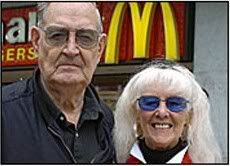
Shriek! How did these people live to be 84! They should have died years ago according to the faddists
AN 84-year-old British couple who have eaten at their local McDonald's every day for the past 17 years have spent nearly $50,000 on hamburgers and fries. Lee and Mary Humphrey have scoffed the same meal - a double hamburger each with a shared large fries - more than 6000 times and have never dined out anywhere else, Metro.co.uk reported. The couple have their own table at the fast-food outlet and moved house two years ago to East Sussex so they could be within walking distance.
They admitted that McDonald's supplied the bulk of their diet. "We don't eat big when we come home. We like to sit down in the afternoon and watch Deal or No Deal with a Magnum chocolate covered ice cream," Mrs Humphrey told Metro.co.uk. "Lee will have a bowl of cereal in the morning and I'll make him a pre-cooked roast beef at the weekends."
Despite the high amounts of fat they consume, the couple said they were fit and walked 6 km every day. "McDonald's is all we need and we're never ill, in fact I'd say we're fighting fit," Mrs Humphrey said. "I think it's the best restaurant in the world".
Source
****************
Just some problems with the "Obesity" war:
1). It tries to impose behavior change on everybody -- when most of those targeted are not obese and hence have no reason to change their behaviour. It is a form of punishing the innocent and the guilty alike. (It is also typical of Leftist thinking: Scorning the individual and capable of dealing with large groups only).
2). The longevity research all leads to the conclusion that it is people of MIDDLING weight who live longest -- not slim people. So the "epidemic" of obesity is in fact largely an "epidemic" of living longer.
3). It is total calorie intake that makes you fat -- not where you get your calories. Policies that attack only the source of the calories (e.g. "junk food") without addressing total calorie intake are hence pissing into the wind. People involuntarily deprived of their preferred calorie intake from one source are highly likely to seek and find their calories elsewhere.
4). So-called junk food is perfectly nutritious. A big Mac meal comprises meat, bread, salad and potatoes -- which is a mainstream Western diet. If that is bad then we are all in big trouble.
5). Food warriors demonize salt and fat. But we need a daily salt intake to counter salt-loss through perspiration and the research shows that people on salt-restricted diets die SOONER. And Eskimos eat huge amounts of fat with no apparent ill-effects. And the average home-cooked roast dinner has LOTS of fat. Will we ban roast dinners?
6). The foods restricted are often no more calorific than those permitted -- such as milk and fruit-juice drinks.
7). Tendency to weight is mostly genetic and is therefore not readily susceptible to voluntary behaviour change.
8). And when are we going to ban cheese? Cheese is a concentrated calorie bomb and has lots of that wicked animal fat in it too. Wouldn't we all be better off without it? And what about butter and margarine? They are just about pure fat. Surely they should be treated as contraband in kids' lunchboxes! [/sarcasm].
Trans fats:
For one summary of the weak science behind the "trans-fat" hysteria, see here. Trans fats have only a temporary effect on blood chemistry and the evidence of lasting harm from them is dubious. By taking extreme groups in trans fats intake, some weak association with coronary heart disease has at times been shown in some sub-populations but extreme group studies are inherently at risk of confounding with other factors and are intrinsically of little interest to the average person.
*********************
Monday, August 20, 2007
Drugs for sadness?
Doctors were too often mistaking common blue moods in their patients for clinical depression and prescribing drugs for normal emotions, a leading Sydney psychiatrist has said. Professor Gordon Parker, the executive director of the Black Dog Institute, wrote in the British medical journal BMJ that the threshold for diagnosing clinical depression had become too low and the definition too broad.
"It's normal for human beings to be depressed," Professor Parker told the Herald yesterday. "Normal depression to my mind means you certainly feel depressed and you feel deflated and you're pessimistic and your self-esteem drops but it's a transient state. After a few minutes, hours, a couple of days, you bounce back."
He said that over the past 20 years diagnostic models had taken "an extreme position" and ran the risk of treating normal emotional states as an illness. "There's been a blurring of clinical depression into normal depression and the consequence of that has been to strain credibility and for many people to have been delivered a bouncing cheque [when drugs do not work]," he said. "There's often an automatic reaching for the prescription pad. People are not looking at the cause." He said the prevalence of depression had increased mostly due to "the incredible broadening of its definition". It was also due to destigmatisation and, to a lesser extent, an actual increase in disorders, he said.
At the opposite end of the debate, published in BMJ yesterday, Professor Ian Hickie, the executive director of the University of Sydney's Brain and Mind Research Institute, said that it was wrong to say depression was being overdiagnosed. Professor Hickie said there was also no evidence of overprescribing. He also said that a study conducted in 27 countries 2003, published in BMJ, showed an increase in the use of antidepressants had led to a decline in suicides. "The answer is do the body count ." he said "In order to save lives you have to treat the mild and moderate cases." He said "the continual demonising of the medicines just plays into the stigma" of mental illness.
"I think it's time the specialists got over it and we got on with the public health issue of identifying those who are likely to benefit and make the wide range of treatments, medication and psychological treatments available," he said. "We're still providing so little treatment to those whose lives are at risk that we hardly need to concern ourselves with overtreatment." Treatment for depression has become more widespread since the early 1990s with the advent of drugs such as Prozac.
The Australian Institute of Health and Welfare says one in five Australians will experience a mental illness. It estimates that there were 10.2 million general practitioner encounters involving mental health-related problems in 2003-04, more than a third of which were about depression.
Source
'Phone-in' heart treatment helps
Getting it implemented beyond the pilot trial will be the difficulty
MOBILE-PHONE technology being used to help treat heart-attack victims and dramatically cut death rates at two Sydney hospitals, is receiving international recognition. The program allows information about a patient's condition to be instantly transmitted from an ambulance on the way to Royal North Shore and Westmead hospitals, giving doctors a head start on treatment.
Research on the program has been published in the European Heart Journal. Greg Nelson, the head of the Interventional Cardiology Group at RNS, said it saved an average of 100minutes, which is critical in reducing the size of the heart attack and the likelihood of death.
Using the method, cardiac mortality rates at RNS dropped from 8per cent to 2per cent. As part of the emergency triage acute myocardial infarction (ETAMI) program, the results of an electro-cardiogram on patients with a suspected heart attack are transmitted by ambulance officers at the scene, using the same technology as making a mobile-phone call, to the emergency department where it is examined by doctors. If it shows the patient is having a heart attack, a surgical team is assembled ready for the patient's arrival.
"It's getting that artery opened sooner that's going to make a big difference," Dr Nelson said. "From symptom onset to opening the artery using the old strategy the average time is 246 minutes. "What we've shown with this method of diagnosis is that time is reduced, on average, to 150 minutes. "We have confirmed that the level of muscle damage is less in people treated this way than people treated in the conventional way."
Source
****************
Just some problems with the "Obesity" war:
1). It tries to impose behavior change on everybody -- when most of those targeted are not obese and hence have no reason to change their behaviour. It is a form of punishing the innocent and the guilty alike. (It is also typical of Leftist thinking: Scorning the individual and capable of dealing with large groups only).
2). The longevity research all leads to the conclusion that it is people of MIDDLING weight who live longest -- not slim people. So the "epidemic" of obesity is in fact largely an "epidemic" of living longer.
3). It is total calorie intake that makes you fat -- not where you get your calories. Policies that attack only the source of the calories (e.g. "junk food") without addressing total calorie intake are hence pissing into the wind. People involuntarily deprived of their preferred calorie intake from one source are highly likely to seek and find their calories elsewhere.
4). So-called junk food is perfectly nutritious. A big Mac meal comprises meat, bread, salad and potatoes -- which is a mainstream Western diet. If that is bad then we are all in big trouble.
5). Food warriors demonize salt and fat. But we need a daily salt intake to counter salt-loss through perspiration and the research shows that people on salt-restricted diets die SOONER. And Eskimos eat huge amounts of fat with no apparent ill-effects. And the average home-cooked roast dinner has LOTS of fat. Will we ban roast dinners?
6). The foods restricted are often no more calorific than those permitted -- such as milk and fruit-juice drinks.
7). Tendency to weight is mostly genetic and is therefore not readily susceptible to voluntary behaviour change.
8). And when are we going to ban cheese? Cheese is a concentrated calorie bomb and has lots of that wicked animal fat in it too. Wouldn't we all be better off without it? And what about butter and margarine? They are just about pure fat. Surely they should be treated as contraband in kids' lunchboxes! [/sarcasm].
Trans fats:
For one summary of the weak science behind the "trans-fat" hysteria, see here. Trans fats have only a temporary effect on blood chemistry and the evidence of lasting harm from them is dubious. By taking extreme groups in trans fats intake, some weak association with coronary heart disease has at times been shown in some sub-populations but extreme group studies are inherently at risk of confounding with other factors and are intrinsically of little interest to the average person.
*********************
Sunday, August 19, 2007
UNUSUAL BACTERIA FOUND IN CROHN'S DISEASE PATIENTS
The abstract below is very technical but any light on Crohn's disease (a not uncommon but still largely mysterious bowel-rotting disease) is worth examination. It was found that an unusual (mutant?) strain of the common bacterium E.coli was present in a small group of patients but not in controls. Whether the bacteria concerned were a cause or an effect is unresolved but a causative role seems somewhat more likely
Culture independent analysis of ileal mucosa reveals a selective increase in invasive Escherichia coli of novel phylogeny relative to depletion of Clostridiales in Crohn's disease involving the ileum
By Martin Baumgart et al.
Abstract
Intestinal bacteria are implicated increasingly as a pivotal factor in the development of Crohn's disease, but the specific components of the complex polymicrobial enteric environment driving the inflammatory response are unresolved. This study addresses the role of the ileal mucosa-associated microflora in Crohn's disease. A combination of culture-independent analysis of bacterial diversity (16S rDNA library analysis, quantitative PCR and fluorescence in situ hybridization) and molecular characterization of cultured bacteria was used to examine the ileal mucosa-associated flora of patients with Crohn's disease involving the ileum (13), Crohn's disease restricted to the colon (CCD) (8) and healthy individuals (7). Analysis of 16S rDNA libraries constructed from ileal mucosa yielded nine clades that segregated according to their origin (P<0.0001). 16S rDNA libraries of ileitis mucosa were enriched in sequences for Escherichia coli (P<0.001), but relatively depleted in a subset of Clostridiales (P<0.05). PCR of mucosal DNA was negative for Mycobacterium avium subspecies paratuberculosis, Shigella and Listeria. The number of E. coli in situ correlated with the severity of ileal disease (rho = 0.621, P<0.001) and invasive E. coli was restricted to inflamed mucosa. E. coli strains isolated from the ileum were predominantly novel in phylogeny, displayed pathogen-like behavior in vitro and harbored chromosomal and episomal elements similar to those described in extraintestinal pathogenic E. coli and pathogenic Enterobacteriaceae. These data establish that dysbiosis of the ileal mucosa-associated flora correlates with an ileal Crohn's disease (ICD) phenotype, and raise the possibility that a selective increase in a novel group of invasive E. coli is involved in the etiopathogenesis to Crohn's disease involving the ileum.
The ISME Journal, 12 July 2007
WALKING REALLY IS GOOD FOR YOU
There is no doubt that high blood pressure is a warning sign so the slight reduction in blood pressure shown below is encouraging. Somewhat amusing that the wicked cholesterol appears to have been unaffected, though. Popular summary below followed by journal abstract
Thirty minutes of walking three times a week may be enough to help lower blood pressure and start you on the path to better health. A new study shows that even a little bit of weekly exercise is enough to lower blood pressure and improve overall fitness. The results showed that 30 minutes of walking three times a week - even if it was broken into 10-minute walks throughout the day - was enough to have a healthy effect on blood pressure as well as measurements around the waist and hip.
National guidelines recommend that people exercise at least 30 minutes a day on most days of the week to maintain optimum health. But few people achieve that goal, citing lack of time as the biggest obstacle. Researchers say these results may help motivate people to fit in even a little exercise here and there to benefit their health.
In the study, published in the Journal of Epidemiology and Community Health, researchers invited 106 healthy but sedentary civil servants to take part in an exercise program for 12 weeks. About a third were told to briskly walk for 30 minutes, five days a week. Another third were told to briskly walk for 30 minutes a day, three days a week; the remaining third were told not to change their sedentary lifestyle at all.
The participants wore pedometers to monitor their walking, and researchers measured their blood pressure, blood cholesterol, weight, hip and waist size, and overall fitness before and after the study. The results showed systolic (the top number) blood pressure dropped - and waist and hip measurements shrunk significantly - in both the three-day-a-week and five-day-a-week exercise groups.
Systolic blood pressure dropped by 5 points among those who exercised three days a week and by 6 points among those who exercised five days a week. Waist and hip measurements fell by 2.6 centimeters and 2.4 centimeters respectively among the three-day-a-week exercisers and by 2.5 centimeters and 2.2 centimeters among the five-day-a-week exercise group. No changes were found in the sedentary group.
Source
Randomised controlled trial of home-based walking programmes at and below current recommended levels of exercise in sedentary adults
By Mark A Tully et al.
Abstract:
Objectives: To determine, using unsupervised walking programmes, the effects of exercise at a level lower than currently recommended to improve cardiovascular risk factors and functional capacity.
Design: 12 week randomised controlled trial.
Setting: Northern Ireland Civil Service; home-based walking.
Participants: 106 healthy, sedentary 40 to 61 year old adults of both sexes.
Interventions: Participants were randomly allocated to a walking programme (30 minutes brisk walking three days a week (n = 44) or five days a week (n = 42)) or a control group (n = 20). Participants could choose to walk in bouts of at least 10 minutes. They used pedometers to record numbers of steps taken. Intention to treat analysis of changes within groups was done using paired t tests; extent of change (baseline to 12 week measurements) was compared between groups using analysis of variance and Gabriel's post hoc test.
Main outcome measures: Blood pressure, serum lipids, body mass index, waist:hip ratio, and functional capacity (using a 10 m shuttle walk test).
Main results: 89% (93/106) completed the study. Systolic blood pressure and waist and hip circumferences fell significantly both in the three day group (5 mm Hg, 2.6 cm, and 2.4 cm, respectively) and in the five day group (6 mm Hg, 2.5 cm, and 2.2 cm) (p<0.05). Functional capacity increased in both groups (15%; 11%). Diastolic blood pressure fell in the five day group (3.4 mm Hg, p<0.05). No changes occurred in the control group.
Conclusions: This study provides evidence of benefit from exercising at a level below that currently recommended in healthy sedentary adults. Further studies are needed of potential longer term health benefits for a wider community from low levels of exercise.
Source
****************
Just some problems with the "Obesity" war:
1). It tries to impose behavior change on everybody -- when most of those targeted are not obese and hence have no reason to change their behaviour. It is a form of punishing the innocent and the guilty alike. (It is also typical of Leftist thinking: Scorning the individual and capable of dealing with large groups only).
2). The longevity research all leads to the conclusion that it is people of MIDDLING weight who live longest -- not slim people. So the "epidemic" of obesity is in fact largely an "epidemic" of living longer.
3). It is total calorie intake that makes you fat -- not where you get your calories. Policies that attack only the source of the calories (e.g. "junk food") without addressing total calorie intake are hence pissing into the wind. People involuntarily deprived of their preferred calorie intake from one source are highly likely to seek and find their calories elsewhere.
4). So-called junk food is perfectly nutritious. A big Mac meal comprises meat, bread, salad and potatoes -- which is a mainstream Western diet. If that is bad then we are all in big trouble.
5). Food warriors demonize salt and fat. But we need a daily salt intake to counter salt-loss through perspiration and the research shows that people on salt-restricted diets die SOONER. And Eskimos eat huge amounts of fat with no apparent ill-effects. And the average home-cooked roast dinner has LOTS of fat. Will we ban roast dinners?
6). The foods restricted are often no more calorific than those permitted -- such as milk and fruit-juice drinks.
7). Tendency to weight is mostly genetic and is therefore not readily susceptible to voluntary behaviour change.
8). And when are we going to ban cheese? Cheese is a concentrated calorie bomb and has lots of that wicked animal fat in it too. Wouldn't we all be better off without it? And what about butter and margarine? They are just about pure fat. Surely they should be treated as contraband in kids' lunchboxes! [/sarcasm].
Trans fats:
For one summary of the weak science behind the "trans-fat" hysteria, see here. Trans fats have only a temporary effect on blood chemistry and the evidence of lasting harm from them is dubious. By taking extreme groups in trans fats intake, some weak association with coronary heart disease has at times been shown in some sub-populations but extreme group studies are inherently at risk of confounding with other factors and are intrinsically of little interest to the average person.
*********************
Saturday, August 18, 2007
MOTHERS WHO EAT "JUNK" FOOD DAMAGE THEIR BABIES??
Another excuse for the usual propaganda. But it only applies to rats so no need to worry. Rats don't usually eat McDonalds last I heard so are hardly a good model for human behaviour. A double-blind human trial should not be too hard to arrange. The results would undoubtedly be amusing
Mothers who eat junk food during pregnancy and breastfeeding may put their children at risk of overeating and obesity, a study by the Royal Veterinary College of London has found. Thus, pregnant and breastfeeding women probably shouldn't indulge in fatty, sugary and salty foods under the misguided assumption that they're "eating for two," the researchers said.
Published Aug. 14 in The British Journal of Nutrition, the study found that rats on a diet of processed junk food such as doughnuts, muffins, biscuits, potato chips and sweets during pregnancy and lactation produced offspring that overate and had unusual preferences for fatty, sweet and salty junk foods.
The findings probably have implications for humans, the researchers said. Obesity is a major cause of disease, associated with an increased risk of type 2 diabetes, heart disease and cancer. Some 400 million people were obese globally in 2005, according to the World Health Organization. "Eating large quantities of junk food when pregnant and breastfeeding could impair the normal control of appetite and promote an exacerbated taste for junk food in offspring," said lead author Stephanie Bayol.
Appetite control is a complex process, involving hormones that signal to the brain to regulate energy balance, hunger and the feeling of fullness. Feeding can stimulate "reward centres" in the brain, which can sometimes override sensations of fullness. Previous research has found that fatty, sugary junk foods inhibit the fullness signals while stimulating the reward centres.
Exposure to a maternal junk early in life may help explain why some people "might find it harder than others to control their junk food intake even when given access to healthier foods later in life," said Bayol.
Source
Journal abstract:
A maternal `junk food' diet in pregnancy and lactation promotes an exacerbated taste for `junk food' and a greater propensity for obesity in rat offspring
By Stephanie A. Bayol et al.
Abstract
Obesity is generally associated with high intake of junk foods rich in energy, fat, sugar and salt combined with a dysfunctional control of appetite and lack of exercise. There is some evidence to suggest that appetite and body mass can be influenced by maternal food intake during the fetal and suckling life of an individual. However, the influence of a maternal junk food diet during pregnancy and lactation on the feeding behaviour and weight gain of the offspring remains largely uncharacterised.
In this study, six groups of rats were fed either rodent chow alone or with a junk food diet during gestation, lactation and/or post-weaning. The daily food intakes and body mass were measured in forty-two pregnant and lactating mothers as well as in 216 offspring from weaning up to 10 weeks of age.
Results showed that 10 week-old rats born to mothers fed the junk food diet during gestation and lactation developed an exacerbated preference for fatty, sugary and salty foods at the expense of protein-rich foods when compared with offspring fed a balanced chow diet prior to weaning or during lactation alone. Male and female offspring exposed to the junk food diet throughout the study also exhibited increased body weight and BMI compared with all other offspring.
This study shows that a maternal junk food diet during pregnancy and lactation may be an important contributing factor in the development of obesity.
British Journal of Nutrition, 15 August, 2007
Umbilical rethink
Cutting or clamping the umbilical cord immediately after birth could be harmful to the newborn child, doctors say. About half of maternity units are estimated to clamp and then remove the cord between mother and child soon after birth, but this could increase the risk of serious blood disorders, according to research.
Leaving the cord intact for a few minutes can increase blood supply and iron levels in the baby and reduce the risk of anaemia, a common infant condition, the British Medical Journal reports today. Andrew Weeks, a senior lecturer in obstetrics at the University of Liverpool, argues that there are benefits in waiting before clamping or cutting the cord.
A study this year in the Journal of the American Medical Association said that waiting two minutes before cutting the cord reduced the risk of serious blood disorders and benefited the baby in its first few months. The Royal College of Obstetrics and Gynaecologists said that there were no guidelines on when exactly the cord should be cut.
Source
****************
Just some problems with the "Obesity" war:
1). It tries to impose behavior change on everybody -- when most of those targeted are not obese and hence have no reason to change their behaviour. It is a form of punishing the innocent and the guilty alike. (It is also typical of Leftist thinking: Scorning the individual and capable of dealing with large groups only).
2). The longevity research all leads to the conclusion that it is people of MIDDLING weight who live longest -- not slim people. So the "epidemic" of obesity is in fact largely an "epidemic" of living longer.
3). It is total calorie intake that makes you fat -- not where you get your calories. Policies that attack only the source of the calories (e.g. "junk food") without addressing total calorie intake are hence pissing into the wind. People involuntarily deprived of their preferred calorie intake from one source are highly likely to seek and find their calories elsewhere.
4). So-called junk food is perfectly nutritious. A big Mac meal comprises meat, bread, salad and potatoes -- which is a mainstream Western diet. If that is bad then we are all in big trouble.
5). Food warriors demonize salt and fat. But we need a daily salt intake to counter salt-loss through perspiration and the research shows that people on salt-restricted diets die SOONER. And Eskimos eat huge amounts of fat with no apparent ill-effects. And the average home-cooked roast dinner has LOTS of fat. Will we ban roast dinners?
6). The foods restricted are often no more calorific than those permitted -- such as milk and fruit-juice drinks.
7). Tendency to weight is mostly genetic and is therefore not readily susceptible to voluntary behaviour change.
8). And when are we going to ban cheese? Cheese is a concentrated calorie bomb and has lots of that wicked animal fat in it too. Wouldn't we all be better off without it? And what about butter and margarine? They are just about pure fat. Surely they should be treated as contraband in kids' lunchboxes! [/sarcasm].
Trans fats:
For one summary of the weak science behind the "trans-fat" hysteria, see here. Trans fats have only a temporary effect on blood chemistry and the evidence of lasting harm from them is dubious. By taking extreme groups in trans fats intake, some weak association with coronary heart disease has at times been shown in some sub-populations but extreme group studies are inherently at risk of confounding with other factors and are intrinsically of little interest to the average person.
*********************
Friday, August 17, 2007
Smoking and Alzheimers
I have often seen it claimed that smoking has a protective effect against Alzheimers. That is not what the research literature says, however. Quite the reverse. See the meta-analysis below. Smoking is quite clearly bad for your brain.
Smoking as a Risk Factor for Dementia and Cognitive Decline: A Meta-Analysis of Prospective Studies
By Kaarin J. Anstey et al
Abstract
The authors assessed the association of smoking with dementia and cognitive decline in a meta-analysis of 19 prospective studies with at least 12 months of follow-up. Studies included a total of 26,374 participants followed for dementia for 2-30 years and 17,023 participants followed up for 2-7 years to assess cognitive decline. Mean study age was 74 years. Current smokers at baseline, relative to never smokers, had risks of 1.79 (95% confidence interval (CI): 1.43, 2.23) for incident Alzheimer's disease, 1.78 (95% CI: 1.28, 2.47) for incident vascular dementia, and 1.27 (95% CI: 1.02, 1.60) for any dementia. Compared with those who never smoked, current smokers at baseline also showed greater yearly declines in Mini-Mental State Examination scores over the follow-up period (effect size (á) = -0.13, 95% CI: -0.18, -0.08). Compared with former smokers, current smokers at baseline showed an increased risk of Alzheimer's disease (relative risk = 1.70, 95% CI: 1.25, 2.31) and an increased decline in cognitive abilities (effect size (beta) = -0.07, 95% CI: -0.11, -0.03), but the groups were not different regarding risk of vascular dementia or any dementia. The authors concluded that elderly smokers have increased risks of dementia and cognitive decline.
American Journal of Epidemiology 2007 166(4):367-378
Pollution causes four in 10 deaths, survey finds
And you thought that heart disease, cancer, bacteria and viruses were the biggest problems! The "study" reported below is just an exercise in wild assumptions. It would have been more defensible if he had said that politics kills people. Socialist politics certainly keep people poor and the worlds's poor do have less access to things like clean water, good sanitation, adequate nutrition and competent medical services
Some 40 percent of deaths worldwide are caused by water, air and soil pollution, a study has found. Such environmental degradation, coupled with the growth in world population, are major causes of a recent rapid increase in diseases reported by the World Health Organization, said the researcher.
Both factors contribute to the malnourishment and disease susceptibility of 3.7 billion people, added the investigator, David Pimentel of Cornell University in Ithaca, N.Y. The findings appear in the early online issue of the research journal Human Ecology and are slated for publication in the December print issue.
Pimentel and some graduate students examined data from more than 120 published papers on the effects on human disease of population growth, malnutrition and various kinds of environmental degradation. "We have serious environmental resource problems of water, land and energy, and these are now coming to bear on food production, malnutrition and the incidence of diseases," said Pimentel.
Of the world population of about 6.5 billion, 57 percent is malnourished, compared with 20 percent of a world population of 2.5 billion in 1950, he added. Malnutrition is not only the direct cause of 6 million children's deaths each year but also makes millions of people much more susceptible to such killers as acute respiratory infections, malaria and a host of other lifethreatening diseases, according to the research.
Among the other points:
* Nearly half the world's people are crowded into urban areas, often without adequate sanitation, and are exposed to epidemics of such diseases as measles and flu.
* With 1.2 billion people lacking clean water, waterborne infections account for 80 percent of all infectious diseases. Increased water pollution creates breeding grounds for malaria-carrying mosquitoes, killing 1.2 million to 2.7 million people a year, and air pollution kills about 3 million people a year. Unsanitary living conditions account for more than 5 million deaths each year, of which more than half are children.
* Air pollution from smoke and various chemicals kills 3 million people a year. In the United States alone about 3 million tons of toxic chemicals are released into the environmentcontributing to cancer, birth defects, immune system defects and many other serious health problems.
* Soil is contaminated by many chemicals and pathogens, which are passed on to humans through direct contact or via food and water. Increased soil erosion worldwide not only results in more soil being blown but spreading of disease microbes and various toxins.
At the same time, more microbes are becoming increasingly drugresistant. And global warming, together with changes in biological diversity, influence parasite evolution and the ability of exotic species to invade new areas. As a result, such diseases as tuberculosis and influenza are reemerging as major threats, while new threatsincluding West Nile virus and Lyme diseasehave developed.
"A growing number of people lack basic needs, like pure water and ample food. They become more susceptible to diseases driven by malnourishment, and air, water and soil pollutants," Pimentel concluded. He and his coauthors called for comprehensive and fair population policies and more conservation. "Relying on increasing diseases and malnutrition to limit human numbers in the world diminishes the quality of life for all humans and is a highrisk policy," they wrote.
Source
****************
Just some problems with the "Obesity" war:
1). It tries to impose behavior change on everybody -- when most of those targeted are not obese and hence have no reason to change their behaviour. It is a form of punishing the innocent and the guilty alike. (It is also typical of Leftist thinking: Scorning the individual and capable of dealing with large groups only).
2). The longevity research all leads to the conclusion that it is people of MIDDLING weight who live longest -- not slim people. So the "epidemic" of obesity is in fact largely an "epidemic" of living longer.
3). It is total calorie intake that makes you fat -- not where you get your calories. Policies that attack only the source of the calories (e.g. "junk food") without addressing total calorie intake are hence pissing into the wind. People involuntarily deprived of their preferred calorie intake from one source are highly likely to seek and find their calories elsewhere.
4). So-called junk food is perfectly nutritious. A big Mac meal comprises meat, bread, salad and potatoes -- which is a mainstream Western diet. If that is bad then we are all in big trouble.
5). Food warriors demonize salt and fat. But we need a daily salt intake to counter salt-loss through perspiration and the research shows that people on salt-restricted diets die SOONER. And Eskimos eat huge amounts of fat with no apparent ill-effects. And the average home-cooked roast dinner has LOTS of fat. Will we ban roast dinners?
6). The foods restricted are often no more calorific than those permitted -- such as milk and fruit-juice drinks.
7). Tendency to weight is mostly genetic and is therefore not readily susceptible to voluntary behaviour change.
8). And when are we going to ban cheese? Cheese is a concentrated calorie bomb and has lots of that wicked animal fat in it too. Wouldn't we all be better off without it? And what about butter and margarine? They are just about pure fat. Surely they should be treated as contraband in kids' lunchboxes! [/sarcasm].
Trans fats:
For one summary of the weak science behind the "trans-fat" hysteria, see here. Trans fats have only a temporary effect on blood chemistry and the evidence of lasting harm from them is dubious. By taking extreme groups in trans fats intake, some weak association with coronary heart disease has at times been shown in some sub-populations but extreme group studies are inherently at risk of confounding with other factors and are intrinsically of little interest to the average person.
*********************
Thursday, August 16, 2007
If you can't show that obesity is bad, invent a new measure of obesity!
Note the rubric I have put in the journal abstract. It is admitted that by the old BMI measure fatties are not worse off and the new measure can be shown to produce an effect only by contrasting the extreme quintiles. It's a crock! It may show some danger for the hugely obese but for the vast majority of people it shows no danger. And extreme quintiles are in any case inherently at risk of being confounded with other factors. The claim that just a slightly enlarged stomach is bad for you is in fact CONTRADICTED by the study!
For many people, middle-aged spread is as much a part of getting older as laughter lines, receding hairlines and worsening hangovers. But research suggests that even the smallest of pot bellies may be a serious health risk. After examining more than 2,700 men and women with an average age of 45, scientists at the University of Texas Southwestern Medical Centre in Dallas found that those with even a little fat around their waists were significantly more vulnerable to heart disease, even if their overall weight was normal.
Their findings, published in the Journal of the American College of Cardiology (JACC), may come as a shock to many who would not consider themselves fat. But they reinforce a growing belief among medical experts that waist-to-hip ratio (WHR) is a more accurate measure of healthy shape than the widely used body mass index (BMI). BMI, which is calculated by dividing weight in kilograms by height in metres squared, gives an overall indication of heaviness compared with height. But according to BMI measurements, well-toned specimens from Brad Pitt to the rugby star Jonah Lomu would be classed as overweight, and increasing numbers of experts are now questioning BMI's usefulness.
The new study by James de Lemos and his team adds credibility to the theory that WHR is a more accurate means of measuring heart-disease risk because it identifies potentially dangerous "central obesity" even in those who are not overweight. The researchers conducted a series of examinations on their participants, ranging from blood sampling to MRI scans. All underwent imaging tests to look for early signs of calcium build-up in the arteries of the heart, which is linked to an increased risk of developing cardiovascular disease later in life. These deposits are a reflection of atherosclerosis - commonly referred to as "hardening" of the arteries - and can be detected years before a patient suffers chest pain or has a heart attack.
Researchers examined the relationship between body shape and early signs of disease in the arteries. They found that the likelihood of there being calcium deposits in the arteries grew in direct proportion to the increase in waist-to-hip ratio.
A breakdown of the participants into five groups showed that those with the highest WHR were almost twice as likely to have calcium deposits in their coronary arteries as those with the smallest WHR. Even when factors such as blood pressure, diabetes, age, high cholesterol levels and smoking were taken into account, the link remained strong.
Dr de Lemos said: "In our thirties and forties, we often gain three to four inches in the midsection. It's a day-to-day, meal-to-meal battle, but it's worth fighting. We don't have to clean our plates. It's better to throw food out than add it to our waists. Even a small pot belly puts us at higher risk when compared to a flat tummy."
June Davison, cardiac nurse at the British Heart Foundation, said: "People who are overweight or obese have an increased risk of developing heart disease. The risks are even higher when fat is mainly concentrated around the abdomen. "What's important is that people consider their body shape as well as their weight."
Source
Journal abstract follows:
The Association of Differing Measures of Overweight and Obesity With Prevalent Atherosclerosis
By Raphael See et al.
Objectives: This study sought to evaluate the associations between different measures of obesity and prevalent atherosclerosis in a large population-based cohort.
Background: Although obesity is associated with cardiovascular mortality, it is unclear whether this relationship is mediated by increased atherosclerotic burden.
Methods: Using data from the Dallas Heart Study, we assessed the association between gender-specific obesity measures (i.e., body mass index [BMI]; waist circumference [WC]; waist-to-hip ratio [WHR]) and prevalent atherosclerosis defined as coronary artery calcium (CAC) score >10 Agatston units measured by electron-beam computed tomography and detectable aortic plaque measured by magnetic resonance imaging.
Results: In univariable analyses (n = 2,744), CAC prevalence was significantly greater only in the fifth versus first quintile of BMI, whereas it increased stepwise across quintiles of WC and WHR (p trend <0.001 for each). After multivariable adjustment for standard risk factors, prevalent CAC was more frequent in the fifth versus first quintile of WHR (odds ratio 1.91, 95% confidence interval 1.30 to 2.80), whereas no independent positive association was observed for BMI or WC. Similar results were observed for aortic plaque in both univariable and multivariable-adjusted analyses. The c-statistic for discrimination of prevalent CAC was greater for WHR compared with BMI and WC in women and men (p < 0.001 vs. BMI; p < 0.01 vs. WC).
Conclusions: We discovered that WHR was independently associated with prevalent atherosclerosis and provided better discrimination than either BMI or WC. The associations between obesity measurements and atherosclerosis mirror those observed between obesity and cardiovascular mortality, suggesting that obesity contributes to cardiovascular mortality via increased atherosclerotic burden.
J Am Coll Cardiol, 2007; 50:752-759
Can Organic Really Feed the World? Activism Disguised As Science
A new study published in an alternative agriculture journal has gained widespread attention by claiming that organic farming not only could adequately feed the world, it might even yield more food and require less farmland. It is a truly sensational claim.
In science, the more sensational the claim, the more robust the evidence needed to support it. This time, the evidence doesn't stack up. In fact, the evidence fell so far short that the journal that published the paper also published not one, but two scathing and dismissive "editorial responses" in the same issue. This is anything but a ringing endorsement.
A simple comparison of the authors of the paper and critiques is revealing. The "organic can too feed the world" authors are a collection of urban academics without any agricultural experience. The lead author studies fossil squirrel's teeth at the University of Michigan's Museum of Paleontology. The others are with Michigan's School of Natural Resources and Environment. In contrast, the authors of the two critiques are an agronomist at the University of Nebraska, Kenneth Cassman, and Colorado organic farmer Jim Hendrix.
As Cassman put it, "their analyses do not meet the minimum scientific requirements for comparing food production capacity in different crop production systems."
First, many of the studies they relied upon to support their claim simply aren't reliable. One large data set (comprising over half of the "yield ratios" they used to estimate food production in the developing world) are merely guestimates of increased productivity from a questionnaire sent to activists running organic "demonstration" farms. That doesn't even remotely approach "science," especially when the returned questionnaires include implausible organic yield increase claims of more than 500 percent. Another large dataset used by the Michigan researchers is so questionable that a paper critical of it published in the journal Field Crop Research was titled "Fantastic yields in the system of rice intensification: fact or fallacy?"
Central to this entire debate is the shortage of organic nitrogen fertilizer, a.k.a. manure. Currently, there is only enough animal manure to support one fifth of current global crop production. They only way to get more organically is to devote more land to legume crops or animal pastures that fix more nitrogen-which would require billions of acres of additional farmland the world doesn't currently have.
The Michigan researchers dismiss this sobering reality by calculating that, theoretically, enough nitrogen can be fixed by growing cover crops during fall/winter and between crops to make up the shortfall. As Dwight Eisenhower once stated, "Farming looks mighty easy when your plow is a pencil and you're a thousand miles from a corn field."
The final, sadly amusing testimony to the fantasy world occupied by these researchers comes from the conclusion of their policy forum article, where they point to the shining example of Cuba as "one of the most progressive food systems in the world" where organic farming is successfully feeding a country. Ah, yes, the famed Cuban "agricultural enlightenment" brought about by the ending of Soviet industrial fertilizer and pesticide donations.
How has Cuba fared after "going organic?" According to unofficial statistics, Cuba suffers massive food shortages and rations basic food staples. But don't take my word for it. Listen to these Cuban immigrants interviewed in a December 27, 2006 story on National Public Radio's Morning Edition:
Joel Lopez, a skinny 19-year-old who arrived on Dec. 14, 2006 in Miami through the [immigration lottery], or Bomba as it is called in Cuba. Through a translator: "Everything is so surprising here, the cleanliness of the streets, the food, the shops. Well, there is no comparison. . . . I have been telling [my friends] about a Chinese buffet I went to. I told them about how you can serve yourself again and again!"
Sitting next to him is Louisa Martinez. Her husband was a baker in Cuba. But still for her, it's the food that is the most dazzling. Through a translator: "Oh the food! Here there is a surfeit of food. Over there, there is a LOT of hunger. It's terrible."
So who are you going to believe: The urban pencil pushing elites, or the real farmers and real victims of the so-called "progressive food" movement?
Source. The three papers concerned can be found here
****************
Just some problems with the "Obesity" war:
1). It tries to impose behavior change on everybody -- when most of those targeted are not obese and hence have no reason to change their behaviour. It is a form of punishing the innocent and the guilty alike. (It is also typical of Leftist thinking: Scorning the individual and capable of dealing with large groups only).
2). The longevity research all leads to the conclusion that it is people of MIDDLING weight who live longest -- not slim people. So the "epidemic" of obesity is in fact largely an "epidemic" of living longer.
3). It is total calorie intake that makes you fat -- not where you get your calories. Policies that attack only the source of the calories (e.g. "junk food") without addressing total calorie intake are hence pissing into the wind. People involuntarily deprived of their preferred calorie intake from one source are highly likely to seek and find their calories elsewhere.
4). So-called junk food is perfectly nutritious. A big Mac meal comprises meat, bread, salad and potatoes -- which is a mainstream Western diet. If that is bad then we are all in big trouble.
5). Food warriors demonize salt and fat. But we need a daily salt intake to counter salt-loss through perspiration and the research shows that people on salt-restricted diets die SOONER. And Eskimos eat huge amounts of fat with no apparent ill-effects. And the average home-cooked roast dinner has LOTS of fat. Will we ban roast dinners?
6). The foods restricted are often no more calorific than those permitted -- such as milk and fruit-juice drinks.
7). Tendency to weight is mostly genetic and is therefore not readily susceptible to voluntary behaviour change.
8). And when are we going to ban cheese? Cheese is a concentrated calorie bomb and has lots of that wicked animal fat in it too. Wouldn't we all be better off without it? And what about butter and margarine? They are just about pure fat. Surely they should be treated as contraband in kids' lunchboxes! [/sarcasm].
Trans fats:
For one summary of the weak science behind the "trans-fat" hysteria, see here. Trans fats have only a temporary effect on blood chemistry and the evidence of lasting harm from them is dubious. By taking extreme groups in trans fats intake, some weak association with coronary heart disease has at times been shown in some sub-populations but extreme group studies are inherently at risk of confounding with other factors and are intrinsically of little interest to the average person.
*********************
Wednesday, August 15, 2007
Banned drug was given in high dose
Now we hear it: Another case of regulatory failure
THE osteoarthritis drug withdrawn from sale on Saturday after the deaths of two patients was approved for use in Australia at double the dose allowed in more than 50 other countries. Australia is the only country in the world where patients have died while taking Prexige. The 200mg dose was approved by the Therapeutic Goods Administration in 2004 to treat osteoarthritis, while other countries recommend a 100mg dose.
The TGA received eight reports of liver damage, including two deaths and two patients who required liver transplants. Five of those were taking 200mg daily, one person was taking 200-400mg daily, one person 400mg daily and the TGA is yet to determine the dose for the eighth patient.
Doctors told The Australian yesterday that the recall highlighted the need for continuing trials into the safety of newly approved drugs. Prexige was first sold in Australia in November 2005 but it was not widely used until it was listed on the Pharmaceutical Benefits Scheme in August last year, despite concerns from medical groups about its safety.
Lynn Weekes, president of the National Prescribing Service -- an independent medication advisory agency -- said pharmaceutical companies should conduct "post-marketing" studies on new drugs, even after they won approval, to detect side-effects that become apparent only once a medicine is widely used. "There were studies done initially on Prexige with doses up to 400mg, and there was no evidence of liver damage," she said. "That's why post-marketing studies are really essential, not just in terms of a drug's safety but also usage."
The NPS warned last July that there was insufficient information about Prexige's safety to support its listing on the PBS. "We are warning all GPs that its long-term safety hasn't been proven yet," an NPS spokesman said at the time. Prexige, used by 60,000 Australians, was one of the new generation of painkillers, called Cox-2 inhibitors, thought to cause fewer side-effects, such as gastric bleeding, than other anti-inflammatory drugs such as ibuprofen and naproxen. However, the drugs fell out of favour in 2004 when pharmaceutical giant Merck withdrew Vioxx, a Cox-2 used to treat arthritis, after it was found to increase the risk of heart attack and stroke. In April 2005, drug company Pfizer withdrew its painkiller Bextra amid concerns that it also was linked to heart disease.
Dr Weekes said doctors were aware that Prexige belonged to a class of drugs linked to cardiac side-effects, but it was not known that they caused serious liver damage. "We were aware of cardiac risks associated with this class of drugs. But these effects in the liver have really come out of the blue," Dr Weekes said. A spokeswoman for Novartis, which makes Prexige, said liver damage was a rare side-effect of the drug. "Serious liver side-effects have been reported rarely, for all Cox-2s and non-steroidal anti-inflammatories. It is a known but rare side-effect for this class of drugs," she said. "What we found is that in a very short period of time, the adverse events that were reported were higher than we would expect, so we made the decision to withdraw the product."
The TGA approved the 100mg dose of Prexige last June.
Source
Viruses that kill bacteria may help with MRSA
A type of “good” virus that infects and kills many types of harmful bacteria is being investigated by scientists in the fight against antibiotic-resistant superbugs such as MRSA. A cream containing the viruses, known as bacteriophages (phages), has been developed to eliminate hospital-acquired infections and could be available within three years. Similar treatments are also being developed for bacterial ear infections and food poisoning, which are triggered by the most stubbornly resistant bugs.
Despite having been used in the former Soviet Union and Eastern Europe to treat infections since the 1920s, the viruses have been neglected in the West for more than 60 years. Scientists are now re-examining whether phage therapies, previously considered to have been superseded by antibiotics, can curb overuse of the drugs. Clinical trials of the proposed cream for MRSA are planned next year after laboratory tests in which phages wiped out more than 15 strains of the superbug.
MRSA is one of a gathering army of microbes that are becoming immune to antibiotic medicines. Others include resistant strains of tuberculosis, the food bug Escherichia coli, and two more causes of hospital infections, Acinetobacter and Pseudomonas.
Contrary to current guidance to eliminate infections, which emphasises the importance of regular hand-washing and use of alcohol gels, the anti-MRSA cream could be applied to the inside of the nose, where bacteria are known to thrive. The cream is likely to contain a “cocktail” of three or four types of virus so that it is difficult for the bugs to build up resistance to it.
MRSA, or methicillin-resistant Staphylococcus aureus, is carried in the body of one in three people without any ill effects, but it can cause potentially lethal infections in hospitals, where sick people come into contact with those harbouring the bacteria. Latest figures show that there were 3,517 MRSA infections in British hospitals between October 2005 and March last year. Shedding of the bug from the nose is the main mode of transmission, researchers say. Treating the full range of hospital-acquired infections costs the NHS about 1 billion pounds a year.
Nick Housby, chief executive of the Coventry-based biotech company Novolytics, which is carrying out the research, said that the aim was to use the phage cream as a preventative measure that could be given to staff and patients a day or two before they go into hospital. But he added that it could also eliminate infections in affected patients within 24 hours. “We’re extremely optimistic,” he said. We know we can kill, in the laboratory, clinically relevant strains. It’s a question now of putting it into the right cream, in terms of the formulation, to make sure that it works.”
The cream would be applied with a stick inserted into the nose. The viruses could then target MRSA bacteria, injecting them with their own genetic material. The bugs are reprogrammed to produce more viruses, which then break out of their host, destroying it in the process. Since the viruses reproduce themselves, repeat treatments would not be needed as frequently as with antibiotics.
The viruses are now starting to make a comeback in the West, where more than 12 companies are now developing phage products. Geoff Hanlon, an expert in the viruses at the University of Brighton, said: “We’re now finding antibiotics are becoming less useful. The climate is probably right to revisit bacteriophage therapy.”
Source
****************
Just some problems with the "Obesity" war:
1). It tries to impose behavior change on everybody -- when most of those targeted are not obese and hence have no reason to change their behaviour. It is a form of punishing the innocent and the guilty alike. (It is also typical of Leftist thinking: Scorning the individual and capable of dealing with large groups only).
2). The longevity research all leads to the conclusion that it is people of MIDDLING weight who live longest -- not slim people. So the "epidemic" of obesity is in fact largely an "epidemic" of living longer.
3). It is total calorie intake that makes you fat -- not where you get your calories. Policies that attack only the source of the calories (e.g. "junk food") without addressing total calorie intake are hence pissing into the wind. People involuntarily deprived of their preferred calorie intake from one source are highly likely to seek and find their calories elsewhere.
4). So-called junk food is perfectly nutritious. A big Mac meal comprises meat, bread, salad and potatoes -- which is a mainstream Western diet. If that is bad then we are all in big trouble.
5). Food warriors demonize salt and fat. But we need a daily salt intake to counter salt-loss through perspiration and the research shows that people on salt-restricted diets die SOONER. And Eskimos eat huge amounts of fat with no apparent ill-effects. And the average home-cooked roast dinner has LOTS of fat. Will we ban roast dinners?
6). The foods restricted are often no more calorific than those permitted -- such as milk and fruit-juice drinks.
7). Tendency to weight is mostly genetic and is therefore not readily susceptible to voluntary behaviour change.
8). And when are we going to ban cheese? Cheese is a concentrated calorie bomb and has lots of that wicked animal fat in it too. Wouldn't we all be better off without it? And what about butter and margarine? They are just about pure fat. Surely they should be treated as contraband in kids' lunchboxes! [/sarcasm].
Trans fats:
For one summary of the weak science behind the "trans-fat" hysteria, see here. Trans fats have only a temporary effect on blood chemistry and the evidence of lasting harm from them is dubious. By taking extreme groups in trans fats intake, some weak association with coronary heart disease has at times been shown in some sub-populations but extreme group studies are inherently at risk of confounding with other factors and are intrinsically of little interest to the average person.
*********************
Tuesday, August 14, 2007
Medicare's Obesity Policy Flawed
An article below that has some wisdom in theory but not much in practice. Following the article are some comments sent to its author by a medical specialist
In government-run health systems, bureaucrats make the decisions about what treatments will be available, not patients and doctors. And sometimes, those decisions don't make sense
Case in point: The agency that runs Medicare - the Center for Medicare and Medicaid Services - is limiting access to the full range of obesity treatments even though Medicare's costs of covering obese patients are rising dramatically. This flies in the face of reason. Obesity is associated with heart disease, stroke, diabetes, respiratory problems and cancer. Its prevalence in Medicare has doubled in the last 20 years, and the share of spending by Medicare on obese patients has almost tripled, from 9.4 percent to nearly 25 percent.
Obesity is a serious problem in the United States, especially for Medicare patients. But CMS has its head in the sand. It has said that weight-loss drugs will not be covered under the Medicare drug benefit. In so doing, it has seriously limited physicians' options for treatment. The reality is that diet and exercise sometimes don't work, especially among elderly patients. Medicare will, however, pay for expensive bariatric surgery, the last-resort treatment for obesity.
When President Bush promoted the Medicare drug benefit, he argued that it didn't make sense for Medicare to pay for ulcer surgery but not ulcer medications. Now, CMS has repeated the same mistake - ruling that Medicare will pay for obesity surgery but not for medications that will help patients address obesity. Doctors can therefore prescribe medicines for problems caused by obesity, like coronary artery disease, high blood pressure and diabetes. But it will not allow health plans to include obesity medicines in their list of available drugs.
The proposal is bad public health policy. It is inconsistent with Medicare's new focus on care management and disease prevention. After all, this isn't simply about lifestyle choices for people who want to lose a few pounds on the latest diet drugs. We're talking about giving physicians and patients the tools they need so that together they can decide what treatment is best.
There are two widely recognized prescription obesity drugs approved by the FDA - Xenical and Meridia - and dozens of new promising therapies in development. If Medicare - the nation's largest health provider - decides against paying for these drugs, private health plans will likely follow.
One of the hallmarks of the Medicare Modernization Act of 2003 was to, well, modernize the program. That meant emphasizing preventive care and disease management to keep people healthier longer and giving physicians and health plans latitude to adopt modern disease-management models.
Medicare already is going broke, but its bankruptcy will be accelerated if it pays only for care after people get sick instead of allowing the whole arsenal of options for ensuring that people stay well. Prevention saves money and lives. As the obesity problem grows, Medicare needs to make sure that physicians and patients have all available treatment options.
Source
Some comments:
I would respectfully disagree with the authors of your Aug 10 newsletter that Medicare's obesity policy is flawed by not offering a "full range of services". This could include health club memberships, steam baths, personal trainers, surgery, and a whole bunch of "treatments" that are of marginal benefit; for almost all these "treatments", benefits are transient. This exposes many taxpayer to abuse by overutilization.
Obesity is largely behavioral. Most Government programs to alter behavior have been failures, because individuals, family, community are the most effective "treatments". These include:
1 The public schools. "Soft" approach to discipline and low expectations have had the opposite result desired - students are LESS motivated to work hard.
2 Marriage initiative - not very effective.
3 Now plan to "encourage assimilation" for immigrants. What self respecting immigrant doesn't already know this? If anything, Government obstructs assimilation with its multi language and other multicultural requirements. There are many other examples.
Possible solutions - market based, such as graded insurance premiums based on risk - obesity is a CONTROLLABLE risk.
Personal story - born in 1943, in 1993 I lost an institutional job. Applied for private life insurance - turned down for obesity (5'5", 247 pounds. In about 3 months I was down to 186 for insurance physical. Walked for about an hour/day in Texas heat in fall, then rode exercise bike while watching movies with surround sound. Healthiest and happiest I have been in years; trying to re establish exercise habit. My obesity is behavioral - my behavior.
What about doctor's behavior? In NH doctor was sued by patient he told was overweight. Parents cry for prosecution of teachers who call children "fatso". Code of conduct does not allow students to say "you're too fat". Fat children are treated with kid gloves to not hurt their "self esteem".
Some places require a "fatness index" as part of a school report card. Can any sane person tell me this was effective - some parents were actually upset to learn that their child is "fat". How can any sane parent not know this?
Do breast implants triple the long-term risk of suicide?
The media report below says so but the actual journal article (abstract below) is more realistic: Women who seek breast augmentation are more likely to have problems in their lives to start with. There is NO evidence that the implants themselves cause anything. I imagine most readers also realize that the once-prominent health scares associated with implants were debunked long ago. If not, see here
Breast implants triple the long-term risk of suicide, claims a new study in the Annals of Plastic Surgery. The increased suicide risk from cosmetic breast enlargement -- together with a similar increase in the risk of death from alcohol or drug dependence -- suggests that women receiving breast implants should also have follow-up mental health checks, say the authors. They performed an extended follow-up study of 3527 Swedish women who underwent cosmetic breast implant surgery between 1965 and 1993. The average age at implant surgery was 32 years. Death certificates were used to compare causes of death between women with breast implants and the general female population. Over an average follow-up period of nearly 19 years, the suicide rate was three times higher for women with breast implants (based on 24 deaths among implant recipients). The risk was greatest -- nearly seven times higher than in the general female population -- for women who received their implants at age 45 or older.
Source
Excess Mortality From Suicide and Other External Causes of Death Among Women With Cosmetic Breast Implants
By Lipworth, Loren et al.
Abstract:
An increased rate of suicide among women with cosmetic breast implants has been consistently reported in the epidemiologic literature. We extended by 8 years the follow-up of our earlier mortality study of a nationwide cohort of 3527 Swedish women with cosmetic breast implants to examine in greater detail suicide and other causes of death. The number of deaths observed among these women was compared with the number expected among the age- and calendar-period-matched general female population of Sweden. Women with breast implants were followed for over 65,000 person-years, with a mean follow-up of 18.7 years (range, 0.1-37.8 years). Overall, 175 deaths occurred among women with breast implants versus 133.4 expected (standardized mortality ratio (SMR) = 1.3; 95% confidence interval [CI], 1.1-1.5). Among women with implants, we observed statistically significant 3-fold excesses of suicide (SMR, 3.0; 95% CI, 1.9-4.5) and deaths from alcohol or drug dependence (SMR, 3.1; 95% CI, 1.0-7.3), as well as an excess of deaths from accidents and injuries consistent with substance abuse or dependence. The increased risk of suicide was not apparent until 10 years after implantation. Deaths from cancer overall were close to expectation (SMR, 1.1; 95% CI, 0.8-1.4). Women with cosmetic implants had elevated SMRs for lung cancer and chronic respiratory disease. There was no excess of breast cancer mortality. The excess of deaths from suicides, drug and alcohol abuse and dependence, and other related causes suggests significant underlying psychiatric morbidity among these women. Thus, screening for preimplant psychiatric morbidity and postimplant monitoring among women seeking cosmetic breast implants may be warranted.
Annals of Plastic Surgery. 59(2):119-123, August 2007
****************
Just some problems with the "Obesity" war:
1). It tries to impose behavior change on everybody -- when most of those targeted are not obese and hence have no reason to change their behaviour. It is a form of punishing the innocent and the guilty alike. (It is also typical of Leftist thinking: Scorning the individual and capable of dealing with large groups only).
2). The longevity research all leads to the conclusion that it is people of MIDDLING weight who live longest -- not slim people. So the "epidemic" of obesity is in fact largely an "epidemic" of living longer.
3). It is total calorie intake that makes you fat -- not where you get your calories. Policies that attack only the source of the calories (e.g. "junk food") without addressing total calorie intake are hence pissing into the wind. People involuntarily deprived of their preferred calorie intake from one source are highly likely to seek and find their calories elsewhere.
4). So-called junk food is perfectly nutritious. A big Mac meal comprises meat, bread, salad and potatoes -- which is a mainstream Western diet. If that is bad then we are all in big trouble.
5). Food warriors demonize salt and fat. But we need a daily salt intake to counter salt-loss through perspiration and the research shows that people on salt-restricted diets die SOONER. And Eskimos eat huge amounts of fat with no apparent ill-effects. And the average home-cooked roast dinner has LOTS of fat. Will we ban roast dinners?
6). The foods restricted are often no more calorific than those permitted -- such as milk and fruit-juice drinks.
7). Tendency to weight is mostly genetic and is therefore not readily susceptible to voluntary behaviour change.
8). And when are we going to ban cheese? Cheese is a concentrated calorie bomb and has lots of that wicked animal fat in it too. Wouldn't we all be better off without it? And what about butter and margarine? They are just about pure fat. Surely they should be treated as contraband in kids' lunchboxes! [/sarcasm].
Trans fats:
For one summary of the weak science behind the "trans-fat" hysteria, see here. Trans fats have only a temporary effect on blood chemistry and the evidence of lasting harm from them is dubious. By taking extreme groups in trans fats intake, some weak association with coronary heart disease has at times been shown in some sub-populations but extreme group studies are inherently at risk of confounding with other factors and are intrinsically of little interest to the average person.
*********************
Monday, August 13, 2007
An extraordinarily stupid diet
Anyone subjecting kids to it could undoubtedly be charged with child abuse -- and the whole "detox" idea is a crock anyway
A 10-DAY detox diet consisting of only lemon juice, water and tree sap syrup is being sold to children as young as six. The popularity of the Lemon Detox Diet has soared in Australia, with more than 40,000 sales through the internet in the past six months. It has become a hot diet/cleansing treatment for Hollywood celebrities such as Angelina Jolie.
Nutritionist Rosemary Stanton is "horrified" by the cleansing diet. "There really isn't any proof this works," Dr Stanton said. "It is quite hazardous to put children on something that is unproven. "Children are growing and their bodies need protein. A diet like that will force their bodies to break down their own body protein. "It is dangerous and the wrong way to go."
The diet was designed by Hawaiian naturopath Stanley Burroughs 30 years ago. It involves drinking nothing more than a mixture of fresh lemon juice, cayenne, water and Madal Bal Natural Tree Syrup for seven to 10 days. The syrup is being sold through the internet for $79 a bottle. The Australian distributor, Sydney-based Andre Saade, said the product was suitable for children, while the company's website states it is "absolutely" safe for children. The syrup is made from the sap of trees -- one part maple, five parts south-east palm syrup, and tastes sweet and sour.
Dr Stanton said the internet was not the place to go for health advice. "People are simply spending money on something that they are not sure works," she said. "The body has its own detox system and that is the liver and the kidneys."
Source
Australian native food fights disease?
It's all very well if you are of the antioxidant religion. That taking antioxidants can shorten your life must not be mentioned, of course
SPREADING Kakadu plum jam on your toast or seasoning soup with native Tasmanian peppercorns could curb the effects of free radicals and soothe the ravages of time, a study has found. For the first time, Australian native fruits have been shown to contain "exceptional" levels of disease-fighting antioxidants, a result scientists hope will boost Australia's fledgling bush-food industry, worth $14 million annually.
Researchers at Food Science Australia, a joint venture between CSIRO and the Victorian Government, compared 12 fruits, including brush cherries, red and yellow finger limes, riberries and Kakadu plums, with blueberries, renowned as a "super food" for its strong antioxidant properties. Native fruits were found to be a rich source of phytochemicals, with Kakadu plums and Burdekin plums containing about five times the amount of antioxidants found in blueberries.
The harsh Australian landscape may account for the findings, according to study co-author Izabela Konczak. "Australian plants had developed in complete isolation from the fruits from the northern hemisphere, with some plants, such as the Tasmanian pepper, associated with hardy Antarctic flora," Dr Konczak said. "If we expose plant cells to stress they produce compounds which protect the plant, and these work in humans as well and can protect us from nasty free radicals." Dr Konczak said eating antioxidants could prevent the development of chronic diseases and stem the ageing process.
Native fruits have been eaten by indigenous Australians for thousands of years, but with scant scientific data about their nutritional value, most people eat native fruit for their piquant taste, said Brunswick East-based CERES Bushfood and Permaculture Nursery manager Antoinette Celotti. "Mountain pepper, for example, has a spicy taste and there are advantages to growing the native fruit in relation to water usage," Ms Celotti said.
Using bush fruits as a source of phytochemicals could also interest the health food industry. "Finding unique food ingredients and flavours with health-promoting properties is a key market requirement these days," Dr Konczak said. So should we be eating Cedar Bay cherries on our breakfast cereal in a bid to stay youthful? "Yes, definitely," she laughed. "The development of minimally processed native fruits - a kind of convenience food - is the best way to use them for health benefits."
Source
****************
Just some problems with the "Obesity" war:
1). It tries to impose behavior change on everybody -- when most of those targeted are not obese and hence have no reason to change their behaviour. It is a form of punishing the innocent and the guilty alike. (It is also typical of Leftist thinking: Scorning the individual and capable of dealing with large groups only).
2). The longevity research all leads to the conclusion that it is people of MIDDLING weight who live longest -- not slim people. So the "epidemic" of obesity is in fact largely an "epidemic" of living longer.
3). It is total calorie intake that makes you fat -- not where you get your calories. Policies that attack only the source of the calories (e.g. "junk food") without addressing total calorie intake are hence pissing into the wind. People involuntarily deprived of their preferred calorie intake from one source are highly likely to seek and find their calories elsewhere.
4). So-called junk food is perfectly nutritious. A big Mac meal comprises meat, bread, salad and potatoes -- which is a mainstream Western diet. If that is bad then we are all in big trouble.
5). Food warriors demonize salt and fat. But we need a daily salt intake to counter salt-loss through perspiration and the research shows that people on salt-restricted diets die SOONER. And Eskimos eat huge amounts of fat with no apparent ill-effects. And the average home-cooked roast dinner has LOTS of fat. Will we ban roast dinners?
6). The foods restricted are often no more calorific than those permitted -- such as milk and fruit-juice drinks.
7). Tendency to weight is mostly genetic and is therefore not readily susceptible to voluntary behaviour change.
8). And when are we going to ban cheese? Cheese is a concentrated calorie bomb and has lots of that wicked animal fat in it too. Wouldn't we all be better off without it? And what about butter and margarine? They are just about pure fat. Surely they should be treated as contraband in kids' lunchboxes! [/sarcasm].
Trans fats:
For one summary of the weak science behind the "trans-fat" hysteria, see here. Trans fats have only a temporary effect on blood chemistry and the evidence of lasting harm from them is dubious. By taking extreme groups in trans fats intake, some weak association with coronary heart disease has at times been shown in some sub-populations but extreme group studies are inherently at risk of confounding with other factors and are intrinsically of little interest to the average person.
*********************
Sunday, August 12, 2007
Two deaths apparently caused by pain treatment; drug banned in Australia
Correlation is not causation. The liver damage observed may NOT have been due to the drug. Why, for instance, did the other 59,992 users NOT get liver damage? I have head of renal failure being "caused" by Keflex (cephalexin), a mass-prescribed antibiotic. Should we ban Keflex too? All drugs should be prescribed with caution as there may be individual sensitivities but banning a useful drug when vast numbers use it safely is plain crazy. ALL drugs have some side effects in some people. Even penicillin and its derivatives can kill you if you are sensitive to it. If we banned all drugs that appear to have rare side-effects we would have no drugs. Perhaps I shouldn't laugh but Canada has recently announced EXPANDED use of the same drug. That should produce some amusing gyrations
TWO people are dead and two others have undergone liver transplants from a drug, used by 60,000 people in Australia, which was urgently recalled today by the Federal Government. The Therapeutic Goods Administration (TGA) said patients prescribed the drug Prexige, used to treat osteoarthritis, should stop taking the medication immediately and seek medical advice to get an alternative prescription.
Prexige was first approved by the TGA in 2004, but has only gained widespread use since being listed on the Pharmaceutical Benefits Scheme last year. Novartis Pharmaceuticals produces the drug, which is listed under the technical name Lumiracoxib. Approximately 60,000 people take Lumiracoxib in Australia, which is prescribed for relief of osteoarthritis, post-operative pain, pain related to dental procedures and painful menstruation.
The TGA has received reports of eight people taking the drug who suffered serious liver reactions, including two deaths and two liver transplants. "The TGA has taken this advice to cancel the registration of Lumiracoxib in order to prevent further cases of severe liver damage," TGA medical adviser Rohan Hammett said. "It seems that the longer people are on the medicine, the greater chance of liver injury."
Source
Fruit fanaticism in Australia
Nobody is even interested in proof of benefit. The wonderful powers of fruit seem to be a worldwide article of faith

VICTORIAN school children will get free fruit every Friday under an $11 million plan to help prevent obesity and diabetes. Launching the program today, Premier John Brumby said 35,000 prep to grade two students at 300 schools would take part in Free Fruit Friday under the first stage of the scheme. "It's all about trying to build a healthier population, educating kids, educating families and making sure that their diet is as good as possible,'' Mr Brumby said.
A study of a similar scheme in England found providing free fruit to young school children had limited benefits. The scheme promoted an increase in fruit intake after three months, the effect reduced at seven months and returned to baseline in year two when pupils were no longer part of the scheme, researchers found. There was a small impact on the intake of some nutrients across the children surveyed, researchers found. The study was published last month in the Journal of Epidemiology and Community Health.
Mr Brumby said the Victorian scheme was more comprehensive than the one tried in the UK and would be more successful. "This is part of a broader strategy which is also linked through programs like Go For Your Life,'' Mr Brumby said. "I think if you just did this in isolation from a whole range of other initiatives, you might say: 'Well, is it going to work?'''
Mr Brumby said the program would create behavioural change. "I think it'll work. We'll, obviously, evaluate the program but we're making a big investment and we need to do that because we do have a diabetes and obesity epidemic in Australia.'' Schools will be encouraged to buy their fruit locally.
Source
****************
Just some problems with the "Obesity" war:
1). It tries to impose behavior change on everybody -- when most of those targeted are not obese and hence have no reason to change their behaviour. It is a form of punishing the innocent and the guilty alike. (It is also typical of Leftist thinking: Scorning the individual and capable of dealing with large groups only).
2). The longevity research all leads to the conclusion that it is people of MIDDLING weight who live longest -- not slim people. So the "epidemic" of obesity is in fact largely an "epidemic" of living longer.
3). It is total calorie intake that makes you fat -- not where you get your calories. Policies that attack only the source of the calories (e.g. "junk food") without addressing total calorie intake are hence pissing into the wind. People involuntarily deprived of their preferred calorie intake from one source are highly likely to seek and find their calories elsewhere.
4). So-called junk food is perfectly nutritious. A big Mac meal comprises meat, bread, salad and potatoes -- which is a mainstream Western diet. If that is bad then we are all in big trouble.
5). Food warriors demonize salt and fat. But we need a daily salt intake to counter salt-loss through perspiration and the research shows that people on salt-restricted diets die SOONER. And Eskimos eat huge amounts of fat with no apparent ill-effects. And the average home-cooked roast dinner has LOTS of fat. Will we ban roast dinners?
6). The foods restricted are often no more calorific than those permitted -- such as milk and fruit-juice drinks.
7). Tendency to weight is mostly genetic and is therefore not readily susceptible to voluntary behaviour change.
8). And when are we going to ban cheese? Cheese is a concentrated calorie bomb and has lots of that wicked animal fat in it too. Wouldn't we all be better off without it? And what about butter and margarine? They are just about pure fat. Surely they should be treated as contraband in kids' lunchboxes! [/sarcasm].
Trans fats:
For one summary of the weak science behind the "trans-fat" hysteria, see here. Trans fats have only a temporary effect on blood chemistry and the evidence of lasting harm from them is dubious. By taking extreme groups in trans fats intake, some weak association with coronary heart disease has at times been shown in some sub-populations but extreme group studies are inherently at risk of confounding with other factors and are intrinsically of little interest to the average person.
*********************
Subscribe to:
Posts (Atom)


